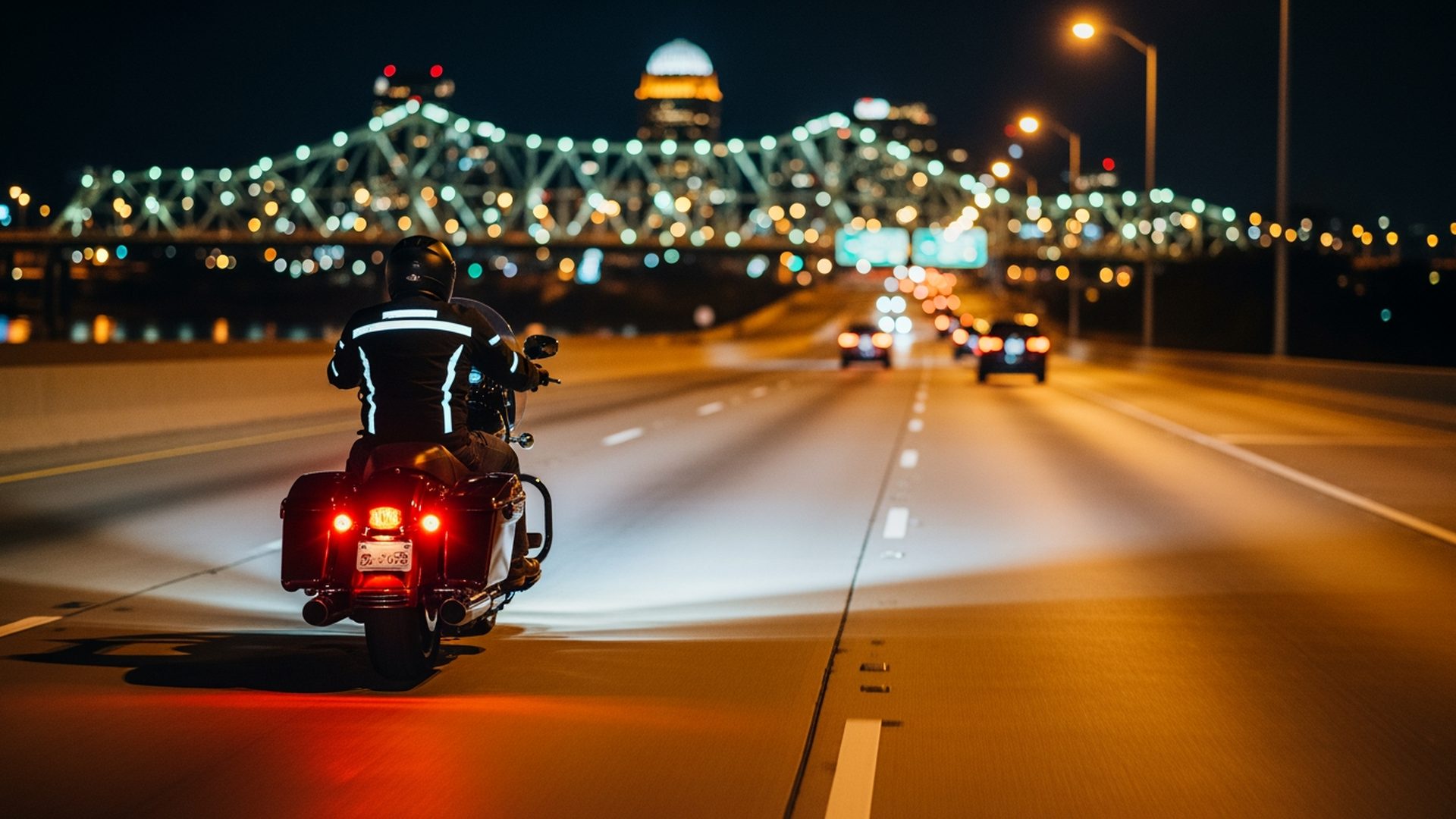
Night Riding in Louisville: Staying Visible on the Watterson, Snyder, and River Bridges
By November the sun is down before most people finish their commute. If you ride around Louisville into the fall and winter, more and more of your saddle time now happens in the dark. Night riding has its rewards, with lighter traffic and cooler air, but it also stacks the deck against a motorcycle in ways daytime riding does not.
Why You Disappear After Dark
During the day a car reads as a car and a rider reads as a rider. At night everything collapses into headlights and taillights. Your single headlight can blend into the wall of lights behind you, and drivers routinely misjudge the distance and speed of an oncoming motorcycle because there is no second lamp to give their eyes a reference. That is why the deadliest night crash for riders is the same as the deadliest daytime crash, only worse: the left-turn collision. A driver waiting to turn looks at your headlight, decides there is time, and turns straight across your path. Add glare, fatigue, and the chance the driver has been drinking, and a routine intersection becomes the most dangerous spot on your ride.
Gear and Lights That Actually Get You Seen
Being visible at night is not about one magic upgrade. It is about stacking the odds with several small ones.
- ✓ Reflective, not just bright. A dark jacket is invisible at night no matter how expensive it is. Reflective panels, a vest, and strips on your helmet and boots light up from far more angles than a headlight alone.
- ✓ Aim and clean your headlight. A misaimed or grimy headlight throws far less usable light than you think. Check the aim, keep the lens clean, and replace a dim or yellowing bulb.
- ✓ Add lighting where the law allows. Auxiliary running lights spread apart give oncoming drivers the two reference points they need to judge distance, and a brighter or blinking-on-brake taillight helps you stand out.
- ✓ A clear, clean visor. Scratches and haze turn every oncoming headlight into a starburst. Keep a clear visor for night rides and never tint down for a dark run.
Riding the Watterson and the Snyder at Night
The Watterson Expressway and the Gene Snyder Freeway feel easier at night because the traffic thins out, and that is exactly the trap. Emptier lanes invite higher speeds, and a lane change at 70 in the dark leaves no room to react to a rider a driver never saw. On both loops, ride where a driver's mirrors can find you rather than tucking into a blind spot, and use your lane position to stay lit up in the headlights around you. Treat every on-ramp as a place where someone is about to merge without looking for a single headlight. And watch the shoulders and tree lines. Fall and winter deer are active at dawn and dusk and after dark, and the wooded stretches along these loops are exactly where one steps out.
The River Bridges After Dark
The Ohio River crossings are their own challenge at night. The Kennedy and Lincoln bridges and the other spans combine narrow lanes, gusting side wind, and expansion joints and steel decking that get slick with the first cold rain or overnight frost. In the dark you get less warning that the surface has changed under you. Cross with a cushion, keep your speed steady rather than surging and braking, leave extra following distance so a sudden stop ahead does not put you into the car in front, and be ready for the crosswind that hits as you clear the bank. If the temperature is near freezing, remember the bridges ice before the approaches do.
When a Driver Never Saw You
You can light yourself up like a Christmas tree and still get hit by a driver who was not looking. If that happens after dark around Louisville, get medical care right away because adrenaline and cold hide injuries that surface a day or two later, document the intersection and the lighting along with your reflective gear, get the names of witnesses before they scatter, and do not accept blame at the scene. Here is what Louisville riders should understand about fault. Kentucky follows pure comparative negligence, so even if an insurer argues you should have been more visible, a share of blame does not erase your claim. Your recovery is reduced by your percentage of fault, not wiped out, and a driver who turned across your path at night does not get a free pass because it was dark. Two more Kentucky facts hit hardest in night crashes. Motorcycles are excluded from the state's no-fault Basic Reparation Benefits, so unless you bought that coverage separately there is no automatic medical-bill benefit riding with you, which makes your own uninsured and underinsured motorist coverage critical when a late-night driver turns out to be uninsured or takes off. And the statute of limitations for a motor-vehicle injury claim is generally two years from the crash, so the clock starts the night it happens.
Have questions after a wreck? Karl Truman and the Louisville motorcycle injury attorneys at Karl Truman Law (trumanlaw.com) review rider claims and explain your options.