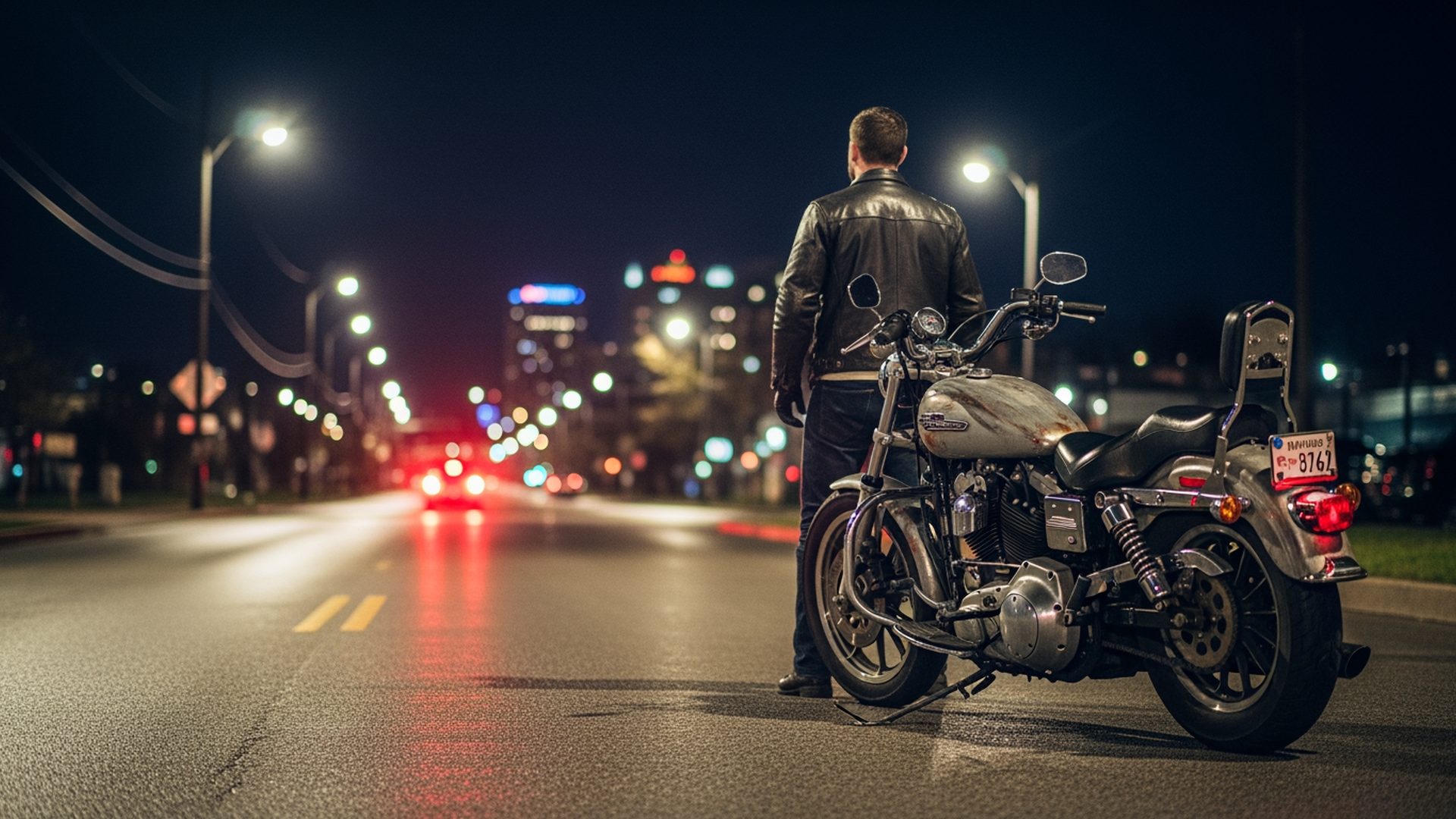
Motorcycle Hit-and-Run in Louisville: What to Do and How UM Coverage Helps
One second you are rolling with traffic through Spaghetti Junction. The next, a car drifts into you, you are down on the pavement, and by the time you look up the driver is gone. No plate, no name, no insurance card. Just you, your bike, and a wave of anger.
First, Protect Yourself at the Scene
Before anything else, your health comes first. A fleeing driver is not worth a second injury. If you can move safely, get yourself and your bike out of live lanes. On roads like I-65 or the Watterson Expressway, a downed rider in traffic is in serious danger from the next car. But do not push through a spinal or leg injury to move a heavy bike. Let the machine sit and wait for help. Call 911 to report the crash and that the driver fled, and ask for both police and an ambulance if anyone is hurt. Grab anything you can about the car, including make, model, color, partial plate, the direction it fled, and any visible damage, because even fragments help investigators.
In a hit-and-run, witnesses are gold. Other drivers, pedestrians, or shop workers may have caught the plate or the direction of flight, so get names and phone numbers before they leave. The Louisville area is covered in cameras, from business security systems to doorbell and Ring cameras, gas station cameras, and dashcams, so note every camera facing the scene before the footage is overwritten. Photograph your injuries, the bike, skid marks, debris, the intersection, and traffic signals. If you were knocked out or too injured to gather any of this, do not beat yourself up, because a lawyer and the police can reconstruct a lot after the fact.
Why the Crash Report Is Non-Negotiable
After a hit-and-run, the police crash report is not just paperwork. It is the backbone of your claim. Your own insurance company will pay a hit-and-run claim through uninsured motorist coverage, but only if it believes the fleeing driver was real and at fault. A prompt crash report, filed the same day when possible, is the single strongest piece of that proof. It documents that you reported the crash immediately, that a driver fled, and that you were not the one who caused it. Skip the report or file it days later, and the adjuster gets room to argue you invented the other driver to dodge your own fault. Do not hand them that opening. Report it, get the case number, and request a copy.
Kentucky riders start this fight with a coverage gap that car occupants never face. Kentucky is a choice no-fault state, and drivers carry Basic Reparation Benefits, or BRB, of around ten thousand dollars for their own first medical bills. Motorcycles are excluded from that no-fault system. So when a car driver gets hit and run, BRB at least covers a first layer of their medical bills, no matter that the other driver is gone. A rider gets none of that unless those benefits were separately purchased for the bike. With no automatic benefits and no at-fault driver to bill, your own uninsured motorist coverage is not just helpful. For many riders it is the only real source of recovery.
How UM Coverage Pays When the Driver Flees
Here is the part that surprises most riders. A hit-and-run driver is treated as an uninsured motorist, even if that driver is never identified. Your own Uninsured Motorist coverage, written as UM, is built to step into the shoes of the driver who ran. A lot of riders carry only liability coverage and never realize UM was left off their policy until a fleeing driver puts them in the hospital. If you carry solid UM limits, this is exactly the moment it earns its keep. If you are not sure what you have, check today, because a serious injury blows past a thin policy fast. The driver who fled will not be paying your hospital bill, but your UM coverage can.
- ✓ Medical bills. Including everything Kentucky no-fault would never cover for a rider.
- ✓ Lost wages. Income you lose while you are off the bike and off work.
- ✓ Pain and suffering. Non-economic harm from a crash you did not cause.
- ✓ Motorcycle damage. Repair or replacement of your bike, depending on your policy.
Two Clocks Are Running: Do Not Let Them Beat You
A hit-and-run claim lives and dies on timing, and there are two separate deadlines. Your insurer's notice deadline comes first. UM coverage carries a duty to notify your company promptly, and hit-and-run claims often carry tighter reporting rules than a standard crash. Report it to your own carrier right away, even before you know how badly you are hurt. Then there is the state filing deadline. In Kentucky, the window to bring most motor-vehicle injury claims is generally two years from the date of the crash, and your own policy may set even shorter deadlines or arbitration rules for a UM claim. Two years sounds like plenty until months vanish into surgeries and physical therapy. Kentucky also follows a pure comparative negligence rule, so expect your own insurer to try to pin fault on the rider to shrink what it pays. Building your record early is how you fight that.

Karl Truman and the Louisville motorcycle injury attorneys at Karl Truman Law represent riders hurt by negligent drivers. If you have questions after a crash, their team is here to help.