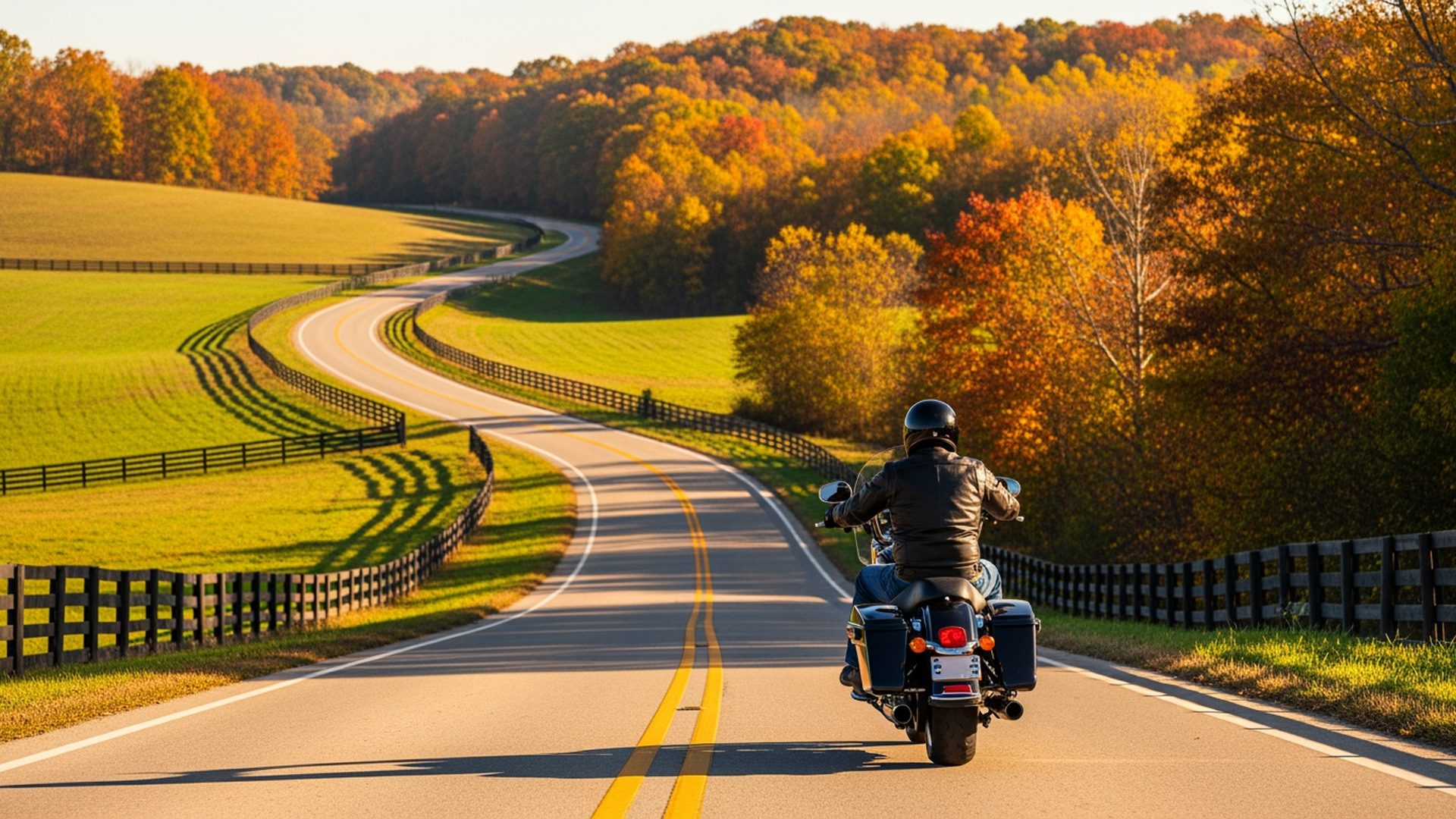
Fall Motorcycle Riding in Kentucky: Bourbon-Country Hazards Around Louisville
Ask most Louisville riders and they will tell you fall is the best season on two wheels. The humidity breaks, the traffic thins, and the run out through bourbon country toward Bardstown turns gold and red. It is also one of the easiest seasons to get hurt without seeing it coming, because the same crisp mornings and colorful backroads hide traction traps that simply are not there in July.
Wet Leaves Are Grease
A single dry leaf is nothing. A wet, matted layer of leaves packed onto the pavement is close to riding on ice. Leaves hide the road surface, they cover painted lines and potholes, and they tear away grip the moment you lean or brake on top of them. They pile up worst in exactly the spots where you least want to lose traction: the shaded curves in Cherokee Park, the tree-lined side streets in the Highlands, the two-lane bourbon-country backroads out toward Bardstown, and the off-ramps where leaves collect against the curb. On a damp fall morning, treat any patch of leaves the way you would treat an oil slick. Roll off the throttle, keep the bike upright, and do your braking and leaning on clean pavement.
Frost and Cold Bridges at Dawn
By mid to late fall, Louisville mornings dip toward freezing while afternoons stay warm. That overnight cold leaves frost and thin black ice on the road at dawn, and some surfaces freeze long before others. Black ice is invisible, so if the thermometer reads in the low 30s and the pavement looks a little too shiny, ride like it is ice, because it might be.
- ✓ The Ohio River bridges freeze first. The Kennedy and Lincoln bridges and the other crossings get cold air from above and below, so they ice over before the road on either end does, along with the stacked ramps at Spaghetti Junction where I-64, I-65, and I-71 meet.
- ✓ Overpasses on the Watterson and the Snyder chill faster. A ramp on I-264 or I-265 can be slick while the road you just left was bone dry.
- ✓ Shaded stretches and low spots hold frost longest. Anywhere that never catches the morning sun stays frozen after the open road has thawed.
Low Sun and Shorter Days
Fall does not just change the road surface. It changes the light. As the days get shorter, the evening commute slides into dusk and darkness, you are harder to see, and a driver who "just didn't see the motorcycle" has even more cover for that excuse. Running your headlight and wearing reflective gear stop being optional. Then there is the glare. In fall the sun sits low on the horizon right at the times most people are driving, blasting straight down east-west routes like Broadway and Shelbyville Road during the morning and evening rush. A driver squinting into a wall of light may never register the single headlight of a motorcycle until it is too late. Assume that at sunrise and sunset, half the drivers around you are half blind, and give yourself extra space and extra escape routes.
Deer and Cold Tires on the Backroads
A couple of fall hazards catch riders off guard because they are not thinking about them. Fall is deer mating and migration season, and activity spikes at dawn and dusk, exactly when you are commuting in low light on the wooded two-lanes through bourbon country, along the river, and near the parks. Where you see one, expect more. Cold rubber is the other trap. Tires need heat to grip, so on a 40-degree morning they are stiff and offer far less traction for the first several miles. Take those miles easy, with no hard braking and no aggressive lean, until the tires come up to temperature. Cold air also drops your tire pressure, so check it more often as the season cools.
When a Fall Crash Still Happens
You can do everything right and still go down when a driver, a deer, or a hidden patch of ice makes the decision for you. Protect yourself and get medical care first, because hidden injuries have a way of surfacing days later, then document the conditions while they are fresh. Here is the part riders get wrong about fault. A crash in bad fall conditions does not automatically mean it was your fault. Kentucky follows pure comparative negligence, which means your recovery is reduced by your share of fault but is never erased, even if a good chunk of the blame lands on you. If another driver turned into you or a road was left in a dangerous state, "it was slippery out" does not hand that driver a free pass. And because motorcycles are excluded from Kentucky's no-fault Basic Reparation Benefits, your own uninsured and underinsured motorist coverage is the backstop that matters most when the other driver is broke or gone.

Led by Karl Truman, Karl Truman Law in Louisville fights for injured motorcyclists. Reach out to their motorcycle accident lawyers in Louisville anytime you need real answers.