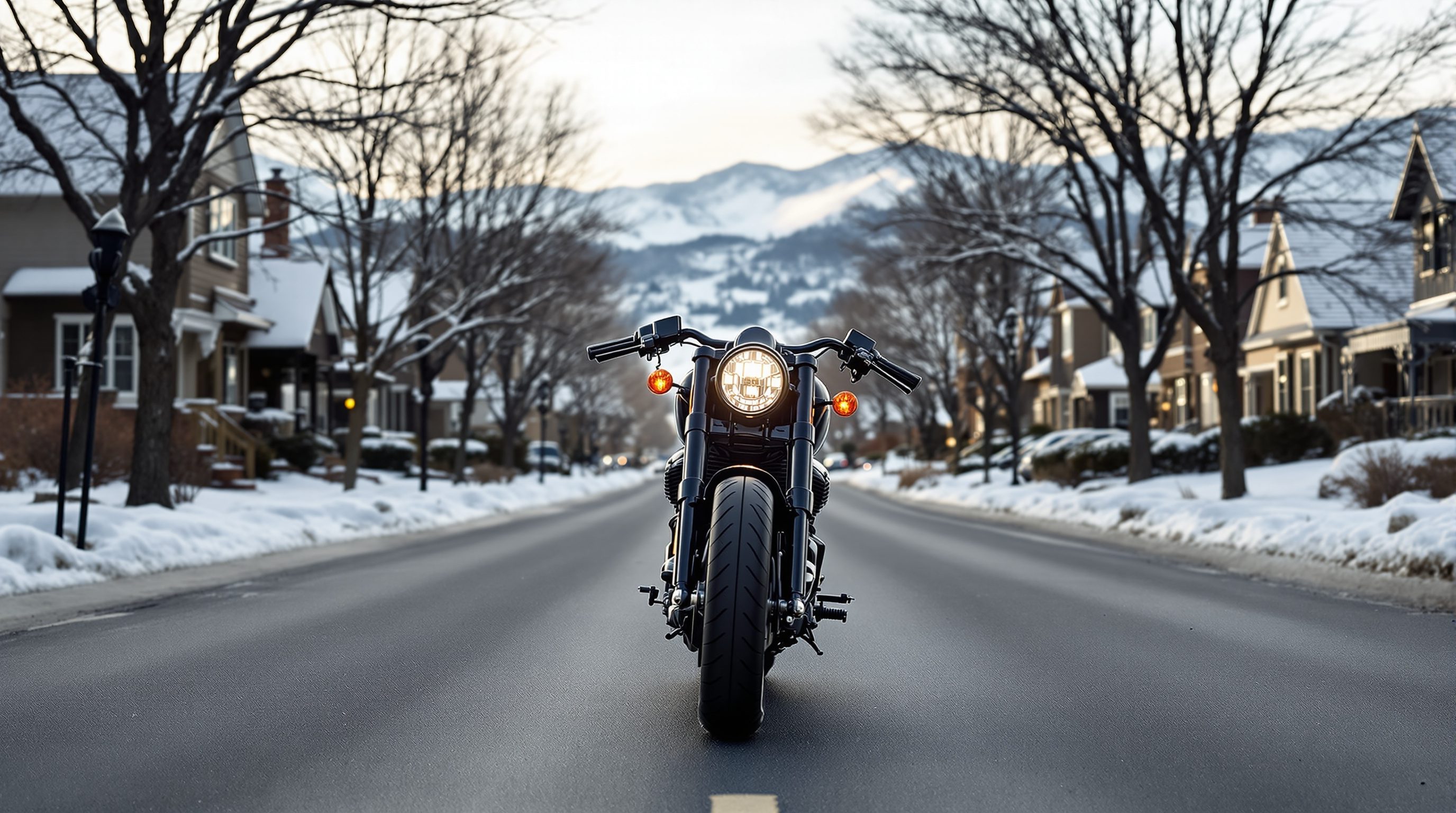
Winter Storage and Your Motorcycle Insurance in Colorado: Should You Drop Coverage?
Somewhere between the first hard freeze and the day the plows come out, most Denver riders make the same call. The bike goes in the garage, the battery goes on a tender, and the riding gear moves to the back of the closet until the Front Range dries out in spring. Then the insurance bill shows up, and you start wondering why you are paying full freight on a motorcycle that has not moved since October.
What actually threatens a parked bike
A motorcycle in storage is not exposed to the thing most of your premium pays for, which is you out on I-25 or up in the high country mixing with traffic. Liability, and the medical and uninsured-motorist pieces tied to riding, only matter when the wheels are turning, so that is the part people look at first when they want to trim the bill. The catch is that a parked bike faces a different set of risks, and those do not go away in winter. Theft does not care that it is January, and a garaged bike is a known target. Fire, a burst pipe, a collapsed shelf, a tree limb through the roof, and the thing Colorado is famous for, hail, can all wreck a motorcycle that never leaves the garage. The Front Range sits in what insurers call Hail Alley, and Colorado routinely lands among the top states in the country for hail damage claims. The coverage that answers those risks is comprehensive, and it is usually the cheapest line on your policy, so that is the piece you almost never want to drop.
Keep this, cut that
The smart winter move is not to cancel your policy, it is to reshape it. Think about what the bike can and cannot do while it is parked, and match your coverage to that.
- ✓ Keep comprehensive coverage. This is what pays for theft, fire, vandalism, falling objects, and hail while the bike sits, and it is the cheapest coverage on the policy.
- ✓ Suspend or reduce collision and liability carefully. If the bike truly is not being ridden, some insurers let you pause the road coverages for the season, but ask exactly how they handle it and get it in writing.
- ✓ Do not cancel the whole policy. A full cancellation is what creates a lapse, and a lapse is what hurts you in spring.
- ✓ Watch your UM/UIM. Uninsured and underinsured motorist coverage is a Colorado rider's real backstop, so dropping it entirely can open a gap you never meant to open.
- ✓ Check your lienholder rules first. If you financed the bike, the lender almost certainly requires comprehensive and collision the entire time you owe money, parked or not.
The lapse trap that raises your spring rate
Here is the part that surprises people. Insurers do not just price your bike, they price you, and one of the things they price is continuous coverage. When you cancel a motorcycle policy outright for the winter and then start a fresh one in April, you have created a coverage lapse on your record, and to an underwriter a lapse reads as risk. It can bump your spring premium higher than anything you saved by canceling. That is why suspending or reducing coverage inside an active policy is almost always better than canceling it. You stay a continuously insured rider, you keep the cheap comprehensive protection working through hail season, and you avoid the paperwork gap that quietly costs you in April. A short call to your carrier before you park the bike is worth more than the guesswork.
Why the road coverage still matters in spring
Colorado is an at-fault state. It repealed no-fault insurance back in 2003, and there is no PIP here, so when a crash happens on a Colorado road an injured rider leans on health insurance, optional MedPay, the at-fault driver's liability coverage, and their own UM/UIM. The state minimum liability limit a driver can carry is only 25/50/15, which can fall far short of what a serious motorcycle injury actually costs, and that is the whole reason your UM and UIM coverage matters. You want it fully back in place before your first spring ride, not after. Colorado also uses a modified comparative negligence rule with a 50 percent bar, so if you are found 50 percent or more at fault you recover nothing. The coverage you carry decides what is even available to recover, so do not let a winter cost-cutting move leave you thin on the exact protection that carries you when a driver pulls out in April.
Scott O'Sullivan and the Denver motorcycle injury attorneys at Rider Justice represent riders hurt by negligent drivers. If you have questions after a crash, their team is here to help.