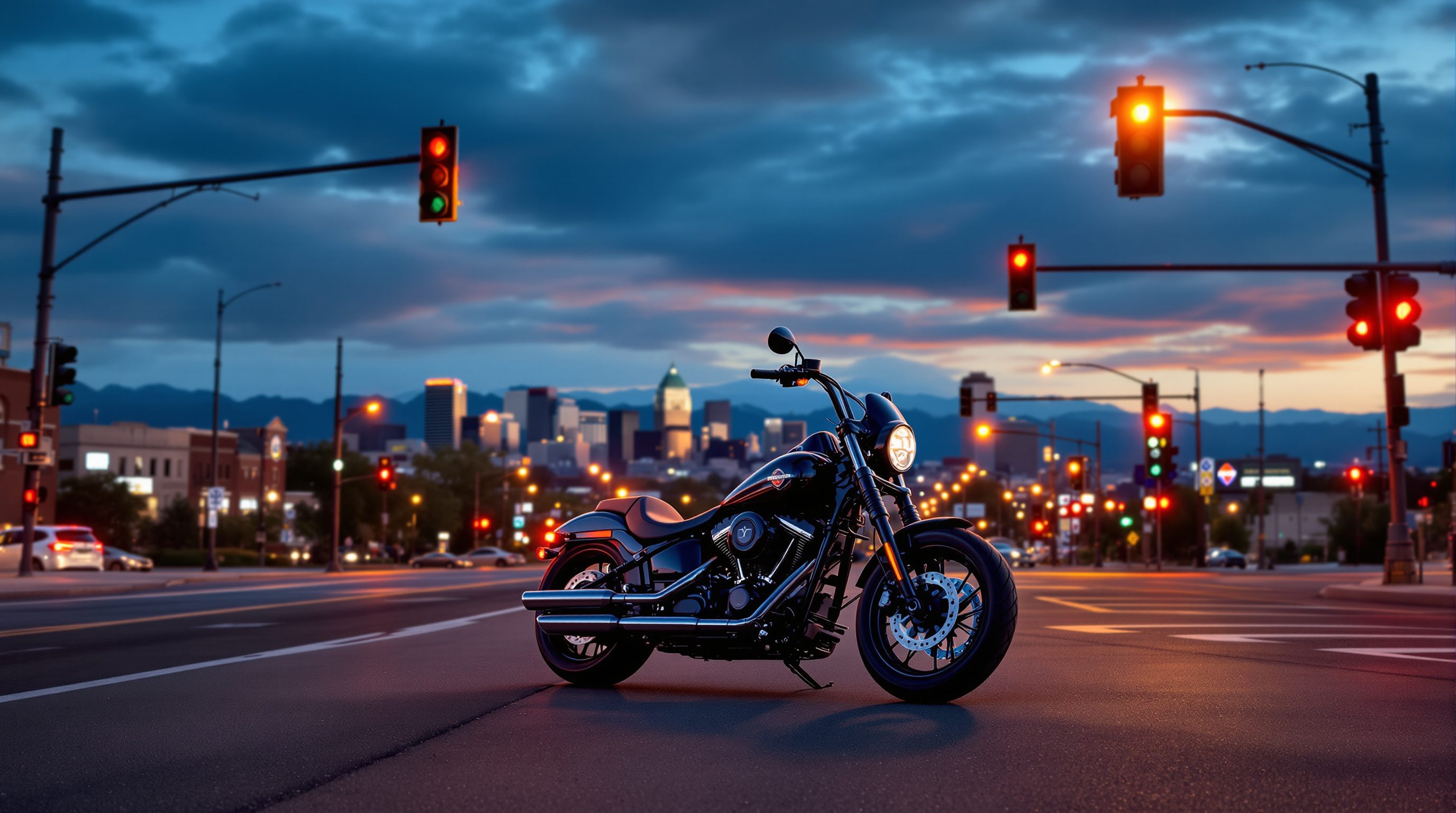
Left-Turn and Intersection Crashes in Denver: Proving the Other Driver's Fault
It is the crash almost every rider fears, and for good reason. You are moving straight through a Denver intersection with the light in your favor. A car in the oncoming lane turns left across your path. There is no time and nowhere to go. The maddening part comes after, when the driver climbs out and says the four words that follow riders everywhere: I never saw him. In Colorado, where a 50 percent fault bar can wipe out your entire claim, that sentence is the opening move in the insurer's effort to pin part of the blame on you.
Why Left Turns Are So Deadly for Riders
A car turning left has to yield to oncoming traffic. When the oncoming traffic is a motorcycle, drivers fail to yield constantly, and the reasons are predictable. A bike is narrow, so it hides in a windshield's blind spots and behind A-pillars. Drivers scan for the size and shape of another car and their brains skip right over a single headlight. They misjudge how fast a motorcycle is closing, because a narrow object gives fewer speed cues than a wide one. The result is a driver who turns left into a gap that a rider is already filling. Busy Denver corridors and Front Range intersections stack the odds further, with heavy turning traffic, protected and unprotected left-turn phases, and sun glare running east and west along the grid. None of that changes the basic rule. The turning driver owed you the right of way, and failing to yield it is negligence.
What I Never Saw Him Actually Means
Here is the part drivers do not realize they are admitting. Failure to see a motorcycle that was there to be seen is not a defense. It is the negligence. A driver has a legal duty to look for and yield to oncoming traffic before turning left, and motorcycles are traffic. Saying I never saw him is close to saying I did not look carefully enough, and that is exactly what makes the turning driver at fault. The insurance company knows this, so it pivots. Instead of defending the turn, the adjuster goes hunting for a reason the rider is partly to blame. Were you speeding? Did you have a headlight on? Could you have braked sooner? In Colorado, that hunt has teeth.
How the 50 Percent Bar Turns Small Blame Into No Recovery
Colorado uses modified comparative negligence with a 50 percent bar. Your damages are reduced by your percentage of fault, and if you are found 50 percent or more at fault, you recover nothing at all. That rule is why shifting even a little fault onto the rider is the insurer's favorite move in a left-turn case. The turning driver is plainly mostly at fault, but if the adjuster can argue you were going a bit fast and push your share from, say, 10 percent up toward the bar, every point comes straight out of your recovery, and the last few points can erase the case entirely. So even in a crash where a driver turned left across your lane, the fight is rarely about whether the driver was negligent. It is about how much blame the insurer can peel off and stick to you. Winning means keeping your share low and the driver's share where it belongs.
Proving Fault Before the Evidence Disappears
Intersection cases are won with evidence, and the best evidence is fragile. Cameras get overwritten, witnesses leave, and skid marks wash away in the next Front Range storm. The sooner the scene is documented, the stronger your fault case, and the harder it is for an adjuster to invent a story about your speed. Every piece below does double duty: it proves the driver failed to yield, and it shuts down the insurer's attempt to invent rider fault under the 50 percent bar.
- ✓ Camera footage. Denver intersections, nearby businesses, buses, doorbells, and other riders' helmet or bike cameras can capture the turn, and this footage is often deleted within days.
- ✓ Independent witnesses. Other drivers and pedestrians who saw the car turn across your path are powerful, precisely because they have no stake in the outcome.
- ✓ The police report and any failure-to-yield citation. An officer's findings and a ticket issued to the turning driver carry real weight with an insurer.
- ✓ Physical evidence and vehicle damage. Point of impact, resting positions, and damage patterns can reconstruct who was where, and reveal how fast each vehicle truly was going.
Do Not Argue Fault With the Adjuster Alone
After a left-turn crash the other driver's insurer may call fast, sound friendly, and ask you to explain what happened. That conversation is not neutral. Anything you say about your speed, your reaction, or your line can be turned into a fault percentage later. You are not required to give a recorded statement to the other driver's company, and it is usually wise not to before you understand the evidence. Colorado gives you three years to file a motor-vehicle injury claim, so there is time to build the fault case correctly rather than talk yourself into the insurer's version of it.
Scott O'Sullivan and the motorcycle accident lawyers in Denver at Rider Justice represent riders hurt by negligent drivers. If you have questions after a crash, their team is here to help.