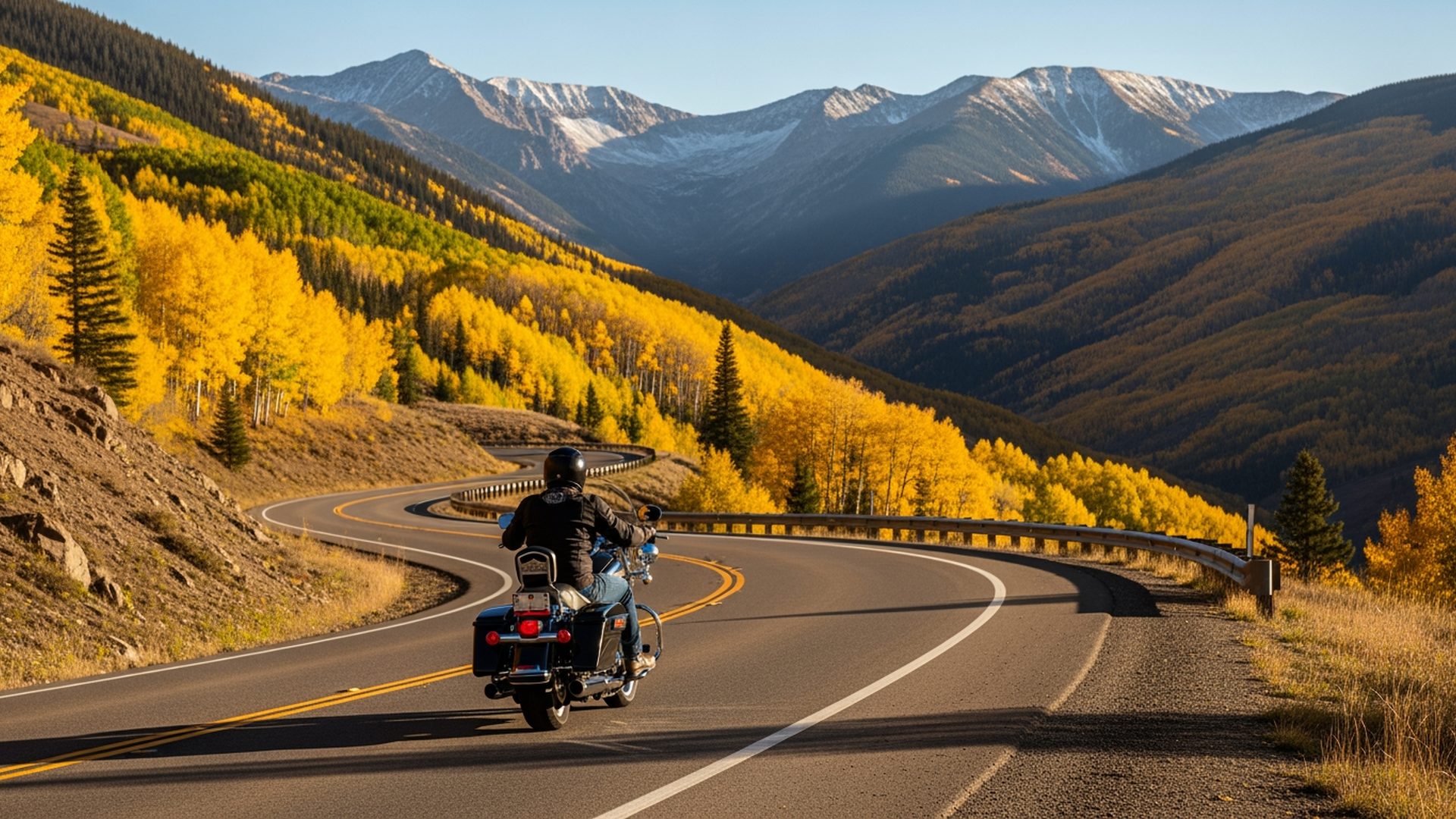
Fall Motorcycle Riding in the Colorado High Country: The Hazards Around Denver
Fall is when the Colorado high country pays Denver riders back. The heat lets go, the aspens turn the canyons gold, and the roads out past Lookout Mountain and up the Peak to Peak Highway stop baking in the afternoon sun. Late September through October is the stretch Front Range riders circle on the calendar, and it also hides a specific set of hazards, most of them the kind you notice a half second too late.
Shorter days put you in the worst light
The biggest change in the fall is not the temperature, it is the clock. Sunset creeps earlier every week, which pushes more of your riding into the low, flat light of late afternoon and dusk. On east-west roads across the Front Range, that sun sits right at eye level and turns a clean windshield into a sheet of glare. A driver pulling onto a road off the Lariat Loop, or turning across your lane on a canyon two-lane, may be staring straight into it when you are the thing they are supposed to see. Dusk is also when your headlight starts to matter but does not yet dominate, so you are lit but not lit enough to stand out against a bright western sky. Plan your loops up Golden Gate Canyon or the Peak to Peak so you are not threading the worst glare window, and assume the driver facing the sun has not seen you at all.
Cold shade, morning frost, and slick canyon corners
The canyon roads riders love are cut into shaded rock walls, and those same walls hold cold long after the open pavement has warmed. A corner in Deer Creek Canyon, on the run up Guanella Pass, or on a north-facing bend of the Lariat Loop can stay damp or frosted well past sunrise. At altitude a patch of morning ice does not give you a warning, it gives you a front end that suddenly stops telling you what it is doing. The move is to read the road surface the way you read traffic, slow your entry, get your braking done before the corner, and roll through on a steady throttle rather than chopping it mid-curve.
- ✓ Shaded corners that never see direct sun. The first hours after sunrise on north-facing canyon walls stay cold and slick long after town has thawed.
- ✓ Morning frost and black ice at elevation. The air stays below freezing on the high passes long after the parking lot you left felt warm.
- ✓ Gravel and rockfall on the pavement. Fall rain or the first snow washes debris onto the canyon roads and the high passes.
- ✓ Sand, cinders, and matted leaves. Early-season storm cleanup and fallen aspen leaves collect right in the apex of the shaded bends.
- ✓ Elk and mule deer on the move. The fall rut puts big animals on the road at dawn and dusk, and they travel in groups, so the second and third are right behind the first.
Altitude, fast weather, and leaf-peeper traffic
The high country does not ease you into fall. A ride that starts in the fifties in Golden can drop into the thirties by the time you top out on Guanella Pass or climb toward Mount Blue Sky. Cold tires take longer to reach the temperature where they grip their best, so the first few miles are not the time to lean hard, and cold hands get clumsy on the levers. Colorado weather turns fast too, and a clear morning can hand you a snow squall above treeline by early afternoon. Dress for the top of the climb, not the parking lot, because a cold, cramped rider is a distracted rider, and distraction is what fills the gap between a close call and a crash. The same fall weather that gets you out of the garage also fills the scenic two-lanes with cars, so ride assuming the driver ahead may slow to gawk at the color, stop short for a pullout, or drift across the center line in a blind canyon curve.
When another driver puts you down
You can do everything right and still get hit. When a driver crosses the center line, turns left across your path, or rear-ends you at a light on a fall ride, Colorado law gives you a path to recover, but it has moving parts worth knowing before you need them. Colorado uses a modified comparative negligence rule with a 50 percent bar. If you are found 50 percent or more at fault for the crash, you recover nothing, and if you are partly at fault but under that line, your recovery is reduced by your share. Insurance companies know this rule cold, and after a motorcycle crash they often lean on the tired assumption that the rider must have been speeding or riding recklessly. That is why the details of how a fall crash happened, the glare, the frost, the elk, the driver who never looked, matter so much. Keep in mind that Colorado requires only minimum liability coverage of 25/50/15, which can fall far short of what a serious injury costs, that uninsured and underinsured motorist coverage is a rider's real backstop, and that the deadline to file a Colorado motor-vehicle injury claim is generally three years from the date of the crash.
Led by Scott O'Sullivan, Rider Justice in Denver fights for injured motorcyclists. Reach out to their motorcycle accident lawyers in Denver anytime you need real answers.