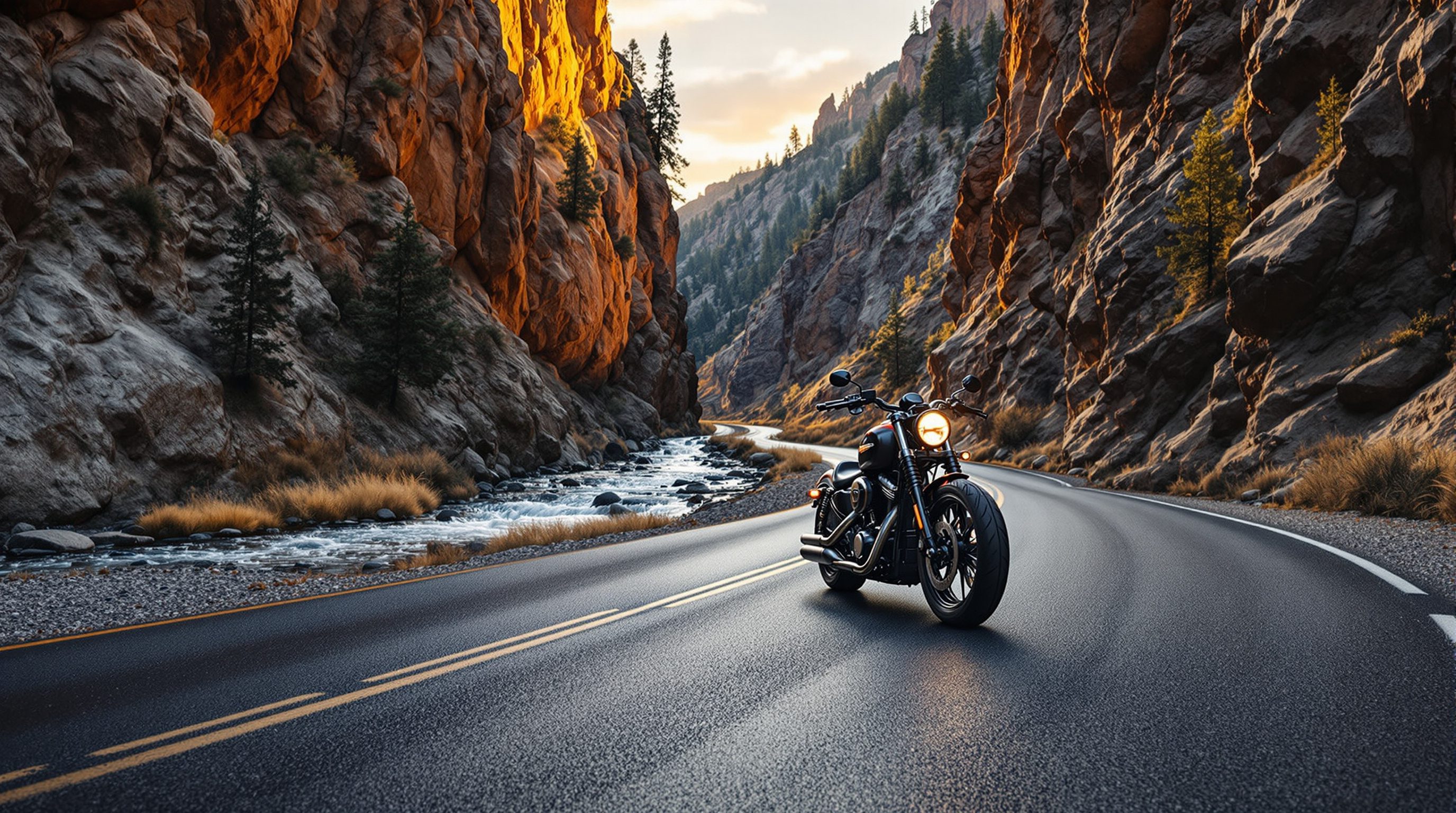
Chip Seal, Gravel, and Rockfall: Surviving Colorado's Canyon Roads on a Motorcycle
Every Front Range rider has the same moment burned into memory. You lean into a familiar corner on the Lariat Loop or a canyon two-lane, the pavement ahead looks fine, and then the front tire hits a patch of loose gravel or a fresh layer of chip seal and the bike goes light and squirmy right at the worst possible instant. If you have ridden Colorado's canyons long enough, you have felt it. If you are new to them, you need to know it is coming.
What chip seal actually does to a motorcycle
Chip seal is how counties and the state resurface a lot of Colorado's rural and canyon roads on a budget. They lay down a coat of oil and then spread loose stone chips over it, and traffic is supposed to press the chips into the binder over the following days and weeks. For a car it is a non-event. For a motorcycle, a fresh chip seal job is a corner full of ball bearings, because the loose stone sits on top of the oil until it beds in, and until it does your contact patch is riding on marbles. The trouble is that fresh chip seal often shows up with little more than a small sign and a low speed advisory that no one enforces, and it can stretch for miles on exactly the twisty roads riders seek out. The surface looks solid and dark, so the danger is invisible until you are leaned over and the tire starts to skate.
Gravel, winter sand, and rockfall on the canyon roads
Chip seal is not the only low-traction trap. Colorado's canyon and mountain roads collect loose material all year, and cold-season riding adds its own layer.
- ✓ Winter traction sand and cinders. The sand crews spread on the passes and canyons does not vanish when the snow melts, it piles up in the corners and sits loose well into spring, right in the apex.
- ✓ Fresh and loose gravel. Driveways, pullouts, and unpaved side roads feed a steady trickle of gravel onto the pavement, and it washes into the corners after rain.
- ✓ Rockfall and debris. Canyon walls shed rock, and the Lariat Loop, Deer Creek Canyon, and the switchbacks routinely have stones and slide debris on the road, sometimes around a blind corner.
- ✓ Runoff washing grit across the lane. Snowmelt and afternoon storms carry sand and gravel across the road in bands that are easy to miss.
- ✓ Edge break and shoulder drop-off. Where the pavement crumbles at the canyon edge, the transition to loose dirt is abrupt, and it will grab a tire that drifts wide.
Technique for low-traction surfaces
You cannot make a marble-covered corner grip, but you can ride in a way that keeps the bike settled and buys you room. The whole game is being smooth and getting your speed off before the surface can hurt you. Get your braking done early and in a straight line, because trail-braking into a loose corner is how the front tucks, so slow while the bike is still upright. Stand the bike up over the worst of it, since a more upright motorcycle has more grip in reserve than one leaned hard over, and straighten your line across a gravel patch where you can instead of leaning through it. Stay smooth on the throttle and easy on the bars, because abrupt inputs are what break traction. Look through the corner and toward your exit rather than fixating on the gravel, and slow down for blind canyon corners so you can stop for rockfall or debris you cannot see until you round the bend.
When a dangerous road condition, not your riding, put you down
Most low-traction crashes are just the road being the road, and riders are expected to adjust. But sometimes a crash is the result of a genuinely dangerous condition that a government entity created or failed to fix, such as fresh chip seal laid without adequate warning, a known rockfall hazard left unaddressed, or debris that should have been cleared, and in those cases Colorado law may allow a claim against the city, county, or state responsible for the road. Here is the part that catches people. A claim against a government entity is not like a claim against another driver. The Colorado Governmental Immunity Act limits when you can sue a public entity and imposes a hard, short notice deadline, so you generally must file a formal written notice of your claim within about 182 days of the injury, and missing that window can bar your claim entirely no matter how strong it is. That is roughly six months, far shorter than the deadline for an ordinary crash. For comparison, the statute of limitations for a normal Colorado motor-vehicle injury claim, the kind where another driver hit you, is generally three years, so a road-defect claim against a government does not give you anywhere near that long to act.
The comparative fault fight
Whether your crash involved another driver or a road condition, expect the other side to argue that you, the rider, were the real problem. Colorado uses a modified comparative negligence rule with a 50 percent bar, so if you are found 50 percent or more at fault you recover nothing, and if you are partly at fault but under that line your recovery is reduced by your share. Insurers and government entities both reach for the same script after a canyon crash, that the rider was going too fast for a road every local knows is loose. Beating that argument comes down to the facts, the condition of the surface, the warnings that were or were not posted, and how the crash actually happened, which is why documenting the scene and getting advice quickly matters so much, especially with a government notice deadline ticking.

Scott O'Sullivan and the Denver motorcycle accident attorneys at Rider Justice represent riders hurt by negligent drivers. If you have questions after a crash, their team is here to help.