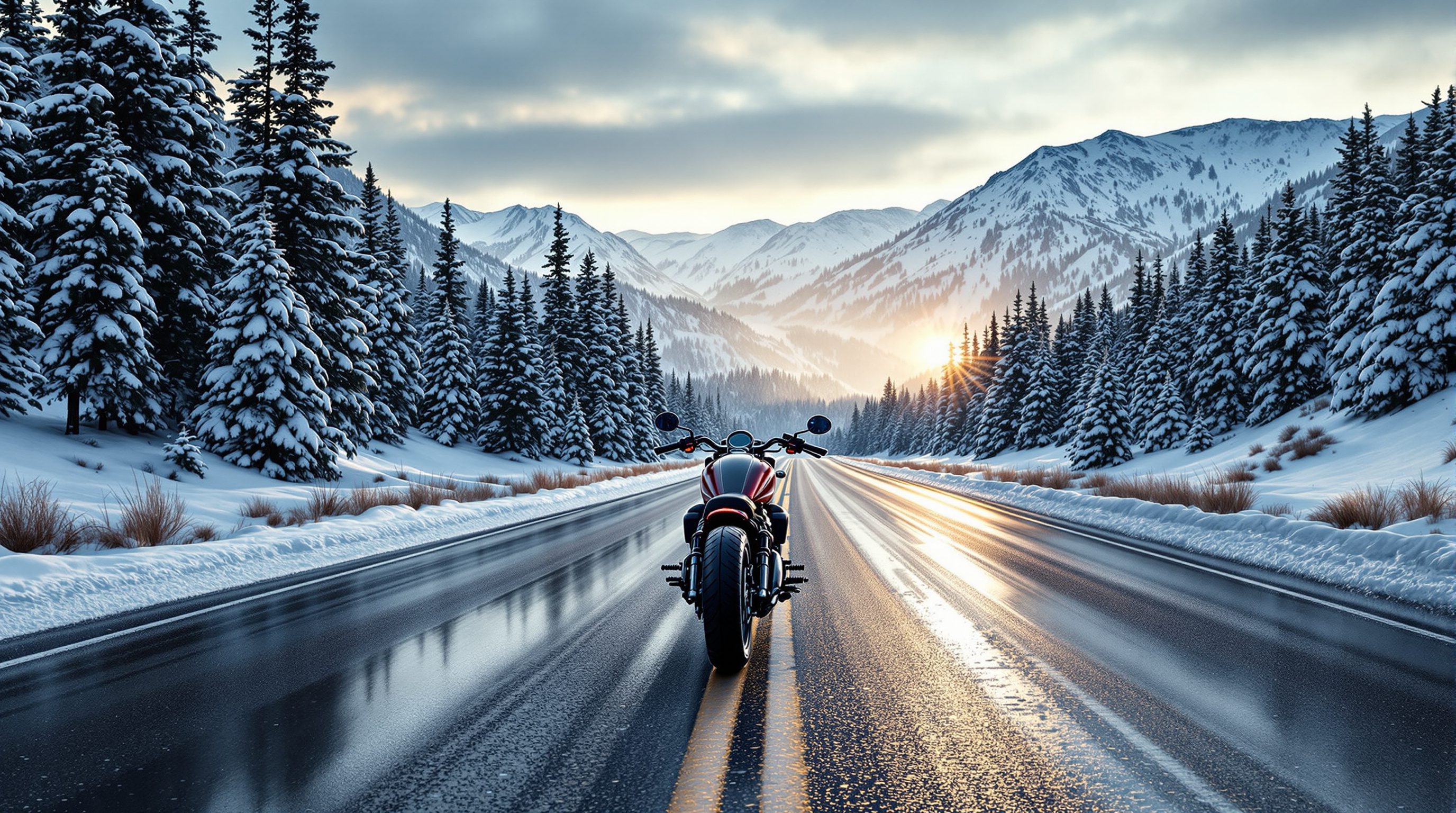
Black Ice and Mountain Passes: Cold-Season Riding Hazards in Colorado
The rider who gets caught by black ice is almost never the one who left the garage expecting it, and that is the whole problem. You roll out of Denver on a bright, dry cold-season morning, the pavement looks clean, and forty minutes and four thousand feet later you are on a shaded switchback where the sun has not touched the road since November. The surface looks exactly like the dry asphalt you have been riding all morning. It is not.
Why a warm Denver morning lies to you
Denver sits at about a mile up. The passes west of it climb to eleven thousand feet and beyond, and every thousand feet you gain pulls the temperature down. A morning that reads a comfortable forty-five degrees at your house can be well below freezing by the time you top a pass, and the road does not warn you when you cross that line. The danger is the swing. On the same ride you can pass through air warm enough to melt yesterday's snow and air cold enough to freeze the meltwater back into a sheet. Snowmelt runs across the road, hits a shaded stretch of colder pavement, and freezes into a film you cannot see. That is black ice. It is not black at all, it is clear, and it lets the dark road show through, which is exactly why riders do not spot it until the front end is already gone.
The places ice hides on the passes
Ice is not random. It collects in the same spots every cold season, and once you know the pattern you can read a road before you reach the bad part.
- ✓ Shaded switchbacks that never see sun. North-facing bends cut into the rock on I-70 and the canyon climbs stay frozen all day while the sunny straights next to them run dry.
- ✓ Bridges, overpasses, and shaded rock cuts. These lose heat from top and bottom and ice over first, well before the road on either side.
- ✓ Runoff crossings and seeps. Water trickling off a rock wall or across the lane refreezes into a slick band right where you least want it, often mid-corner.
- ✓ Early morning and late day on the high passes. Guanella Pass, Loveland Pass, and the climbs off I-70 hold ice long after the valleys thaw, and they refreeze fast once the sun drops.
- ✓ The first and last storms of the season. An early fall or late spring squall drops snow on a pass with no plow schedule to match, and it melts and refreezes for days.
Altitude does more than make it colder
The high country changes your machine and your body, not just the road. Cold tires take far longer to reach the temperature where they grip their best, and at altitude on a cold morning they may never fully get there on a short ride, so the rubber you are trusting is harder and less sticky than it is on a summer afternoon. Cold hands get clumsy on the levers exactly when you need fine control, and thin mountain air changes how your bike breathes and how quickly you tire. Add the weather, which turns fast in Colorado at any time of year. A clear pass can be socked in with a snow squall within the hour, and cold-season storms arrive with almost no notice above treeline. The rider who dresses for the Denver parking lot instead of the top of the climb ends up cold, cramped, and distracted, and distraction is what fills the gap between a close call and a crash.
When the hazard was another driver, not the ice
Not every cold-season crash is the road's fault. Plenty of them happen because a driver slid through a stop, misjudged the conditions, or crossed the center line on a slick pass and took a rider down. When that happens, Colorado law still gives you a path to recover, and the conditions do not automatically make it your fault. Colorado uses a modified comparative negligence rule with a 50 percent bar, so if you are found 50 percent or more at fault you recover nothing, and if you are partly at fault but under that line your recovery is reduced by your share. Insurers love to argue that a rider out in the cold season assumed the risk, or that the ice, not their driver, caused the wreck, which is why the facts of how the crash happened matter so much. Keep in mind that Colorado is an at-fault state with no PIP, that a driver may carry only the 25/50/15 minimum, that your own UM and UIM coverage is your real backstop when they are underinsured, and that the deadline to file a Colorado motor-vehicle injury claim is generally three years from the date of the crash.

Led by Scott O'Sullivan, Rider Justice in Denver fights for injured motorcyclists. Reach out to their motorcycle accident lawyers in Denver anytime you need real answers.