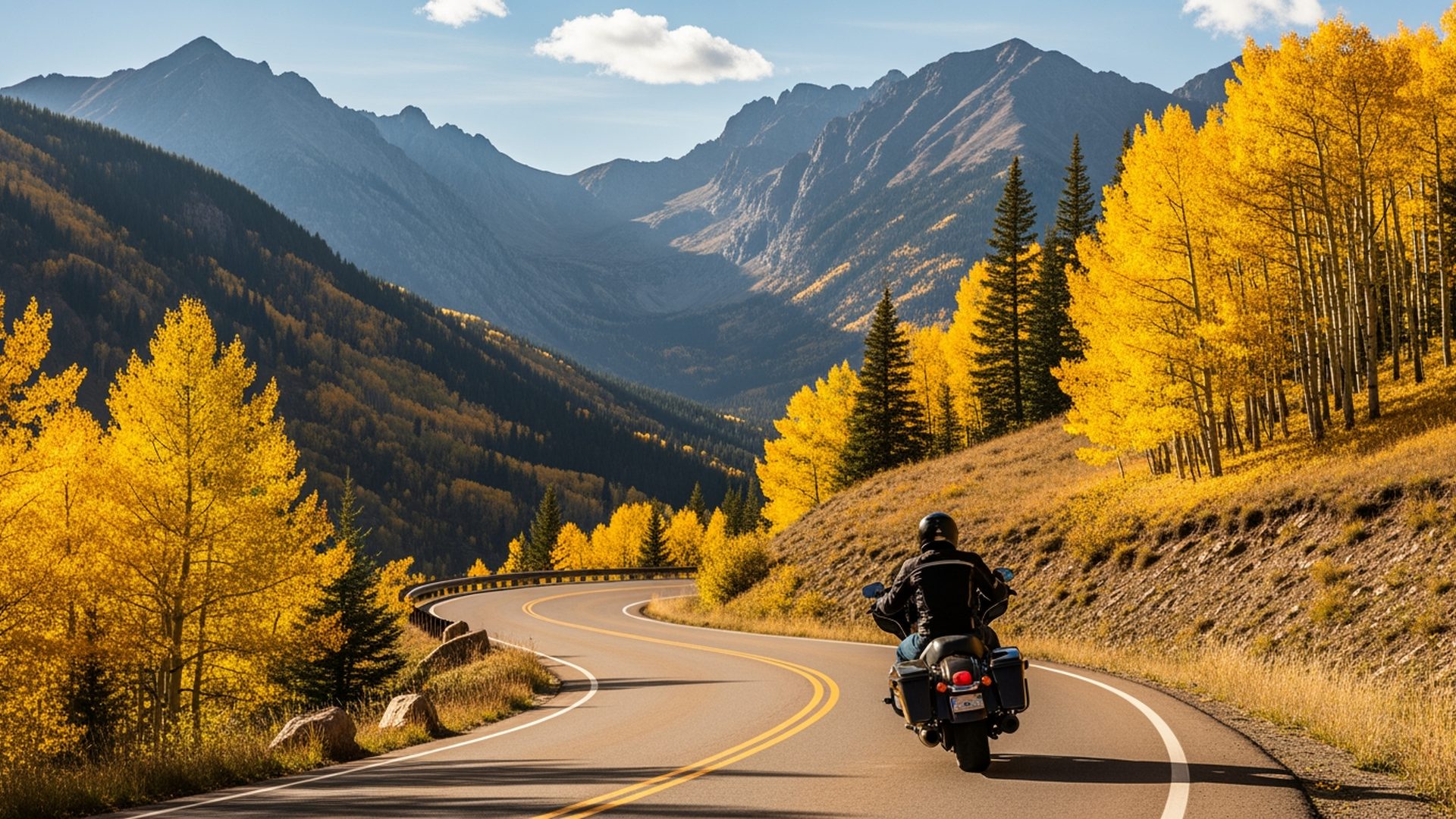
Best Motorcycle Rides Near Denver (Mountain Passes) and Their Hidden Risks
Denver is one of the best places in the country to own a motorcycle. Within an hour of downtown you can trade the flats of the Front Range for switchbacks, high passes, and scenery few riders ever forget. But the same mountains that make this a rider's paradise carry hazards the flatlands never taught you, and Colorado law adds a twist most riders never think about until they are already hurt.
Mount Blue Sky and the Climb to 14,000 Feet
The paved road up Mount Blue Sky, the peak formerly known as Mount Evans, is one of the highest in North America, and riding it is a bucket-list run for a reason. You climb past the tree line into thin, cold air with the whole Front Range falling away behind you. Nothing else near Denver feels quite like it. That altitude is also the risk. The higher you go, the less power your engine makes and the less grip you have on cold, sometimes damp pavement. Weather that was sunny in Idaho Springs can turn to hail or fog near the summit in minutes. There are no guardrails on long stretches, the drop-offs are real, and bighorn sheep wander onto the road without warning. Give yourself margin, dress for cold you cannot see from the parking lot, and never outride the switchback in front of you.
Lookout Mountain and the Lariat Loop
Closer to town, the ride up Lookout Mountain out of Golden and around the Lariat Loop is the classic Denver warm-up. Tight, well-paved curves, a quick climb, and a view back over the city make it a favorite for an after-work run or a Sunday morning before the crowds. Because it is so close and so popular, it is also crowded. You share those curves with cyclists, sightseers braking mid-corner, and drivers drifting over the center line while they take in the view instead of watching the road. Gravel washes onto the apexes after rain. Ride it smooth, expect the unexpected around every blind curve, and leave the racetrack pace for a track.
The Peak to Peak Highway
Running north from Black Hawk toward Estes Park, the Peak to Peak Highway is a long, rolling ride through pine forest and old mining country with the Continental Divide off your shoulder. It is the kind of route you plan a whole day around, and it rewards you the entire way. The distance and scenery are the trap. This is elk and deer country, and a collision with a full-grown elk at speed is catastrophic on a bike. Afternoon mountain storms build fast and turn the pavement slick and cold. Cell coverage drops out for long stretches, so a crash far from help stays far from help. Watch the tree lines at dawn and dusk, keep an eye on the sky, and do not push into a storm to make time.
I-70 into the High Country
For a lot of Denver riders the mountains start at the I-70 on-ramp, the fast artery up to Idaho Springs, Georgetown, Loveland Pass, and the ski towns beyond. It is the quickest way to reach the good stuff, and Loveland Pass in particular is a stunning ride over the Divide. The interstate itself is the hazard. I-70 up the canyon is heavy, fast, and packed with distracted tourists, semis fighting the grade, and drivers who brake hard the second the scenery opens up. Sudden weather at altitude can drop the temperature and soak the road in the space of a mile. Treat the climb as its own ride, not just the boring part before the fun, and stay out of the blind spots of trucks working the hills.
Deer Creek, Golden Gate, and Guanella Pass
When you want canyon carving without the interstate, the back roads deliver. Deer Creek Canyon and Golden Gate Canyon give you tight, technical pavement close to town, and Guanella Pass out of Georgetown climbs to a high alpine saddle that feels a world away from the city. These roads are narrow, shaded, and often littered with the things mountains shed: gravel, rockfall, sand left over from winter, and wet leaves in the shadows. Blind crests and one-lane-feeling curves hide oncoming cars and slow traffic. The reward is real, and so is the need to ride within sight distance and expect debris in every corner.
The Hidden Risks Every Denver Ride Shares
No matter which route you pick, Front Range mountain riding comes with a few constants worth planning around before you ever drop the kickstand.
- ✓ Altitude. Thinner air means less engine power, longer stopping distances, and weather that changes faster than you expect.
- ✓ Afternoon storms. Summer thunderstorms build over the peaks almost daily and can bring rain, hail, and slick pavement in minutes.
- ✓ Wildlife. Elk and deer move onto mountain roads at dawn and dusk, and a collision on a bike is often severe.
- ✓ Gravel and rockfall. Canyon roads collect loose gravel, sand, and fallen rock, especially in curves and shaded sections.
- ✓ Sudden cold. A climb of a few thousand feet can drop the temperature enough to stiffen your hands and steal your focus.
Why a Colorado Crash Hits Riders Differently
Here is the part most riders never see coming. Colorado repealed no-fault insurance back in 2003, so this is an at-fault state. If another driver causes your crash, their insurance is supposed to pay, but Colorado only requires drivers to carry minimum liability limits of 25/50/15. On a serious motorcycle injury, that can run dry fast, and plenty of drivers carry nothing more than the minimum or let their coverage lapse entirely. That makes your own uninsured and underinsured motorist coverage a Colorado rider's real backstop, often the difference between a covered injury and a financial disaster. It is worth checking your policy before your next ride, not after a crash. Colorado also follows modified comparative negligence with a 50 percent bar, which means if you are found 50 percent or more at fault you recover nothing, and insurers know it. The deadline to file a motor-vehicle injury claim is generally three years from the crash, longer than many states but not something to sit on.

Scott O'Sullivan and the motorcycle accident lawyers in Denver at Rider Justice represent riders hurt by negligent drivers. If you have questions after a crash, their team is here to help.