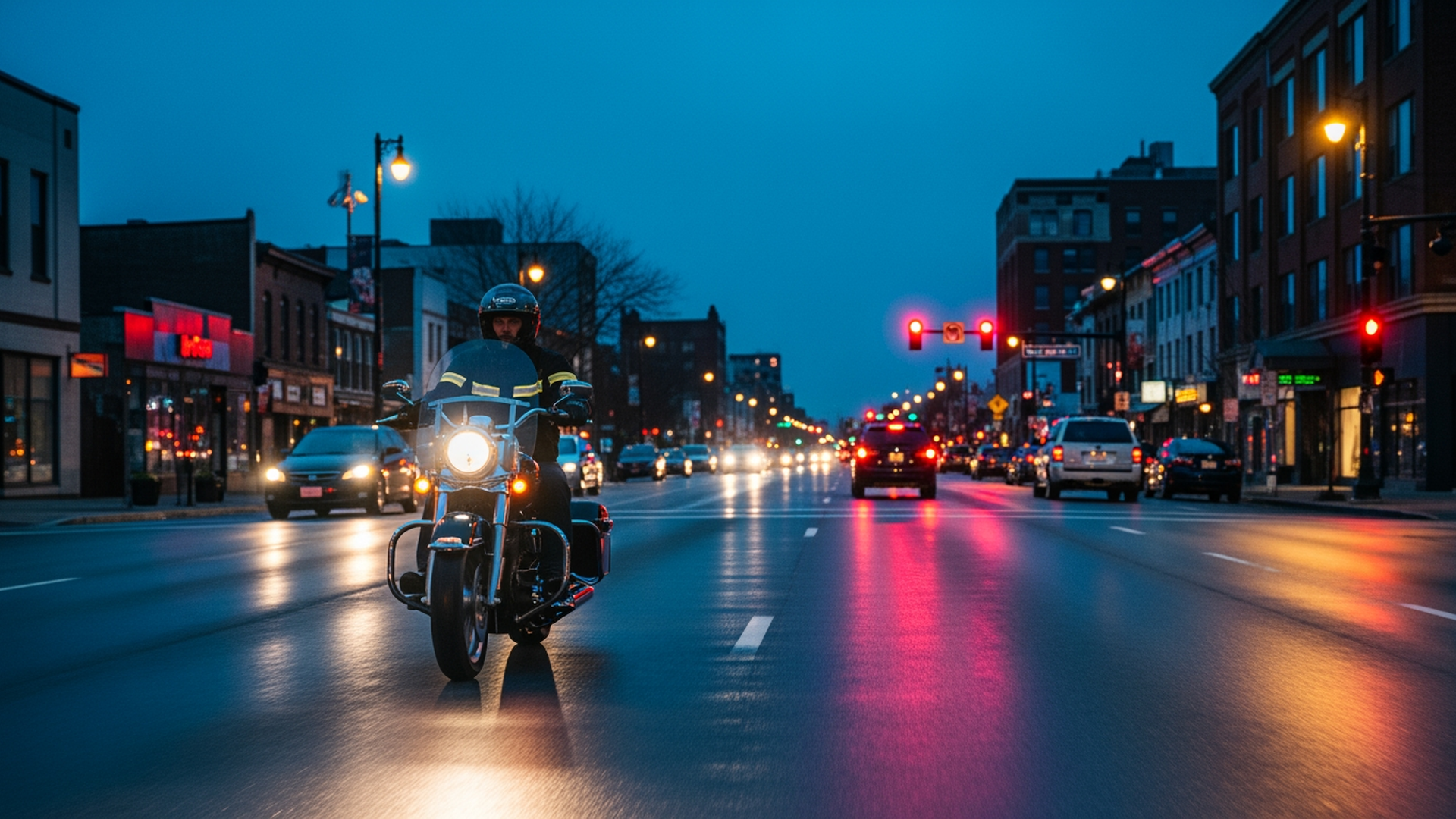
Night Riding in Buffalo: Being Seen When Drivers Are Not Looking for You
By November the ride home is a night ride whether you planned it or not. The clocks fall back, sunset lands in the late afternoon, and a big share of Western New York riding shifts into the dark. Night riding is not reckless by itself, but it strips away your single biggest advantage on the road, which is being seen. On a motorcycle, visibility is survival, and whether you are downtown competing with storefronts and signals or out on a pitch-black Southtowns two-lane, a single headlight is easy to lose. Here is how to stay lit and stay upright on the roads around Buffalo once the sun goes down.
Why the dark is harder on a motorcycle
A car at night reads as a wide, obvious pair of headlights and a set of taillights. A motorcycle reads as a single light, low to the ground, that a tired or distracted driver can mistake for something far away or miss entirely. Depth perception fails at night, and a driver judging the gap before a left turn across a Buffalo intersection can badly misjudge how close and how fast you are coming. In the city your one headlight competes with storefronts, signals, and oncoming traffic that swallows it. Out on the dark county roads the opposite problem bites, where your light is the only thing out there but a driver pulling out of a side road or a bar lot may not be looking for a motorcycle at all. Either way, the core problem behind most night crashes involving riders is the same. Not that you were invisible, but that a driver saw one small light and made the wrong call. The left-turn collision at an intersection is the single most common way a rider gets killed, and every lit intersection between you and home is a fresh chance for a driver to make that mistake. Everything below is about closing that gap.
Own your visibility, do not assume it
You cannot control whether a driver is paying attention, but you can control how hard you are to miss. The riders who make it home are usually the ones who stack the deck in their favor with gear and lighting, not the ones who trust drivers to look twice. Build your night setup around being seen.
- ✓ Reflective gear on the parts that move. Strips on your jacket, helmet, and around the ankles catch headlights and read as a human, not another light. Movement draws the eye. New York already requires a DOT helmet for every rider and passenger, so make that helmet work for you with reflective material.
- ✓ A clean, aimed headlight. A grimy or misaligned headlight throws away half its output. Wipe the lens and check the aim before a night run, and remember Buffalo road spray coats it fast.
- ✓ Auxiliary lights that widen your footprint. Two points of light read as a vehicle far better than one, and they help a driver judge your distance and speed against a busy or a black background.
- ✓ A working, bright brake light. The driver behind you in stop-and-go traffic on the 33 or a city arterial needs the clearest possible warning when you slow.
- ✓ A clean, clear face shield. Scratches and haze turn every oncoming headlight and streetlight into a starburst and cost you the detail you need to read the road.
None of this guarantees a driver sees you. It just makes it far more likely, and it puts you in a far stronger position if one still does not.
Ride the gaps and buy space at the light
Being seen is half of it. The other half is positioning yourself so that when a driver misses you, it does not matter.
- ✓ Buy space at every intersection. Cover your brakes and set up an escape path for the left-turning driver who never sees your light. Watch the front wheels of any car waiting to turn.
- ✓ Stay out of blind spots. On the expressways and the bridge approaches at night, if you cannot see a driver's mirrors, they cannot see you. Ride the open pockets in traffic.
- ✓ Do not outride your headlight. Match your speed to how far your beam actually reaches, so a pothole, a steel plate, or a frost heave does not appear with no time to react. On the dark roads out of the city, that gap is even shorter.
- ✓ Watch for deer on the dark Southtowns roads. After dark in the fall, the two-lanes south of the city and out toward the county are prime deer country. Scan the shoulders and the treeline, and slow down where the woods close in.
Weekend nights and the drunk-driver window
Not every hour after dark carries the same risk. Late on Friday and Saturday nights, the odds of sharing the road with an impaired driver climb sharply, and an impaired driver is exactly the one most likely to blow a light, drift a lane, or turn left across a headlight they never processed. Around the Chippewa strip and the downtown bars, the routes home from the stadium and the arena, and the roads leading out of the village bars in the Southtowns and ski country, treat the late-weekend hours as their own hazard. Ride like the car at the next light might not stop, keep more space than feels necessary, and if you can shift a late ride earlier or take a calmer route home, that is a real safety upgrade, not an overreaction.
What New York law means if a driver hits you at night
Do everything right and a driver can still turn across your path claiming they never saw you. When that happens, "I never saw the motorcycle" is not a defense, it is an admission that the driver failed to look for you. But New York treats riders differently than drivers, and that matters after a night crash. New York is a no-fault state, but its no-fault law specifically does not cover motorcyclists. A car occupant taps PIP for their own bills regardless of fault. A rider cannot, so recovering usually means proving the other driver caused the crash. Insurers love to argue the rider was hard to see or riding too fast for conditions, as if that shifts the blame off their driver and onto you. New York does use pure comparative negligence, so even a share of blame does not end your claim, but it can shrink it, which is exactly why the details matter so much.
- ✓ No-fault excludes motorcycles. New York's PIP system does not pay a rider's own injuries, so do not let an insurer twist "it was dark" into "the rider caused it."
- ✓ Pure comparative negligence. New York reduces your recovery by your share of fault but never bars it entirely, so a partly-blamed rider still has a claim worth fighting for.
- ✓ Minimum liability is 25/50/10. Often not enough for a serious injury, which is why the uninsured-motorist coverage required in New York is your real lifeline against an impaired, uninsured, or hit-and-run driver.
- ✓ Three years to file. The statute of limitations on a New York injury claim is generally three years, and shorter against a public entity like the NFTA or a county, so a night crash you were sure was the driver's fault can still slip past a valid deadline if you wait.
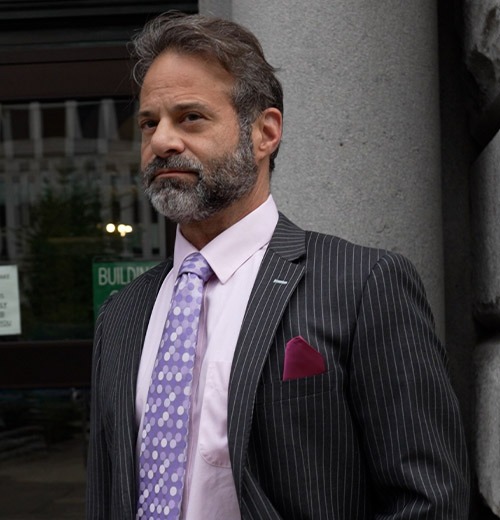
Have questions after a wreck? Rick Nicotra and the Buffalo motorcycle injury attorneys at The Nicotra Law Firm (866nicotra.com) review rider claims and explain your options.