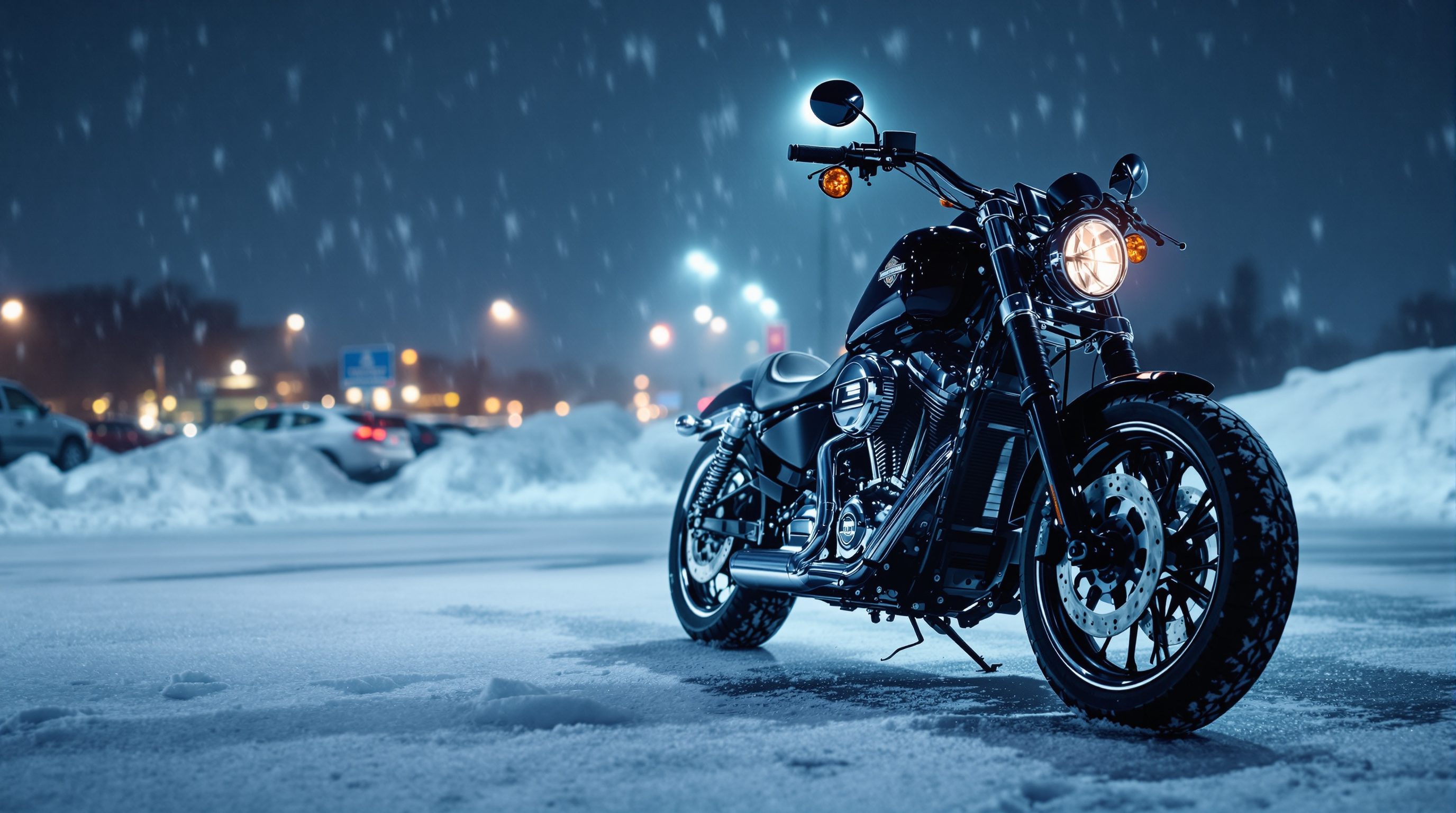
Lake-Effect Snow and Black Ice: Cold-Season Riding Hazards in Buffalo
Buffalo riders know the pattern. You leave the house under a clear blue sky, a cold front slides across Lake Erie, and twenty minutes later you are riding into a wall of white with the road disappearing under your front tire. Lake-effect snow does not behave like ordinary weather. It comes in narrow, intense bands that can bury one part of the metro while the next town over stays dry. For the die-hard year-round commuter, and for the rider who just wanted one more January run, that swing is the danger. Add black ice on the bridges and a coating of salt and brine, and a cold-season ride can go bad faster than in any other time of year.
Lake-effect bands: sunny, then whiteout
Lake-effect snow forms when cold air sweeps over the relatively warm waters of Lake Erie and dumps snow downwind. The result is narrow bands, sometimes only a few miles wide, that can stall over a single stretch of road. You can be riding the 190 in sunshine and hit a squall by the time you reach the Niagara Section of the Thruway or head south on US-219 or the 90 toward the Southtowns. Visibility can drop from miles to a few car lengths in the time it takes to change lanes.
That sunny-then-whiteout swing is what catches experienced riders. The forecast said flurries, the road looked fine, and you left the gear at home or the heated grips off. Then a band parks over you, cars slow to a crawl behind you, and drivers who cannot see you are suddenly looking for a lane change. A rider in a squall is nearly invisible, and a driver's claim that they never saw you is something insurers love to lean on.
Black ice on Buffalo's bridges and overpasses
Bridge decks freeze before the roads around them because cold air hits them from above and below. In Buffalo, that means the Skyway, the Peace Bridge approaches, the Grand Island bridges on the 190, the Thruway spans and the overpasses on the 33 and the 198 are exactly where a rider on a clear-looking morning finds a sheet of black ice. It is thin, clear, and almost impossible to see, and it can appear in the middle of an otherwise bare and wet road.
Black ice takes away traction for both tires at once, and a motorcycle that goes down on an elevated span can slide into traffic or a barrier before you can react. The first freeze of the season is the most dangerous, because riders have not yet reset their instincts and drivers are not yet driving for the conditions.
- ✓ Bridge decks freeze first. The Skyway, Peace Bridge, Grand Island bridges, and Thruway spans lose traction before ground-level pavement does.
- ✓ Salt and brine leave a slick film. Dry-looking pavement can still be greasy, especially after a brine treatment before a storm.
- ✓ Squalls hide you from drivers. Low visibility means a car can change lanes into you without ever seeing you.
- ✓ Cold tires do not grip. Rubber stiffens in the cold, and a few miles of riding may not warm it enough to matter.
- ✓ Shaded and low spots refreeze. Melt from the afternoon turns to ice again under overpasses and in shadows after sunset.
- ✓ The first freeze is the worst. Drivers and riders both forget how little traction is left until the first slide.
Salt, brine, and the die-hard winter commuter
Road crews treat Western New York roads with salt and brine, sometimes hours ahead of a storm. That helps cars, but on a motorcycle it can mean a slippery film in the lane and a coating on your tires, brakes, and chain. Painted lines, manhole covers, and metal grates are slick on a good day and worse when they are wet with brine.
If you commute by bike through the winter, respect the first freeze, cut your speed, avoid sudden inputs, and stay off the elevated spans when the temperature is hovering near freezing. There is no shame in parking the bike for a morning. A missed day at work costs far less than a crash on the Skyway.
If a winter crash happens
Get medical attention first, even if you feel fine, because cold and adrenaline can hide injuries. Photograph the road, the weather, and any ice or slush. Ask whether a driver's actions, a road that was not treated, or an unsafe lane change played a role. In New York, fault is shared under pure comparative negligence, which means your recovery is reduced by your share of blame but never barred. Insurers still try to blame the weather and the rider, so the details matter.
And because New York's no-fault system does not cover motorcyclists, your own medical bills are not automatically paid. Your claim depends on proving another party's fault, and on your own coverage.
Led by Rick Nicotra, The Nicotra Law Firm in Buffalo fights for injured motorcyclists. Reach out to their motorcycle accident lawyers in Buffalo anytime you need real answers.