The San Diego Rider's Guide to Motorcycle Injury Compensation
Presented by Banker's Hill Law Firm, A.P.C. · San Diego, California
Member, National Academy of Motorcycle Injury Lawyers
Chapter 1
A Message to San Diego's Riders
The only thing worse than being seriously hurt in a motorcycle crash is not getting the compensation you deserve, or finding out later that an insurance company took advantage of you.
Insurance companies have every advantage. They aren't worried about medical bills, lost wages, or putting food on the table. Their adjusters are trained to diminish, devalue, and deny motorcycle claims, and behind them stands an army of lawyers whose only job is to pay you as little as possible.
Here's the truth: you don't have to face them alone. Maxwell Agha has spent more than three decades fighting insurance companies on behalf of injured San Diegans, and through our membership in the National Academy of Motorcycle Injury Lawyers (NAMIL), Banker's Hill Law Firm stands up for injured riders across San Diego County. We know how insurers operate, and we don't back down.
If you've been hurt, don't wait. Every day that passes is another day the insurance company is working against you. Call (619) 230-0330 for straight answers.
Chapter 2
The Firm in Your Corner
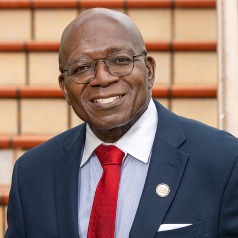
Maxwell Agha
Founding Principal, Banker's Hill Law Firm, A.P.C.
Maxwell Agha earned his Bachelor's degree from Seattle Pacific University before earning his Juris Doctor from the University of San Diego School of Law. He began his legal career with a judicial clerkship in California Superior Court, conducting legal research and drafting bench memoranda, then worked as a civil litigation attorney focused on personal injury before serving in the Chief Prosecutor's office of the U.S. Department of Justice, Southern District of California, handling civil and federal criminal matters. He founded Banker's Hill Law Firm to represent injured people against the insurance industry, and the firm has now served San Diego County for over 35 years.
Why riders can trust this firm
Recipient of the Top 100 National Trial Lawyers designation and a Top 50 National Bar Association recognition.
Alumnus of the Lanier Trial Academy, trained alongside legendary trial lawyer Mark Lanier.
Has won millions of dollars in settlements and high-stakes litigation across California's federal and state courts.
Volunteer arbitrator for the San Diego County Bar Association, mediating attorney-client fee disputes.
Member of the State Bar of California, the U.S. District Court for the Southern District of California, the U.S. Court of Federal Claims, the American Bar Association, and the San Diego County Bar Association, among others.
Firm Coordinates
Banker's Hill Law Firm, A.P.C. · 160 Thorn St, San Diego, CA 92103 (619) 230-0330 · bhlflaw.com
Chapter 3
Don't Get Played by the Adjuster
The first thing the other driver's insurer wants is a recorded statement and a signed release. Don't give either. Once they have your words on tape, they will twist them to deny or minimize your claim. If you think you can handle an adjuster alone, test them with these questions and watch the red flags appear.
11 Questions Every Rider Should Ask an Adjuster
Will you put in writing that the crash was not my fault?
What are your insured's policy limits? Show me the declaration page.
Can I have a copy of your insured's recorded statement?
If you want my medical records, will you give me copies of everything you collect?
Will you share statements from other witnesses?
Does your insured have umbrella or secondary coverage? Put it in writing.
What personal or medical information have you gathered on me from databases?
Have you pulled my credit report or debt information?
Have you canvassed my neighbors or people I know?
Have you conducted surveillance on me? Show me the photos or video.
What reserve amount have you set on my case?
If the adjuster says "no" to any of these, that's a flashing warning sign they don't intend to treat you fairly.
Chapter 4
Five Strategies That Can Grow Your Settlement
These aren't tricks. They're proven habits that can significantly increase the value of your case if you start them early.
1. Take photos, lots of them.
The scene, your injuries, your bike, the other vehicles, your recovery. Pictures tell a story words can't.
2. Get diagnosed for every injury.
Don't shrug off "minor" pain. If it isn't in your medical record, insurers will argue it came from something else.
3. Follow doctor's orders.
Every appointment, every therapy session. Skipping care is the easiest way to tank a claim.
4. Bring in the right experts.
Accident reconstructionists, medical life-care planners, and economists make your damages undeniable.
5. Negotiate the medical bills.
Even after you win, reducing outstanding bills keeps more money in your pocket. A good firm does this for you every day.
Chapter 5
Five Mistakes That Can Ruin Your Claim
Giving a recorded statement. Never let the other driver's adjuster record you.
Believing the adjuster. If they say you don't have a case or you're at fault, get a lawyer's opinion first.
Failing to capture evidence. Skipping photos of the scene, vehicles, or injuries is a mistake you can't undo.
Missing medical appointments. Every gap in treatment becomes ammunition that you "weren't really hurt."
Representing yourself. You're too close and too untrained in the maneuvering. Your words can be used against you. A lawyer's can't.
Chapter 6
California Motorcycle Insurance Essentials
Most riders don't realize how little coverage California law requires, and even after a rare increase, the state's minimums still fall well short of real medical costs.
California Minimum Coverage (California Vehicle Code §16056)
30 / 60 / 15
$30,000 bodily injury per person · $60,000 per crash · $15,000 property damage. These limits took effect January 1, 2025, replacing the 15/30/5 minimums that had been in place since 1967, and they are scheduled to rise again to 50/100/25 in 2035. California is a fault-based (at-fault) state, not a no-fault state, and it does not require Personal Injury Protection (PIP) or Medical Payments coverage. Unless you carry your own MedPay or health insurance, your medical bills after a crash depend entirely on the at-fault driver's liability limits.
A single surgery can top $100,000. Rehab and lost wages pile on fast. If the driver who hits you carries only California's minimum, you'll be left with pennies unless you protected yourself with your own coverage.
What riders should carry
Liability: at least 100/300 if you can.
UM/UIM: match your liability limits, this is your real lifeline in California.
Medical Payments (MedPay): optional in California, but worth adding since PIP doesn't exist here.
Umbrella: worth it if you own a home or assets.
Chapter 7
The UM/UIM Lifesaver: A Real-Numbers Story
Picture a rider hit by a driver who ran a red light on the I-8/I-5 interchange. Medical bills alone top $250,000. The problem: the at-fault driver carried only California's minimum, $30,000 in liability.
Without protection, that rider is financially ruined. But say they carried Underinsured Motorist coverage of $250,000. When the at-fault driver's insurance runs out, their own UIM picks up the rest.
The Math
At-fault driver's insurance: $30,000 Your UIM coverage: $250,000 Total available: $280,000
Under California Insurance Code §11580.2, insurers must build UM/UIM into your policy at limits equal to your liability coverage unless you sign a written waiver declining it. Riders skip UM/UIM, or unknowingly waive it, to save a few bucks. Don't. In California it's the difference between recovery and ruin.
Chapter 8
What Is My Case Worth in California?
There's no magic calculator, but three factors drive most of it: liability (how clearly the other driver is at fault), available insurance (policy limits set the ceiling), and your lawyer (insurers track which firms actually try cases, and know Maxwell's litigation background).
California's Pure Comparative Negligence Rule (Li v. Yellow Cab Co. (1975) 13 Cal.3d 804)
California uses pure comparative negligence. Unlike many states, there is no cutoff, you can recover damages even if you were mostly at fault, reduced by your percentage of responsibility. For example, if you're found 30% at fault on a $100,000 claim, you can still recover $70,000. That said, insurers still fight hard to pin blame on riders, since every percentage point reduces what they owe.
Other factors adjusters weigh: the severity and permanence of your injuries, current and future medical bills, lost wages and earning capacity, your credibility, and the at-fault driver's conduct (impaired? distracted?).
Chapter 9
Timeline: How Long Until It Settles?
Never settle too soon. Insurers dangle quick low offers before you know the full extent of your injuries.
Wait for Maximum Medical Improvement (MMI). Settle before you've healed as much as you will, and you're gambling with your future care.
After treatment, expect 3–6 months to gather bills, build a demand, and negotiate.
California Deadline
You generally have two years from the date of injury to file a personal-injury lawsuit in California (Code of Civil Procedure §335.1). If a government entity or government vehicle is involved, such as a city bus, a Caltrans road defect, or a county-owned vehicle, you must file a formal claim with that agency within just six months (Government Code §911.2), far sooner than the standard deadline. Miss either window and your claim is gone. Don't wait to get advice.
Chapter 10
Do I Have to Go to Court?
"I'm not the suing type." We hear that a lot. The truth: you're the boss, and most cases settle before trial. But filing suit is sometimes how you make a stubborn insurer pay full value. It opens access to records, statements, and depositions, and it tells the insurer you're serious. Having a firm willing to try the case is often what makes the difference, even if you never see a courtroom.
Chapter 11
Evidence Wins Cases: Your Post-Crash Playbook
Immediately after a crash
Photograph the scene, vehicles, your bike, your gear, and your injuries.
Get witness names and numbers.
Call police and get the crash report.
Save your gear, don't toss the helmet, jacket, or gloves. They prove impact.
Medical evidence is everything
Report every symptom, even "small" ones. Undocumented means denied.
Follow treatment. Keep a simple pain journal (pain, sleep, mobility).
Helmet-cam or dash-cam footage can be a game-changer.
Chapter 12
San Diego & California Riding Risks
I-8 & I-5 corridor traffic. Dense, fast-merging commuter traffic where I-8 meets I-5 and I-805, with frequent stop-and-go congestion and aggressive lane changes.
Palomar Mountain's South Grade Road, "the Glass Elevator." Twenty-one hairpin switchbacks climbing roughly 2,500 feet in under seven miles. Spectacular riding, but unforgiving if you carry too much speed into a blind corner.
Sunrise Highway (S1) through Mount Laguna. Long sweeping curves east of San Diego on the way to the Anza-Borrego overlooks, with sudden weather changes, occasional winter ice near the summit, and gravel on the shoulders.
Coastal marine-layer fog. Roads like Torrey Pines and the coast highway can turn socked-in with dense morning fog, cutting visibility with little warning, especially in late spring and early summer.
Backcountry wildfire season. East County and mountain routes carry real wildfire risk, especially in August and through fall Santa Ana wind events, bringing sudden smoke, ash on the road, and abrupt closures.
California's Helmet Law
California has a universal helmet law (Vehicle Code §27803): every rider and passenger must wear a DOT-compliant helmet, properly fastened, while the motorcycle is in motion, regardless of age or experience. There is no adult exemption. Riding without one risks a citation and can be used by an insurer to argue you contributed to the severity of your injuries.
Lane Splitting Is Legal in California
California is the only state that expressly makes lane splitting legal, under Vehicle Code §21658.1 (added by AB 51, effective January 1, 2017). The statute itself sets no fixed speed limit or speed-differential number. The CHP publishes safety guidance, considering total traffic conditions, lane width, and surrounding vehicle speeds, but that guidance is educational, not a hard legal rule. Riding too fast relative to traffic can still be used against you as evidence of unsafe operation, so ride the guidance, not just the letter of the law.
Chapter 13
Ride Safer: Pro Tips for San Diego Riders
Braking & cornering
Finish braking before you enter a curve, especially on switchbacks like South Grade Road.
Avoid hard braking on painted surfaces and crosswalks, they're slicker than the surrounding pavement.
Practice emergency stops in a safe lot. Muscle memory saves lives.
Lane splitting
Split between the far-left lanes when possible, they carry the least cross-traffic risk.
Keep your speed differential modest and proportional to traffic, per CHP guidance, and back off in narrow lanes or beside larger vehicles.
Cover your brakes and watch for doors opening or sudden lane changes.
Fog, heat & visibility
Slow down and add following distance the moment marine-layer fog rolls in along the coast.
Watch for sudden temperature swings between coastal fog and inland heat on longer rides.
Bright jacket and reflective tape change whether drivers see you at intersections and in fog.
Check your tire date code (4-digit DOT) and replace tires every 5–6 years regardless of tread.
Chapter 14
Results, Reviews & Community
Maxwell Agha founded Banker's Hill Law Firm after a judicial clerkship in California Superior Court and a role in the Chief Prosecutor's office of the U.S. Department of Justice, Southern District of California, a combination of courtroom and government experience he now brings to every injured rider's case. He is a recipient of the Top 100 National Trial Lawyers designation, a Top 50 National Bar Association recognition, and an alumnus of the Lanier Trial Academy.
For Maxwell's approval before publishing: insert 2–3 real, firm-approved case results and a few verified client testimonials here. Per bar advertising rules and our own standard, we won't publish specific results or quotes that the firm hasn't reviewed and approved. Until then this section stays general.
Chapter 15
Your Next Step: A Free Case Review
If you've been hurt in a motorcycle crash, don't go it alone. The insurance company has a team of lawyers. So should you.
When you call Banker's Hill Law Firm, you'll talk to a real person, get your questions answered, and learn your rights before you sign anything. No pressure, no obligation, and if we take your case, you don't pay unless we win.
MedPay: Optional Medical Payments coverage that pays your own medical bills regardless of fault.
Pure comparative negligence: California's rule (Li v. Yellow Cab Co.) letting you recover damages reduced by your share of fault, with no cutoff percentage.
D · About NAMIL
The National Academy of Motorcycle Injury Lawyers is a nationwide network of attorneys dedicated to injured riders. Membership is limited to firms committed to bikers' rights. Banker's Hill Law Firm is NAMIL's member firm for the San Diego market.