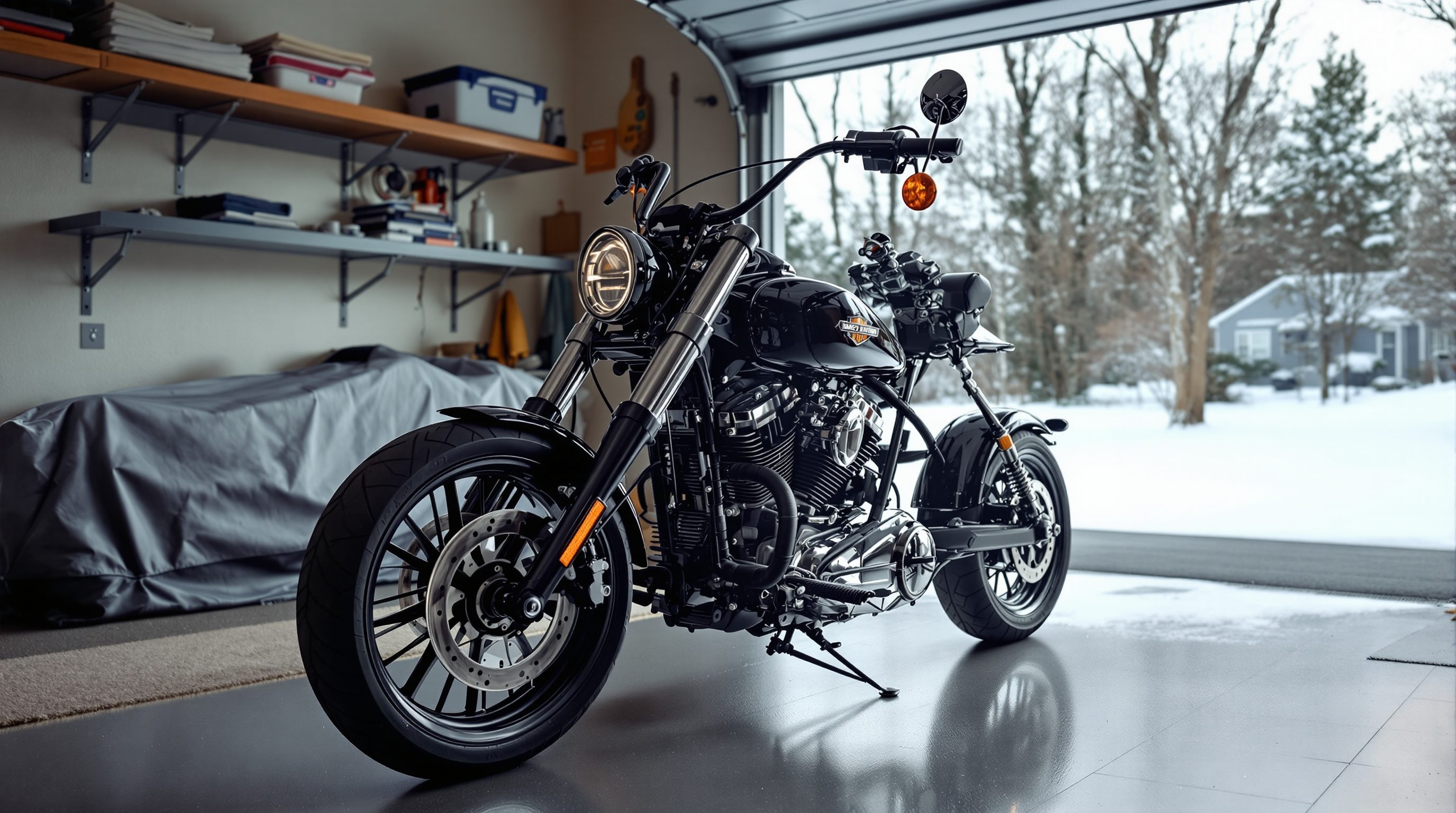
Storing Your Motorcycle for the Georgia Winter? Do Not Drop Your Insurance
Metro Atlanta winters are mild enough that plenty of riders tuck the bike away from January until the dogwoods bloom. The riding days get short and cold, the salt trucks come out after an ice storm, and the garage starts to look like the smart place for the bike to sit. That part is fine. The mistake riders make is what they do with the insurance while it sits. The instinct is simple. The bike is not moving, so why pay to insure it? Cancel the policy, save a few months of premium, buy it back in the spring. That move feels smart and it can cost you far more than it ever saves. Here is how to store the bike the right way and keep your coverage working for you through the cold months instead of leaving a hole you fall into come spring.
Canceling the Policy Is the Expensive Kind of Saving
A stored bike is not a risk-free bike, and the day you drop coverage is the day the insurance company gets to treat you like a brand-new, higher-risk customer all over again. Let your motorcycle policy lapse and you can lose the continuous-coverage and loyalty discounts you have spent years building, watch your premium jump when you reinstate in the spring, and hand the insurer a fresh reason to question you.
Georgia also expects continuous liability coverage on a motorcycle that is still registered and tagged. A lapse can put your registration in the state's crosshairs, so if you are truly done riding for the season, canceling insurance without also handling the registration is how you end up with a lapse notice and fees stacked on top of a higher renewal.
A Parked Bike Still Gets Stolen, Burned, and Crushed
Liability coverage pays for harm you cause to other people. It does nothing for your own machine. The coverage that protects a stored bike is comprehensive, and comprehensive covers exactly the things that happen to a bike sitting still: theft out of a garage or a storage unit, fire, a tree limb coming down in a winter storm, flooding, vandalism, or a car backing into it. Drop your coverage to nothing over the winter and every one of those becomes money straight out of your pocket. Thieves know bikes go quiet in the cold months, and they know where riders stash them.
What Storage Coverage Actually Looks Like
You do not have to choose between paying full freight and going bare. Ask your carrier about reducing the policy to comprehensive-only, sometimes called lay-up or storage coverage, for the months the bike is parked. You keep the protection against theft, fire, and weather while trimming the road-use cost you are not using. What you should think hard about before dropping is your liability and your uninsured and underinsured motorist coverage, because Atlanta hands you sixty-degree afternoons in January and February. The second you roll that stored bike out for a warm-day shakedown run with the liability and UM stripped off, you are riding uninsured, and a gap in that coverage is exactly what wrecks a claim later.
Do Not Gut the UM Coverage That Protects You
Georgia only requires 25/50/25 in liability, and every insurer here has to offer you uninsured and underinsured motorist coverage on top of it. That UM coverage is a rider's real backstop in a state full of uninsured and underinsured drivers. Cancel everything for the winter, get hit by an uninsured driver on the first nice ride of the year before you have reinstated, and there is no UM there to catch you. Keep the coverage continuous, and keep the UM limits where they belong.
Prep the Bike So Spring Is a Turn of the Key
Storing the bike right protects the machine the same way keeping the policy protects the claim.
- ✓ Put the battery on a tender.. A trickle charger keeps the battery from dying flat over a cold Atlanta winter so you are not buying a new one in March.
- ✓ Fill the tank and add stabilizer.. A full tank with fuel stabilizer keeps condensation and rust out of the tank and stops the ethanol from gumming up the fuel system.
- ✓ Set the tires and get weight off them.. Inflate to the max sidewall pressure and put the bike on stands, or move it every few weeks, so the tires do not develop flat spots.
- ✓ Cover it and keep the critters out.. Clean and wax the bike, throw a cover over it, and block the exhaust and airbox so mice do not move in for the winter.
- ✓ Keep comprehensive coverage in force.. Storage does not stop theft, fire, or a tree coming down, so keep comp on the policy and keep your coverage continuous instead of canceling outright.

Michael Moebes and the Atlanta motorcycle injury attorneys at Moebes Law represent riders hurt by negligent drivers. If you have questions after a crash, their team is here to help.