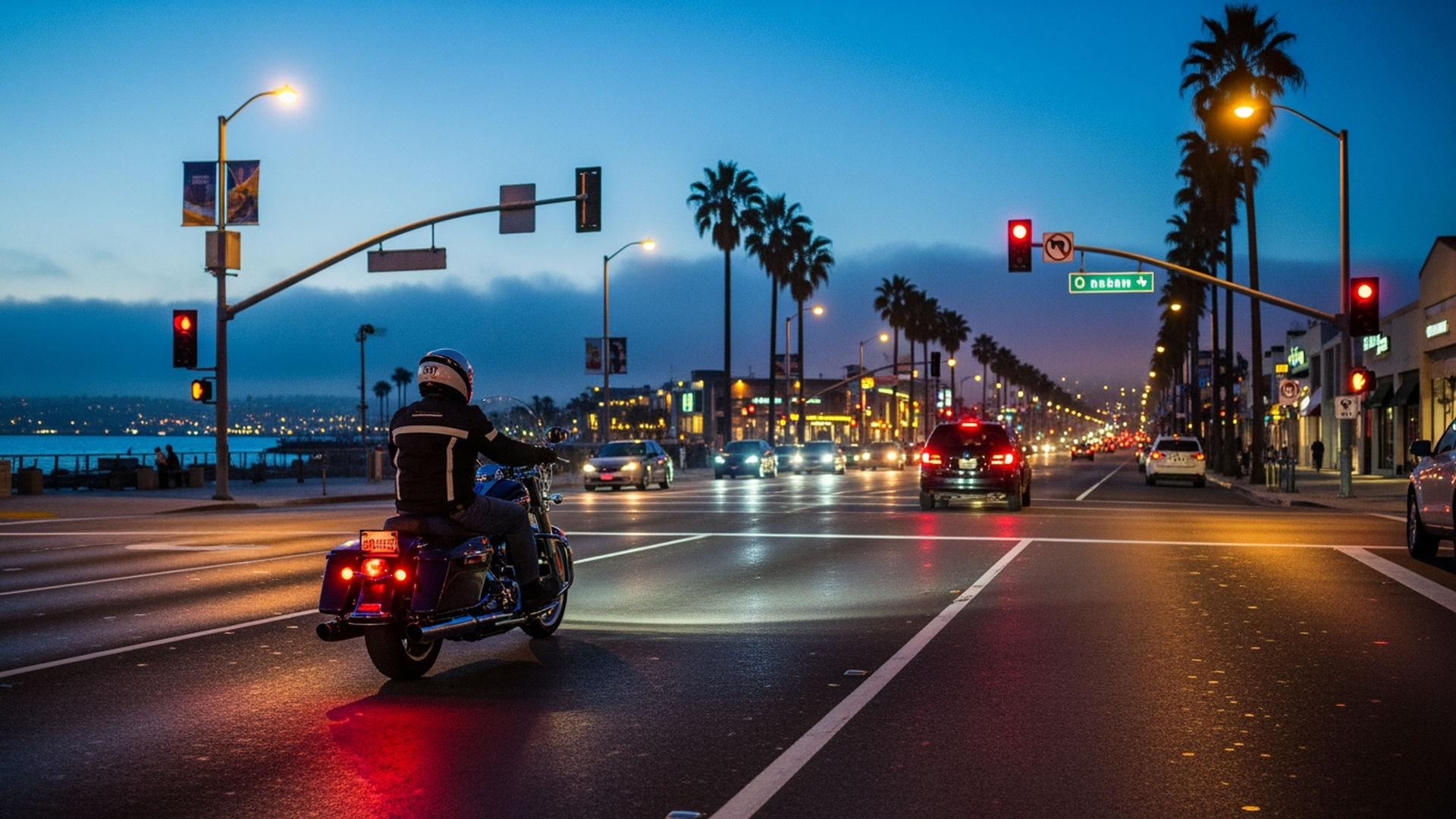
Night Riding in San Diego: Being Seen When Drivers Are Not Looking for You
By November the ride home is a night ride whether you planned it or not. The clocks fall back, sunset lands in the late afternoon, and a big share of San Diego riding shifts into the dark. Night riding is not reckless by itself, but it strips away your single biggest advantage on the road, which is being seen. On a motorcycle, visibility is survival, and in a coastal city where the marine layer can roll in after dark and city glow swallows a single headlight, being seen gets harder in a hurry. Whether you are threading the arterials through Hillcrest, Pacific Beach, and downtown, or heading up a black-dark two-lane toward Julian or Mount Laguna, here is how to stay lit and stay upright once the sun goes down.
Why the dark is harder on a motorcycle
A car at night reads as a wide, obvious pair of headlights and a set of taillights. A motorcycle reads as a single light, low to the ground, that a tired or distracted driver can mistake for something far away or miss entirely. In the city the problem is worse, not better, because your one headlight competes with a wall of storefronts, signals, signs, and oncoming traffic that swallows it whole. Add San Diego's marine layer, the low coastal fog that can settle over the arterials and the coast highways after dark, and your one light gets softer and harder to place. Depth perception fails at night, and a driver judging the gap before a left turn across a busy arterial can badly misjudge how close and how fast you are coming. That is the core problem behind most night crashes involving riders. Not that you were invisible, but that a driver saw one small light in a sea of them and made the wrong call. The left-turn collision at an intersection is the single most common way a rider gets killed, and every lit intersection between you and home is a fresh chance for a driver to make that mistake. Everything below is about closing that gap.
Own your visibility, do not assume it
You cannot control whether a driver is paying attention, but you can control how hard you are to miss. The riders who make it home are usually the ones who stack the deck in their favor with gear and lighting, not the ones who trust drivers to look twice. Build your night setup around being seen.
- ✓ Reflective gear on the parts that move. Strips on your jacket, helmet, and around the ankles catch headlights and read as a human, not another light in a store window. Movement draws the eye. California already requires a DOT helmet for every rider and passenger, so make that helmet work for you with reflective material.
- ✓ A clean, aimed headlight. A grimy or misaligned headlight throws away half its output, and a salt-air film builds up fast near the coast. Wipe the lens and check the aim before a night run, and it matters even more heading out of the city glow into the dark.
- ✓ Auxiliary lights that widen your footprint. Two points of light read as a vehicle far better than one, and they help a driver judge your distance and speed against a busy, foggy city background.
- ✓ A working, bright brake light. The driver behind you in stop-and-go on the freeway or a crowded surface street needs the clearest possible warning when you slow.
- ✓ A clean, clear face shield. Scratches, haze, and fog condensation turn every oncoming headlight and streetlight into a starburst and cost you the detail you need to read the road.
None of this guarantees a driver sees you. It just makes it far more likely, and it puts you in a far stronger position if one still does not.
Ride the gaps and read the intersection
Being seen is half of it. The other half is positioning yourself so that when a driver misses you, it does not matter. In San Diego traffic that means owning your space on the freeway and reading every intersection on the surface streets like the turn is coming.
- ✓ Buy space at every intersection. Cover your brakes and set up an escape path for the left-turning driver who never sees your light. Watch the front wheels of any car waiting to turn, because the wheels move before the car does.
- ✓ Stay out of blind spots. On the 5, the 805, and the bridge and interchange approaches at night, if you cannot see a driver's mirrors, they cannot see you. Ride the open pockets in traffic.
- ✓ Watch for the sudden curb stop. Rideshare pickups and delivery drivers cut across a lane and stop at the curb without warning around the Gaslamp, Pacific Beach, and North Park nightlife. Give them a wide berth and never trust a signal you did not see.
- ✓ Do not outride your headlight. Match your speed to how far your beam actually reaches, so a pothole, a patch of fog, or a stalled car does not appear with no time to react. On the dark backcountry two-lanes heading home from Julian, Palomar, or Mount Laguna, that gap is far shorter and deer are on the move.
Weekend nights and the impaired-driver window
Not every hour after dark carries the same risk. Late on Friday and Saturday nights, the odds of sharing a San Diego road with an impaired driver climb sharply, and an impaired driver is exactly the one most likely to blow a light, drift a lane, or turn left across a headlight they never processed. Around the Gaslamp downtown, Pacific Beach, and the North Park and Hillcrest bar strips, the routes people take home from a night out, and the arterials that funnel crowds out of bars and events, treat the late-weekend hours as their own hazard. Ride like the car at the next light might not stop, keep more space than feels necessary, and if you can shift a late ride earlier or take a calmer route home, that is a real safety upgrade, not an overreaction.
What California law means if a driver hits you at night
Do everything right and a driver can still turn across your path claiming they never saw you. When that happens, "I never saw the motorcycle" is not a defense, it is an admission that the driver failed to look for you. California law shapes what comes next, and here it leans in a rider's favor more than most states. California uses pure comparative negligence, which means your recovery is reduced by your share of the blame but is never barred outright, even if you are found mostly at fault. That is a real advantage over the states that end your claim at 50 or 51 percent. But insurers still love to argue the rider was hard to see or riding too fast for conditions after a night crash, as if a dark road or a bank of fog shifts the blame off their driver and onto you, because every point they shift comes out of your recovery. Do not let "it was dark out" get twisted into "the rider caused it." A driver who turns across a lane still has to look for what is in it.
- ✓ Pure comparative negligence never zeroes you out. California reduces your recovery by your share of fault but always lets you recover something, so keeping the blame off the rider after a night crash still matters for every dollar.
- ✓ Universal helmet law. Every rider and passenger in California must wear a DOT-approved helmet, no exceptions, and reflective gear on top of it only helps you.
- ✓ Minimum liability is only 30/60/15. Raised in 2025 but often not enough for a serious injury, which is why the uninsured and underinsured-motorist coverage a California insurer must offer is your real lifeline against an impaired, uninsured, or hit-and-run driver at night.
- ✓ Two years to file. The statute of limitations on a California injury claim is generally two years, so a night crash you were sure was the driver's fault can still slip past a valid deadline if you wait.
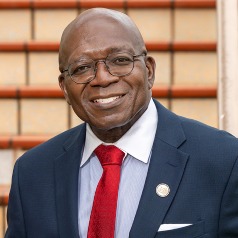
Have questions after a wreck? Maxwell Agha and the San Diego motorcycle injury attorneys at Banker's Hill Law Firm (bhlflaw.com) review rider claims and explain your options.