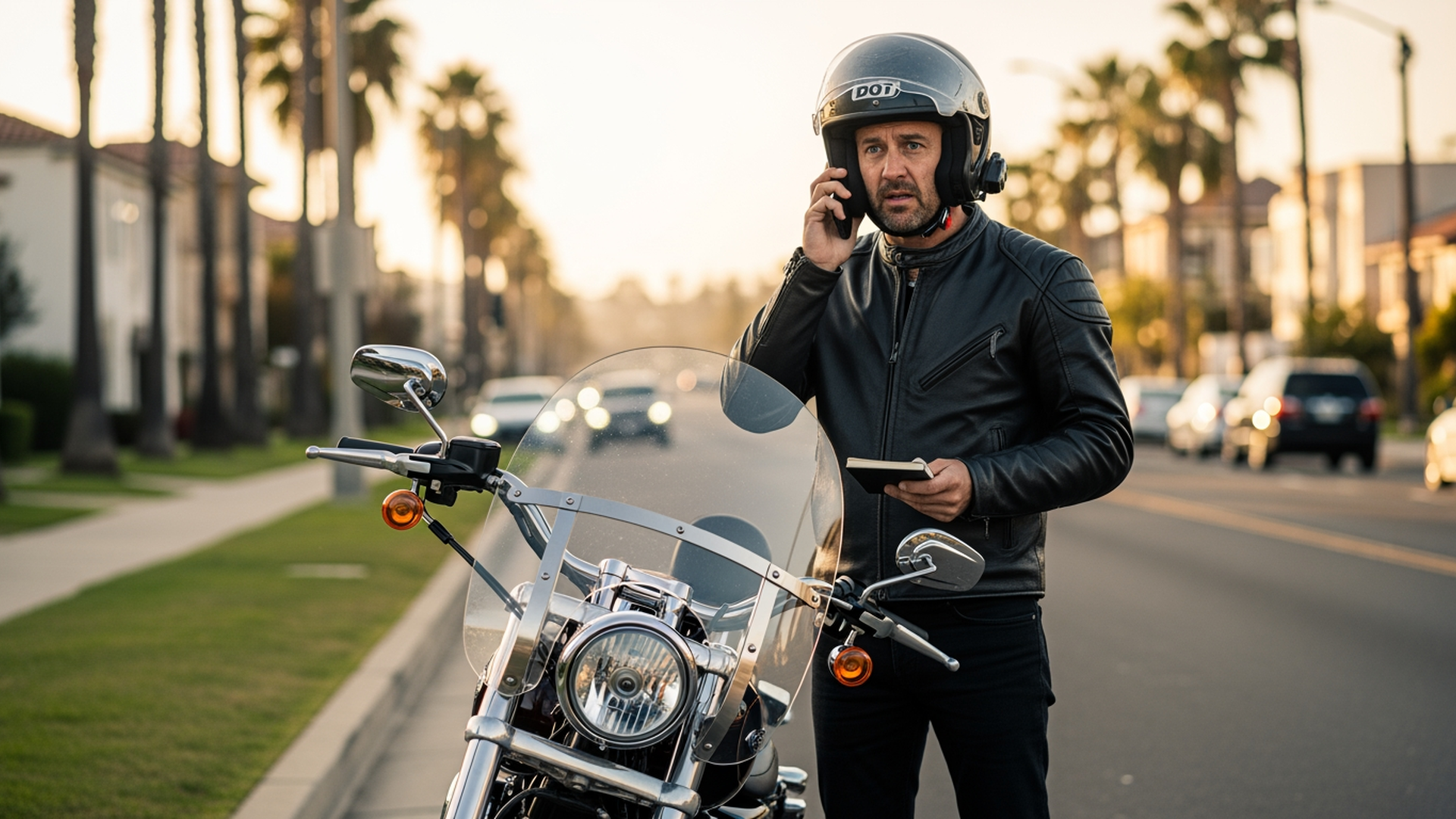
Dealing With the Insurance Adjuster After a California Motorcycle Crash
A day or two after your crash, the phone rings. It is the other driver's insurance adjuster, and they sound genuinely kind, even concerned. They are sorry this happened. They just need a few quick details to get your claim moving. Be careful. That call is the opening move in a process built to pay you as little as California law lets them, and for a San Diego rider still in pain and still sorting out a wrecked bike, it is one of the most dangerous moments of the whole claim.
The Adjuster Is Not Your Friend
Strip away the friendly tone and an adjuster has one job: protect the insurance company's money. Every warm question is in service of that goal. They are not calling to make sure you are okay, they are calling to lock in your account of the crash while you are rattled, medicated, and unprepared, and to get you to accept less than your claim is worth before anyone knows how hurt you really are. None of it is personal. It is a playbook. Recognizing it is how you beat it.
Why You Do Not Give a Recorded Statement
The recorded statement is a trap dressed up as a formality. They will frame it as routine, just so we have your account on file. What they are really building is a transcript of you, in pain and off balance, saying something they can twist later. Right after a crash you do not know the full extent of your injuries, some do not surface for days. If you tell the adjuster you feel okay out of politeness, and a herniated disc shows up next week, that recording gets played back as proof you were not really hurt. They will also fish for admissions: a casual "I did not really see him coming" becomes an argument that you were not paying attention. You have every right to decline. A polite "I am not giving a recorded statement" is a complete answer.
How Everything You Say Feeds a Comparative-Fault Reduction
This is the part that makes California different, and it is the reason to guard your words. California uses pure comparative negligence, so your recovery is reduced by your percentage of fault. The adjuster cannot erase your claim by pinning most of the blame on you the way they could in a 51 percent-bar state, but they do not need to. Every percentage point of fault they move onto you comes straight off your check. On a $200,000 claim, nudging you from 10 percent to 40 percent fault quietly costs you $60,000. So every question about what you could have done differently, every prompt to speculate or apologize, is aimed at building your fault percentage. Watch for the tired anti-rider scripts: that you must have been speeding, that your lane position was wrong even though lane splitting is legal in California at a reasonable speed, or the gut-level bias that anyone on two wheels was being reckless. Do not hand them the ammunition.
What to Say and What Not to Say
You do not have to be combative. Keep it short and factual, and let the record stay clean.
- ✓ Do confirm the basics. That a crash happened, the date, and the location are fine. Stop there.
- ✓ Do not speculate about fault or apologize. Reflex politeness like "sorry" gets used against you and feeds the fault reduction.
- ✓ Do not guess about your injuries. Never say you feel fine when you do not yet know how hurt you are.
- ✓ Do not accept the fast lowball. A quick check that feels like a lifeline is offered before anyone knows what your injuries will cost, and signing the release closes the claim for good, even if you need surgery next month. You have two years to file, so there is no reason to rush.
- ✓ Do not sign a blanket medical release. A broad authorization hands them your entire medical history to comb for old injuries they can blame instead of the crash.
When to Get Counsel
You do not have to deal with any of this yourself, and on a serious injury claim you probably should not. Once a lawyer represents you, the adjuster deals with your attorney instead of catching you on your worst day. The recorded-statement pressure stops, the lowball offers meet someone who knows what the claim is actually worth, and the anti-rider fault games meet real pushback. The nicer the early offer, the more reason to slow down. Be polite, be brief, sign nothing, and get advice before the adjuster's friendliness costs you money you cannot get back.
Led by Maxwell Agha, Banker's Hill Law Firm in San Diego fights for injured motorcyclists. Reach out to their San Diego motorcycle injury attorneys anytime you need real answers.