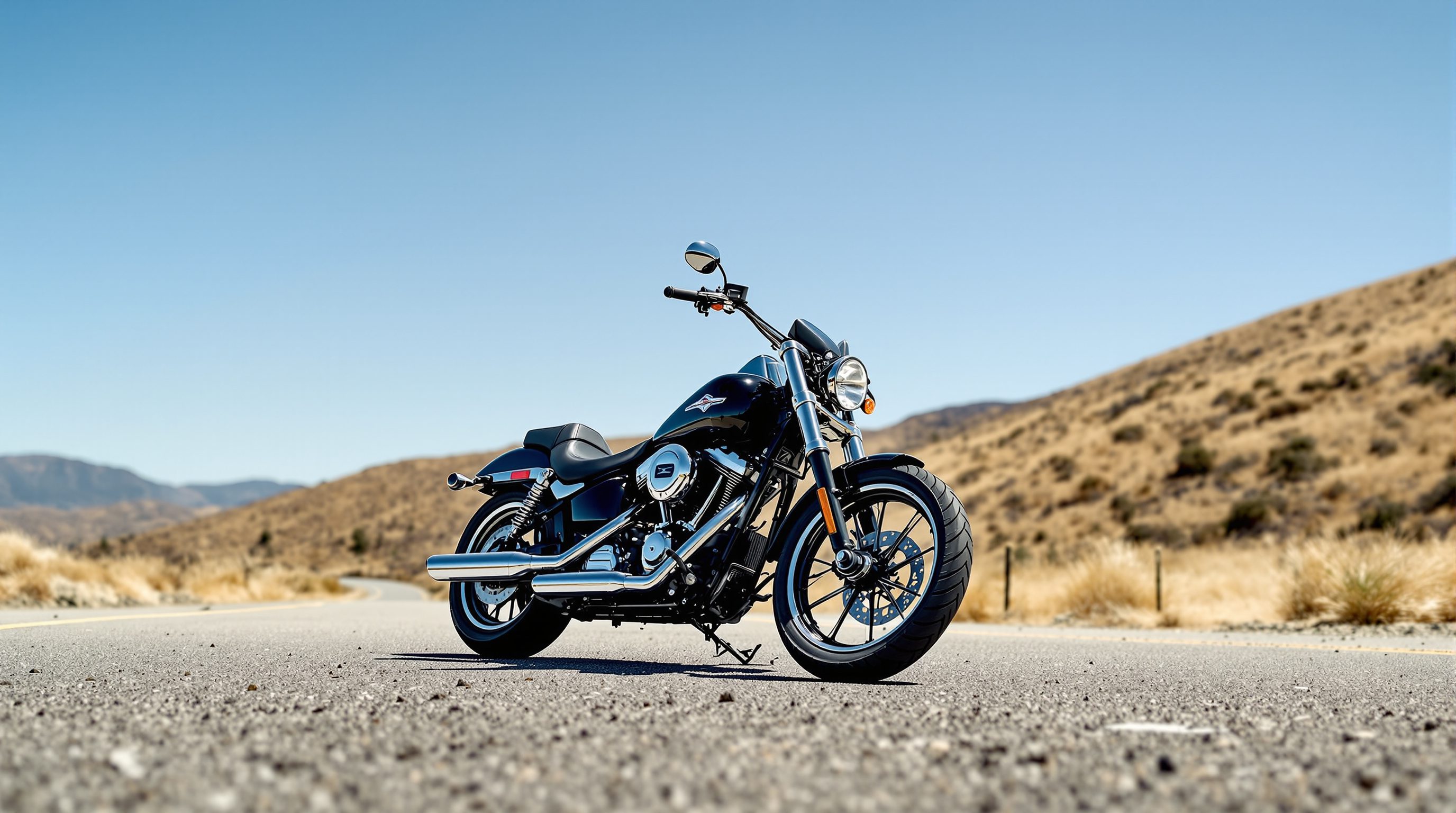
Lane Splitting and Filtering in California: Legal in 2026, and How Fault Still Works
Ride in from out of state and you will hear it at every gas stop: someone insists lane splitting cannot really be legal. In California, it is. You are stuck in a crawl on the 15, a clean gap opens between the stopped cars, and when you slip through it you are not bending a rule or hoping a cop looks the other way. You are doing something the California vehicle code names and allows by statute. That is worth understanding cold, because the day a driver drifts into you while you are splitting, their insurance company will act like you got away with something. You did not.
What Vehicle Code 21658.1 Actually Says
California wrote lane splitting straight into its vehicle code. Section 21658.1 defines it as riding a two-wheeled motorcycle between rows of stopped or moving vehicles in the same lane, on divided or undivided roads and highways, and it authorizes the practice rather than banning it. The legislature looked at what riders were already doing and chose to name it and allow it. That is the opposite of what nearly every other state has done.
The same law directs the California Highway Patrol to develop educational safety guidelines for lane splitting. So the CHP, not a courtroom, is the agency that publishes what safe splitting looks like. The practical takeaway for a San Diego rider is simple: you never have to pretend you were not splitting. You were allowed to. That single fact reshapes how a crash claim plays out.
The CHP Safety Guidance, in Plain Terms
The Highway Patrol's guidance is built on the physics of what actually gets riders hurt, and it comes down to three things: your speed, the difference between your speed and the cars around you, and where you put yourself. The bigger the gap between your pace and the traffic's pace, the less time anyone has to react to a door, a mirror, or a car nosing into the lane. Ride inside it.
- ✓ Keep your speed reasonable.. Splitting is for slowed or stopped traffic, not for blasting past freeway flow. The faster you go, the harder every hazard hits.
- ✓ Keep the speed difference low.. The danger is not your speed alone, it is how much faster you are moving than the cars beside you. A small differential gives everyone time to react.
- ✓ Stay out of blind spots.. Do not linger beside a car where the driver cannot see you, and never split next to a big rig.
- ✓ Split the far-left lanes when you can.. The gap between the two leftmost lanes tends to be widest and the traffic there more predictable.
- ✓ Read the whole picture.. Watch for lane changers, phones, and the sudden surge when traffic breaks loose. Cover your brakes and be ready to abandon the gap.
Splitting Versus Filtering, and Why California Stands Alone
People use lane splitting and filtering loosely, but they are not quite the same thing. Splitting usually means moving between lanes of slow or moving traffic. Filtering usually means easing to the front between stopped cars at a red light or a jam. California's statute is broad enough to cover a rider moving between stopped or moving vehicles, which is why California is the one state that expressly authorizes lane splitting outright.
A handful of other states have carved out narrow permission for limited filtering at low speed or at stops, and most of the country still bans the maneuver entirely. That patchwork is why the out-of-state rider at the gas pump is so sure it is illegal. Where they ride, it probably is. Here, it is written into the code.
How Fault Still Works if You Crash While Splitting
Legal does not mean blameless in the eyes of an adjuster. California follows pure comparative negligence, which means your recovery is reduced by your share of fault but is never barred, even if you are found mostly to blame. There is no 50 or 51 percent cliff that zeroes you out the way half the country has. That is genuinely rider-friendly, and it matters here.
So picture two riders. One was splitting at a walking-pace differential, in a sane position, when a driver changed lanes into them. The other was screaming up the gap at 40 over stopped traffic. Both were doing something legal. But the second rider handed the insurer a story, and under pure comparative negligence that story becomes a fault percentage that shaves the recovery. An unreasonable split can put some fault on you. It can never bar your claim. The way you ride the gap is the same evidence that later decides how the fault gets divided, so split like it is being filmed.
Do Not Let the Insurer Rewrite the Law
Do not expect the other driver's insurance company to volunteer that lane splitting is legal in California. Their job after a crash is to move blame off their driver and onto the rider between lanes, the easiest target they will ever get. Expect to hear that you came out of nowhere and that their driver never had a chance. None of that changes the statute. What it does is turn your claim into a fight over your fault percentage, which is exactly why the details of how you split, and independent witnesses, are worth protecting from the first minute. Do not narrate the crash to an adjuster before you get advice.

Maxwell Agha and the San Diego motorcycle accident attorneys at Banker's Hill Law Firm represent riders hurt by negligent drivers. If you have questions after a crash, their team is here to help.