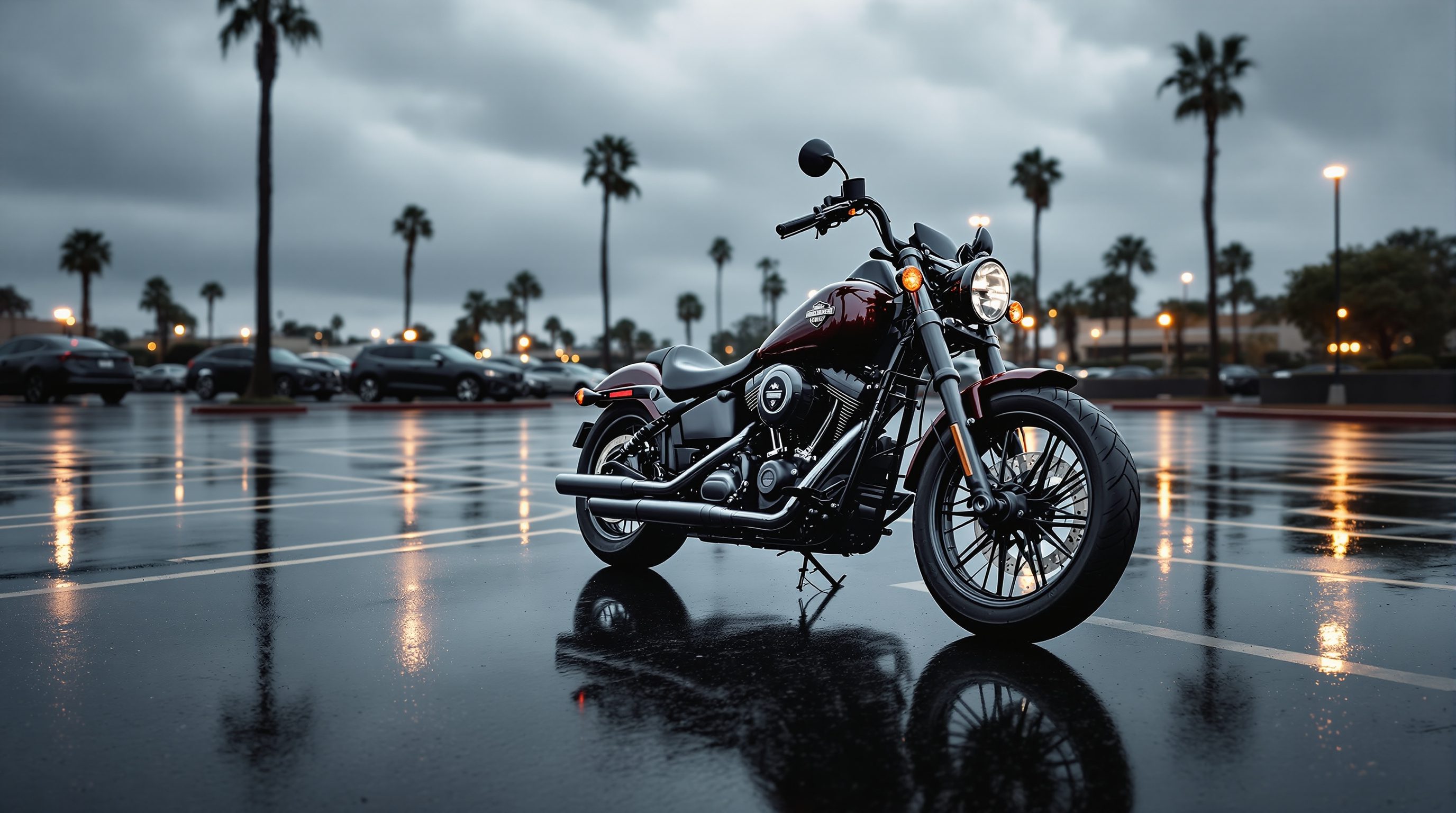
The First Rains Are the Most Dangerous Riding Days of the Year in San Diego
San Diego riders do not think of themselves as rain riders. We get spoiled by months of dry, sunny pavement. That is exactly the problem. When the first real rain of the winter finally hits, the roads are more treacherous than anything a rider in Seattle sees all year, and most of us are out of practice for it. The danger is not the water itself. It is what a long dry summer leaves on the road, floating up the moment it gets wet. Here is why the first rains are the slickest days you will ride, how to survive them, and how fault works if a car takes you down in the wet.
Why the First Rain Is the Worst
Every day the roads stay dry, they collect a film of oil, grease, rubber, and dust from every car that passes. In San Diego that dry spell runs for months. All of that grime bonds to the pavement and just sits there.
When the first rain comes, the water does not wash it away right away. Instead it lifts that oil and rubber to the surface and turns the whole road into a greasy slick. The first fifteen to thirty minutes of rain after a dry spell is the most dangerous stretch, before enough water falls to finally rinse the surface clean. A hard rain in March is far less slippery than a light drizzle in January, because by March the roads have already been scrubbed.
Then add the San Diego specials. Painted lane lines, crosswalks, and arrows turn to ice when wet. So do Botts dots and raised markers, metal manhole covers, and steel plates over roadwork. Marine-layer fog can roll in on the same mornings and cut your visibility right when your traction is worst.
How to Ride the First Rain
If you can wait out that first half hour, do it. If you have to ride, ride like the road is trying to drop you, because it is.
- ✓ Smooth everything. Easy on the throttle, the brakes, and the lean. Sudden inputs break traction on a greasy surface, so make every move gentle and gradual.
- ✓ Buy space. Double your following distance and brake earlier and lighter. Wet pavement stretches how long it takes you to stop.
- ✓ Avoid the slick stuff. Ride around painted lines, crosswalks, Botts dots, metal covers, and steel plates. When wet they offer almost no grip.
- ✓ Mind the fog. Marine-layer fog cuts visibility both ways. Turn on your lights, wear high-visibility gear, and slow down so you have time to react.
- ✓ Skip the worst window. Those first minutes of rain on a long-dry road are the most treacherous. If you can park it and wait, you dodge the worst of it.
If a Car Hits You in the Rain
Wet roads do not just make you more likely to go down on your own. They make drivers around you clumsier, slower to stop, and quicker to blame the motorcycle. If a car turns across your path or slides into you in the rain, the other driver's insurer will lean hard on the weather to pin the crash on you.
Expect them to argue you were going too fast for conditions, that you assumed the risk by riding in the rain at all, or that a real rider would have stayed home. Here is what protects you: California follows pure comparative negligence. Your recovery is reduced by your share of fault, but it is never barred. Even if an adjuster convinces themselves you were partly to blame for riding in the wet, that does not wipe out your claim the way it would in a state with a fault bar. It only reduces it by your percentage, and their job is to make that percentage as big as they can. Do not give a recorded statement, do not guess at your speed, and get the road, the paint, and the conditions documented before the sun comes back out. You have two years from the crash to file, so there is no reason to let them rush you.

Led by Maxwell Agha, Banker's Hill Law Firm in San Diego fights for injured motorcyclists. Reach out to their motorcycle accident lawyers in San Diego anytime you need real answers.