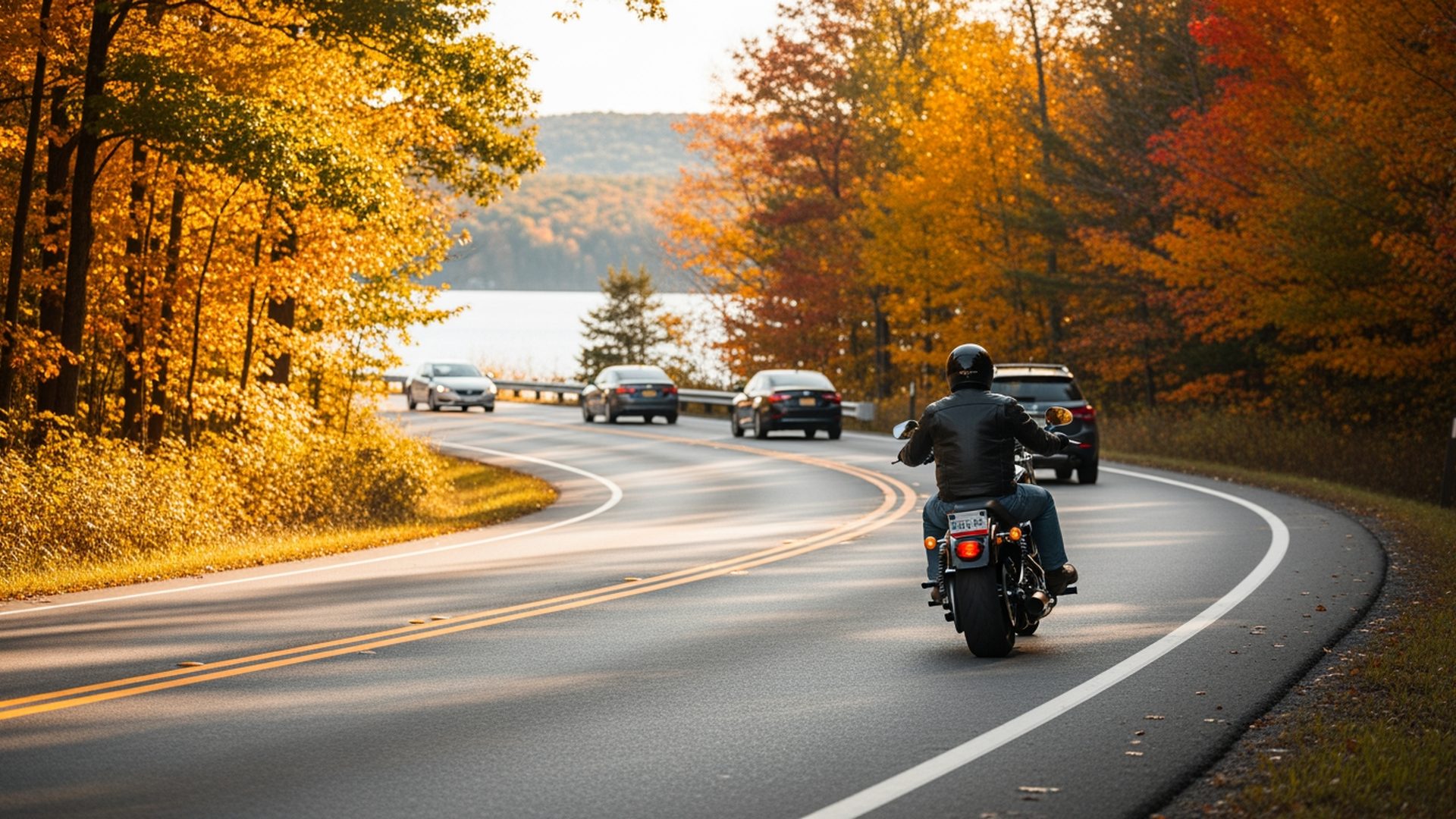
Best Motorcycle Rides Near New York City (and Their Hidden Risks)
The New York City metro is better riding country than most people give it credit for. An hour north of the George Washington Bridge the Hudson Highlands climb right up out of the river, the Palisades run green along the Jersey and Rockland cliffs, and the back roads of Westchester and Putnam string together a full day of curves. The same region that gives downstate riders some of the best fall runs in the Northeast also carries real hazards, and New York law adds a twist most riders never think about until they are already hurt.
Bear Mountain and Seven Lakes Drive
Ask a downstate rider for the classic run and Bear Mountain comes up first. Cross the Bear Mountain Bridge, climb Perkins Memorial Drive for the long view over the river, then let Seven Lakes Drive unspool through Harriman State Park with sweeping curves, lake after lake, and a rhythm that keeps you leaned over for miles. In October the hardwoods light up and the whole loop feels a world away from the Cross Bronx. Those same qualities are the risk. Weekend traffic is heavy, the road fills with cars and other bikes braking late for the views, and gravel and wet leaves collect right in the curves where you least want to lose traction. Ride it smooth and patient, not like a racetrack.
The Palisades Interstate Parkway
For a fast, scenic escape straight out of the city, the Palisades Interstate Parkway runs from the George Washington Bridge north along the wooded cliffs above the Hudson toward Bear Mountain. Sweeping bends, tree canopy, and river overlooks make it a favorite quick run for riders who want green and open road without a long haul. The catch is that it is a busy commuter parkway, not an empty backroad. No commercial trucks, but plenty of distracted drivers watching the scenery, sudden lane changes, and deer that step out of the tree line without warning, especially at dawn and dusk. Keep your following distance long and your eyes moving.
Up the Hudson to Cold Spring and Storm King
Point the bike north through Putnam County and follow Route 9D up the east bank of the Hudson to Cold Spring, with Storm King Mountain rising across the water. The riverside road threads through the Highlands past Boscobel and Breakneck Ridge, and the little village at Cold Spring makes a perfect turnaround for lunch. In fall it is some of the prettiest riding in the state. It is also narrow, winding, and clogged on weekends with hikers, cyclists, and tourists parking half on the shoulder near the trailheads. Cross traffic and car doors are the danger here, not speed. Treat every parked car as if someone is about to step out of it.
The Taconic State Parkway
When you want miles of curves, the Taconic State Parkway delivers. Running north through eastern Westchester, Putnam, and Dutchess, the Taconic is a rider's parkway: long sweeping bends, rolling grades, and stretches of genuine driving pleasure that make the drive out worth it. It also has a reputation, and it earned it. The curves are faster than they look, the pavement changes without warning, and the Taconic is thick with deer, especially at dawn and dusk when a strike on a bike is a serious crash. There is no shoulder to speak of in places and no shortage of drivers treating it like an interstate. Respect the road, watch the tree line, and ride your own pace.
Long Island and the North Fork
For a different kind of day, run east onto Long Island and out to the North Fork. Once you clear the Expressway and the suburbs, the roads through the farm country and vineyards toward Orient Point open into long straights, water views, and small-town pace that feel nothing like the LIE grind. It is an easy, relaxed ride with a lighthouse at the end. The hazards are the ones that come with that: getting there means the Long Island Expressway, where congestion and distracted drivers make a bike easy to miss, and once you are out east the two-lane roads carry summer and fall tourist traffic, wide farm equipment, and drivers turning into vineyard lots without ever seeing you. Relaxed is not the same as safe.
The Hidden Risks Every Downstate Ride Shares
No matter which route you pick, riding out of New York City comes with a few constants worth planning around. Ride like the road is not looking out for you, because it is not.
- ✓ Deer and wildlife. The Highlands, the Taconic, and the parkways are thick with deer, especially at dawn and dusk, and a deer strike on a bike is a serious crash.
- ✓ Gravel and wet leaves. Rural and parkway curves collect loose stone and fall leaves right where you lean, exactly where you least want to lose traction.
- ✓ Potholes and steel plates. Downstate roads and city streets are a minefield of potholes, sunken utility cuts, and slick steel construction plates that shrug off a car and can put a bike down.
- ✓ The left-turn driver. The most common motorcycle crash is a car turning left across a rider's path, and it happens at metro intersections and parkway crossings every day.
- ✓ Bridge, tunnel, and expressway traffic. Low sun and constant congestion on the GW Bridge, the Cross Bronx, the Major Deegan, and the LIE leave drivers rushed, distracted, and blind to a bike in the next lane.
Why a New York Crash Hits Riders Differently
Here is the part most riders never see coming until it is too late. New York is a no-fault insurance state, but its no-fault law specifically does not cover motorcyclists. A driver hurt in a car can tap their own no-fault PIP for medical bills and lost wages no matter who caused the crash. An injured rider cannot. That single exclusion means a downstate rider who goes down has to look to the at-fault driver, and to their own coverage, for everything, which makes the whole claim harder and higher-stakes. New York does follow pure comparative negligence, so being partly at fault reduces your recovery but never bars it completely, though insurers still fight hard to shift blame onto riders. The state also requires only minimum liability coverage of 25/50/10, which can vanish before a serious crash is paid for, so your own uninsured and underinsured motorist coverage is a downstate rider's real backstop in a metro full of uninsured and hit-and-run drivers. Every rider and passenger in New York must also wear a DOT helmet, no exceptions. Check your policy and your gear before your next ride, not after a crash. And if you do go down, New York generally gives you three years from the date of the crash to file an injury claim, shorter when a city or MTA vehicle is involved.

Mary Ellen O'Connor and the motorcycle accident lawyers in New York at O'Connor Law represent riders hurt by negligent drivers. If you have questions after a crash, their team is here to help.