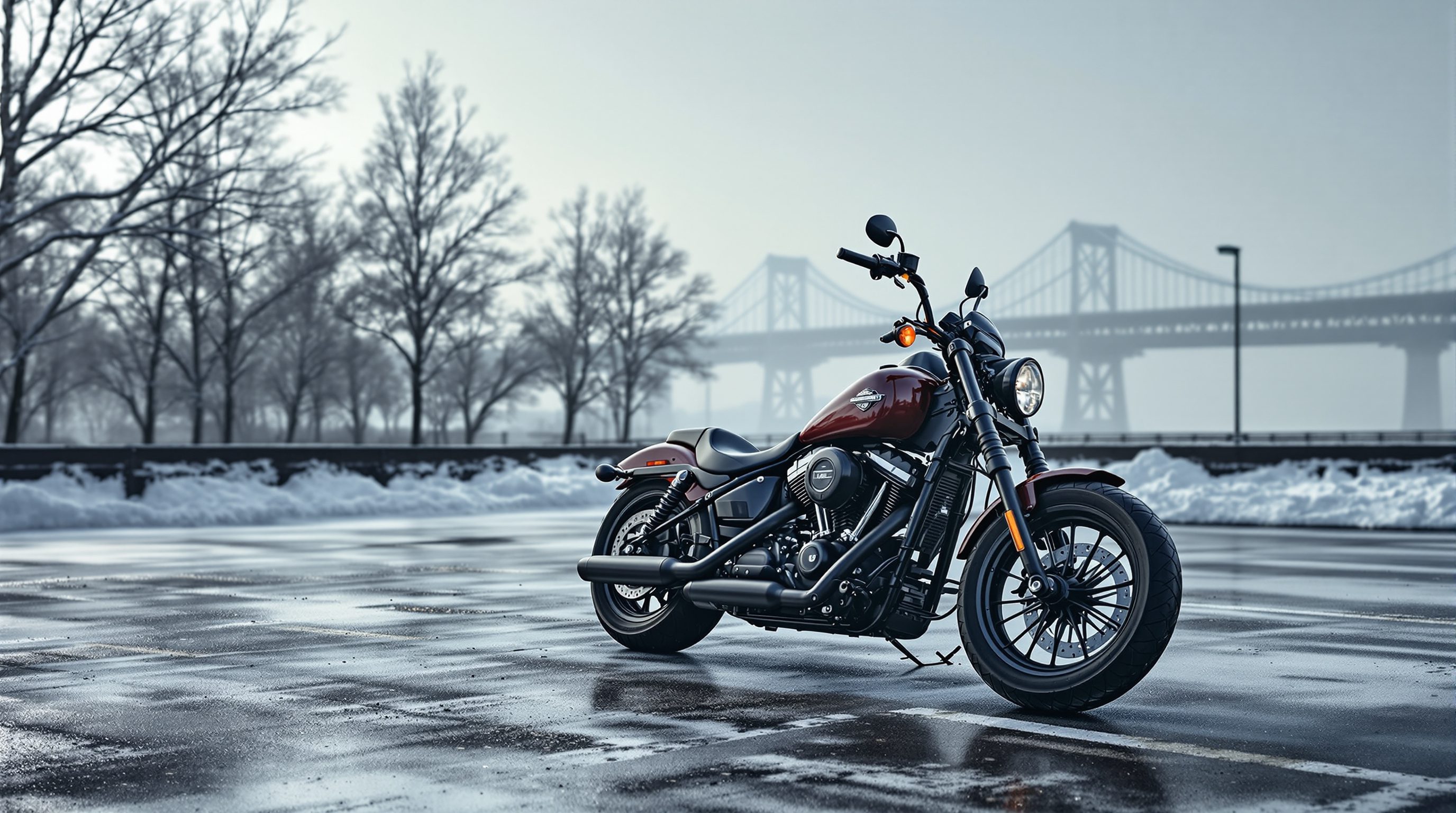
Black Ice and Bridge Decks: Winter Road Hazards in the NYC Metro
Most riders in the New York metro store the bike in January. Some do not. If you are the die-hard who commutes over the GW Bridge in a heated jacket while everyone else waits for April, this one is for you. Winter does not just make the ride colder, it changes the road under your tires in ways that a car driver never feels and never has to respect. Black ice on a bridge deck, frost on a steel plate, brine slick on a shaded overpass: these are the hazards that put a two-wheeler down while the SUV next to you shrugs it off. Respect the first freeze, or the first freeze will teach you the hard way.
Why bridge decks and overpasses freeze first
There is a reason every winter road sign in the metro warns that bridges freeze before roadways, and for a rider it is not a suggestion. A normal stretch of the Cross Bronx sits on top of ground that holds warmth and slows freezing. A bridge deck or an elevated overpass has cold air moving both above it and underneath it, so it loses heat from every side and drops below freezing while the pavement on either end is still bare and wet. That means the GW Bridge, the elevated sections of the Cross Bronx and the Major Deegan, and the overpasses on the Hutch and the Saw Mill can be glazed with black ice when you had traction thirty seconds ago. On a bike there is no warning shimmy, no gradual slide. The front tucks and you are down.
Black ice you cannot see until you are on it
Black ice earns its name because it is not black, it is clear, so you see the dark asphalt right through it and read the road as merely wet. The danger spots are predictable if you know where to look: shaded curves where a building or a hillside blocks the sun all day, the bottoms of underpasses where cold air and runoff pool, and the north-facing side of any elevated ramp. Morning and late-night commutes are the worst, when overnight cold has had hours to work and the sun has not touched the pavement. A wet-looking road that has stopped throwing spray off the car ahead of you is a warning. Assume any shaded, elevated, or low-lying stretch is iced until proven otherwise.
Steel, brine, and the metro's frozen furniture
The city road surface is a minefield in winter even where there is no sheet ice. Steel construction plates and bridge expansion joints go slick with frost and offer almost no grip to a cold tire, and the metro is paved with them. Manhole covers and metal grates freeze over and become skating rinks the size of your contact patch. Then there is what the DOT puts down to fight the ice: rock salt that leaves a loose, marble-like layer, and liquid brine sprayed before a storm that dries into a slippery film and stays greasy for days. Painted lines, crosswalks, and the metal-heavy Manhattan grid all lose grip in the cold. None of this bothers a car much. All of it can drop a motorcycle.
- ✓ Treat every bridge and overpass as iced. Decks freeze first and thaw last, so the GW Bridge, the Cross Bronx, and the Hutch can be glazed while the road nearby is clear.
- ✓ Read the shade, not just the sky. North-facing curves, underpasses, and building-shadowed streets stay frozen long after the open road has thawed.
- ✓ Avoid steel plates and manhole covers. Frost-slick metal offers almost no grip; cross it upright, off the brakes, and never mid-lean.
- ✓ Respect salt and brine. Loose rock salt acts like marbles and dried brine leaves a greasy film that lingers for days after a storm.
- ✓ Ride smooth and give yourself room. Gentle throttle, gentle brakes, no sudden inputs, and far more following distance than you keep in summer.
Why the first freeze matters more than the tenth
The most dangerous ride of the winter is often the first cold snap, when riders who have not adjusted their habits meet ice they were not expecting on a route they know cold. By February the die-hard commuter has recalibrated. It is that first freeze that catches people. And the stakes are higher on a bike in New York than most riders realize, because no-fault does not cover motorcyclists here. Go down on an icy overpass with no other vehicle involved and there is no PIP fund to pay your medical bills or lost wages. If another driver's speed or failure to clear ice from a for-hire vehicle contributed, or a public entity left a known hazard unaddressed, you may have a claim, but New York generally gives you only three years to bring it, and far less when a City or MTA vehicle is involved. The best protection is still not going down. When the temperature drops toward freezing and the decks glaze over, the smartest move a metro rider can make is to leave the bike parked and let the salt trucks win that day.

Mary Ellen O'Connor and the New York motorcycle accident attorneys at O'Connor Law represent riders hurt by negligent drivers. If you have questions after a crash, their team is here to help.