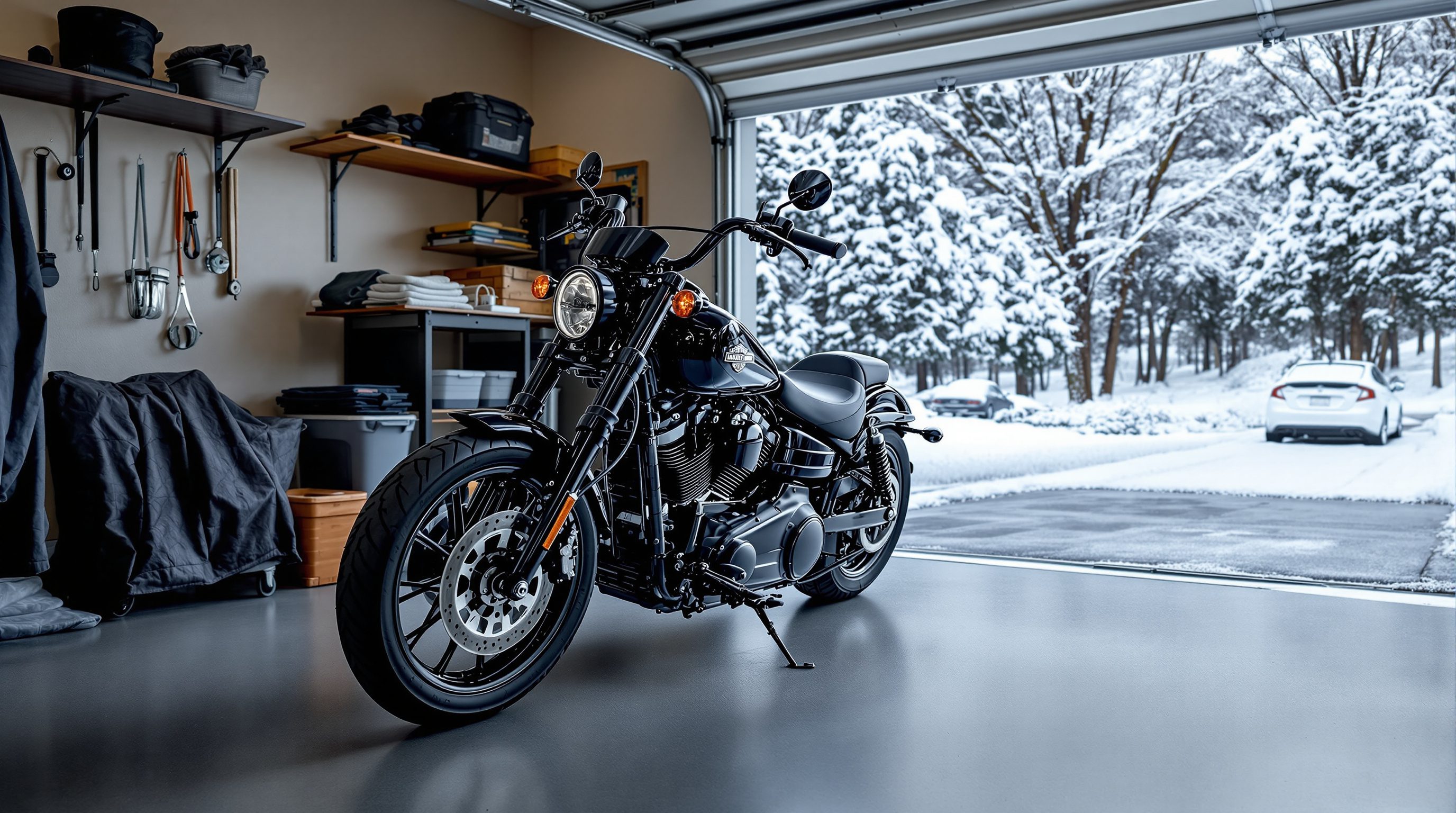
Winterizing Your Ride in the DMV: Storing a Motorcycle Without Killing Your Coverage
January in the DMV is layup season. The salt trucks own the Beltway, black ice sits on the overpasses, and most of us have the bike up on a stand from sometime in November until the roads dry out in spring. Parking the bike is the easy part. The part riders get wrong is the insurance. It feels smart to call your carrier and cancel the whole policy while the bike sleeps, because why pay to insure something you are not riding? Here is why that instinct costs DMV riders real money, and how to park the bike for winter without leaving yourself exposed.
Do Not Drop Everything Just to Save a Few Dollars
A stored bike is still at risk. Theft out of the garage, a fire, a tree limb through the roof in an ice storm, a burst pipe that floods the floor, rodents chewing through the wiring harness. If you cancel the policy outright, none of that is covered, and a winter loss comes straight out of your pocket.
A lapse in coverage is its own problem. Insurers treat any gap in your record as a red flag. Riders who let coverage lapse over the winter often come back in spring to higher premiums, or trouble getting written at all. And your uninsured and underinsured motorist coverage is worth protecting in a region this hard on riders. In DC, Maryland, and Virginia, where a single percent of fault can bar a claim entirely, UM and UIM are often the pieces that actually carry your recovery when the other driver has nothing. Dropping them for a few months to save a little is a bad trade.
Comprehensive-Only Is the Move Most Riders Want
You usually do not have to choose between paying full freight and going bare. Ask your agent about switching to comprehensive-only for the storage months. Comprehensive is the part of the policy that pays for theft, fire, vandalism, storm damage, and rodents, the things that happen to a parked bike, without charging you for collision and road liability you are not using while it sits.
A few cautions before you do it. If your bike is financed, your lienholder almost certainly requires full coverage year-round, so confirm before you touch anything. Ask whether dropping to comprehensive-only affects your UM or UIM coverage, because that protection can ride along with the liability portion. And never ride a comprehensive-only bike. The day you roll out onto US-50 or the GW Parkway, you need your full coverage restored first.
Virginia Changed the Math
Where your bike is plated matters. Virginia used to let owners pay a fee instead of carrying insurance, but that option has been phased out, and the Commonwealth now expects every registered vehicle to carry coverage. That means dropping insurance on a plated Virginia motorcycle over the winter can trigger penalties rather than savings. Maryland and DC have their own registration and insurance rules. The point is simple: do not assume the cheapest option is even legal where your bike is registered. Confirm it.
Winterize the Bike So Spring Does Not Cost You
Coverage protects you from the surprises. Good prep prevents the self-inflicted ones. A DMV winter is long and damp, and a bike that sits wrong can cost you a battery, a fuel system, or a set of tires by April.
- ✓ Battery.. Put it on a tender or pull it and keep it on a maintainer indoors, because a hard freeze finishes off a half-charged battery fast.
- ✓ Fuel and stabilizer.. Fill the tank and add stabilizer before storage so the fuel does not gum up and moisture does not rust the tank from the inside.
- ✓ Tires.. Set them to full pressure and get the weight off them with stands or a plank, since months on cold concrete leaves flat spots.
- ✓ Oil and fluids.. Change the oil before it sits so acids from old oil are not eating at the engine all winter.
- ✓ Cover and critters.. Use a breathable cover and block the exhaust and intake, because mice love a warm airbox and will chew your wiring.
Before the First Spring Ride, Confirm the Coverage Is Back On
When the roads finally clear, the first call is to your agent, not a quick spin around the block. Restore full liability, collision, and UM or UIM before the tires touch pavement. Take a few photos of the bike as it comes out of storage too, so you have a clean record of its condition if something goes wrong early in the season. The goal is to ride into spring fully covered, not to find out on I-395 that you are not.

Seann Malloy and the Washington DC metro motorcycle injury attorneys at Malloy Law Firm represent riders hurt by negligent drivers. If you have questions after a crash, their team is here to help.