The Most Dangerous Roads for DMV Motorcyclists, and How to Ride Them
Ask any DMV rider and they can name the roads that make them tense up. It is not superstition. Certain corridors around Washington concentrate the exact conditions that put motorcyclists down: some of the worst congestion in the nation, forced high-speed merging, blind lane changes, brutal potholes, and drivers with far too much to watch. Knowing which roads carry the most risk, and why, is not about avoiding them, because most of them you cannot avoid. It is about riding them with a plan. Here is an honest look at the corridors that demand the most from DMV riders, and how to give yourself the best odds on each one.
The Capital Beltway and the Mixing Bowl
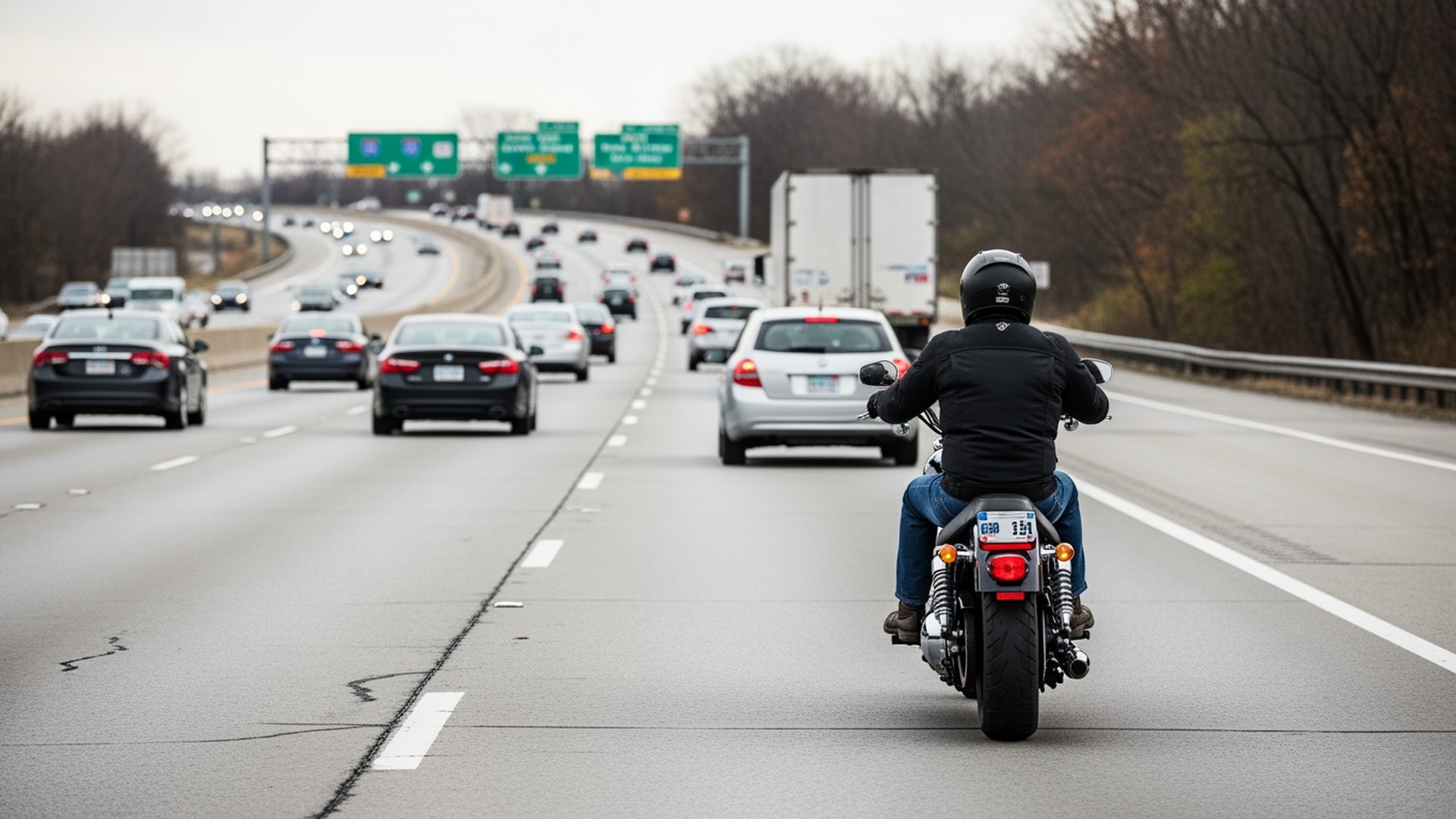
The Capital Beltway, I-495, is the spine of the region and one of the most congested and crash-prone stretches of freeway in the country. For a rider it is a wall of merging, weaving, and sudden braking, with lanes that appear and vanish, ramps that dump traffic straight into the flow with almost no room, and stop-and-go that bunches up without warning. The worst of it is the Springfield Interchange, the Mixing Bowl, where I-495, I-395, and I-95 all knot together in a maze of ramps, lane splits, and high-speed merges that forces drivers across several lanes in a short distance. On both, the danger to a rider is the lane change into a bike the driver never saw and the rear-end into stopped traffic. Ride these with a following gap bigger than feels necessary, stay out of the blind-spot pockets beside trucks and cars, cover your brakes, read the traffic two or three cars ahead, and know which lane you need well before the split so you are never forced across at the last second. Keep an escape lane in mind at all times.
I-395, I-66, and I-270
The commuter arteries into the District carry their own reputation. I-395 funnels traffic from Northern Virginia across the 14th Street Bridge into downtown, mixing heavy congestion, tight ramps, express-lane transitions, and drivers changing lanes to reach an exit at the last moment. I-66 inside the Beltway is chronically jammed, with fast HOV and toll-lane traffic running beside slower flow and constant weaving between the two. I-270 up toward Frederick is a wide, high-speed corridor where traffic moves fast until it suddenly does not, with abrupt slowdowns, aggressive lane changes across many lanes, and the collector-distributor splits near the spur that catch drivers off guard. On all three the theme is speed differential and forced merging. Match the flow rather than fighting it, give merging traffic room to see your headlight before the gap closes, and back your speed down where the pace turns unpredictable.
DC-295, New York Avenue, and the traffic circles
Closer into the city, the hazards change character. DC-295 and Kenilworth Avenue run fast and rough along the Anacostia, with heavy merging, uneven pavement, and notorious potholes that can knock a bike offline in an instant. New York Avenue is a wide, busy gateway into downtown where high speeds meet cross traffic, turning vehicles, and abrupt stops. Then there are the District's traffic circles, Dupont, Logan, Thomas, Washington, Chevy Chase, where multiple streets feed into a single rotating stream and drivers change lanes, hesitate, and exit without signaling. For a rider a circle is a swirl of blind spots and last-second decisions. Pick your exit and your lane before you enter, hold a steady line, stay visible, and never assume a driver crossing the circle sees you. Watch the pavement everywhere in the city, because the potholes and utility-cut edges on these roads are a real threat on two wheels.
- ✓ Live outside the blind spots. On the Beltway, I-395, I-66, and I-270, the crash that gets riders is the lane change into a bike the driver never saw. Position yourself where mirrors can find you and never linger beside a vehicle.
- ✓ Keep a gap you can stop in. The region's congestion turns into sudden stops without warning. A larger following distance is your buffer against the rear-end crash and gives you room to swerve.
- ✓ Choose your lane early at the Mixing Bowl and the circles. Know which lane or exit you need before you reach the split so you are never forced across several lanes at the last second.
- ✓ Watch the pavement on DC-295, Kenilworth, and the city streets. Potholes, seams, and utility cuts can knock a bike offline. Scan the surface ahead and leave room to avoid a crater without swerving into traffic.
- ✓ Make yourself seen. Reflective gear, a clean aimed headlight, and a lane position that keeps you visible cut down the "I never saw the motorcycle" crash these corridors specialize in.
When a driver puts you down on one of these roads
You can ride every one of these corridors perfectly and still get hit, because most rider crashes come down to another driver merging, turning, or changing lanes into a motorcycle they never looked for. When that happens, DMV law shapes what comes next, and it is harsh. DC, Maryland, and Virginia all follow contributory negligence, meaning if you are found even 1 percent at fault, you can be barred from recovering anything at all. Insurers know this, so after a crash on a road with a bad reputation they love to argue the rider chose a dangerous route, was lane-splitting, or was going too fast for it, trying to shift blame off their driver and onto you. The road's reputation is not your fault, and it does not excuse a driver who failed to yield or check a blind spot.
- ✓ Contributory negligence makes documentation everything. In DC, Maryland, and Virginia even a small share of fault can end your claim, so how the crash is recorded can decide whether you recover in full or nothing at all.
- ✓ Minimum liability is low across the region. DC at 25/50/10, Maryland at 30/60/15, and Virginia at 30/60/20. A serious injury on the Beltway or I-270 blows past those limits fast, which is why UM/UIM coverage matters so much.
- ✓ Where the crash happened decides the deadline. Generally 3 years in DC and Maryland but only 2 in Virginia, with much shorter notice rules against government defendants on the interstates and parkways.
- ✓ Helmets are required across the DMV. All three jurisdictions require a DOT-approved helmet, and a non-compliant one gets turned into a contributory-fault argument. Wear a compliant helmet every ride.
If you go down on one of these corridors, get medical care first, then document everything you can: the lane, the merge or circle, the road surface, the traffic, and the exact spot. The more a road is known for crashes, the harder the insurer will lean on that reputation to blame you, and in a contributory-negligence region those details are the difference between a recovery and nothing.

Seann Malloy and the Washington DC metro motorcycle accident attorneys at Malloy Law Firm represent riders hurt by negligent drivers. If you have questions after a crash, their team is here to help.