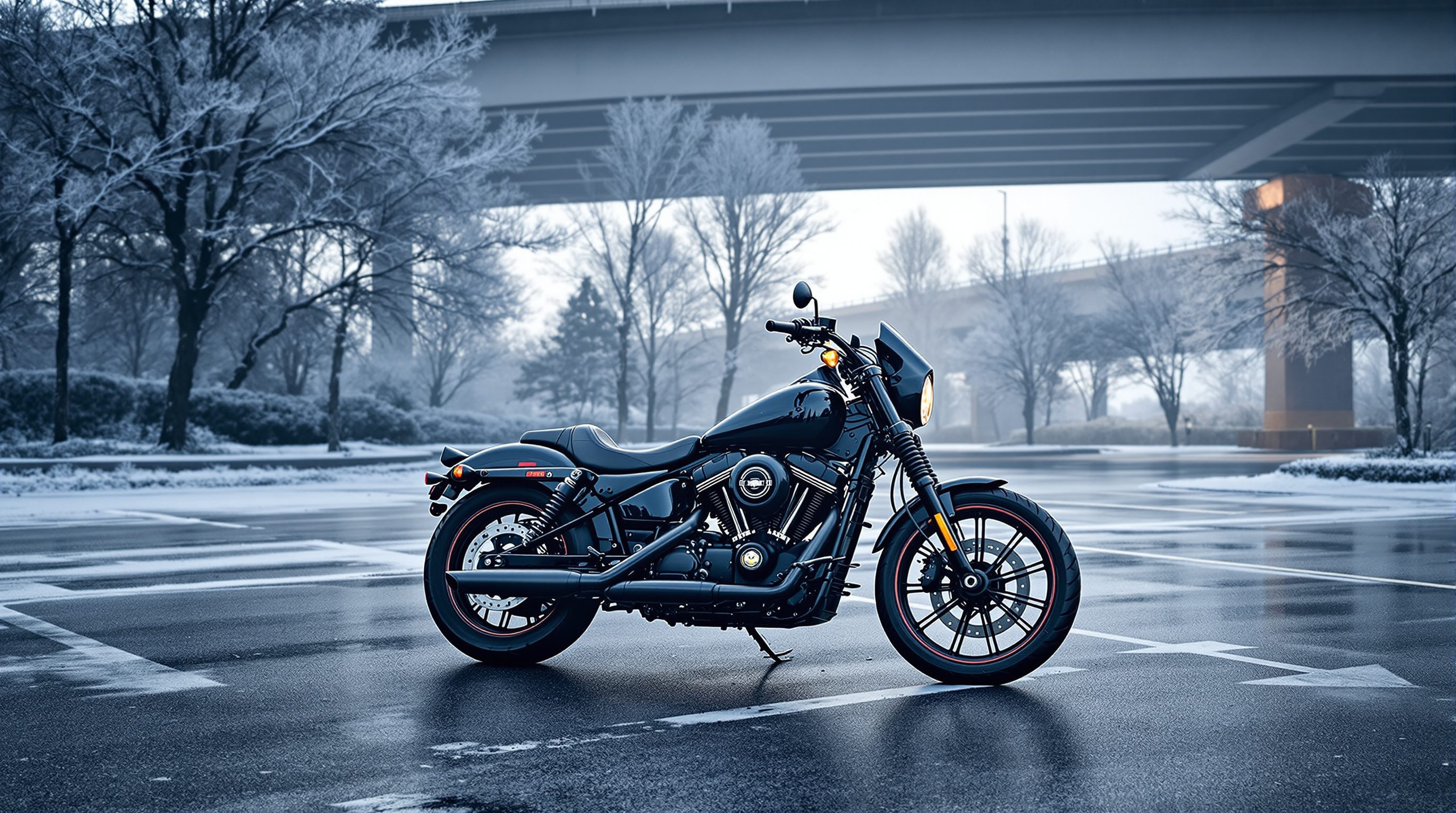
Black Ice on the Bridges: Why DMV Overpasses Freeze First and How Fault Works If You Go Down
There is a stretch of every DMV ride where the pavement lies to you. The road out of Rock Creek Park looks wet, the American Legion Bridge on I-495 looks clear, the ramp off the GW Parkway looks like every other ramp. Then you cross a bridge deck or an overpass on a cold January morning and the front end is suddenly light and skating on a sheet of ice you never saw. That is black ice, and in the DMV it shows up first exactly where a motorcycle can least afford it: on bridges, overpasses, and shaded ramps. Here is why those spots freeze before everything else, how to ride through freeze season without getting caught, and what the fault rules mean if a driver loses control on the ice and takes you down with them.
Why Bridges and Overpasses Ice Over First
Regular road sits on top of the ground, and the ground holds warmth that keeps the surface a few degrees above freezing for a while after the air drops. A bridge or an overpass has cold air running underneath it as well as over it. It loses heat from both sides, so it chills to freezing faster and stays frozen longer than the road leading up to it. That is why the Potomac crossings, the Beltway bridges, and the flyover ramps around the Springfield and Wilson Bridge interchanges can be glazed while the approach was bone dry.
Shade does the same thing. A ramp tucked under an overpass, a curve screened by the Blue Ridge foothills or by the trees along Suitland Parkway, or the north side of any cut never sees the sun to burn the ice off. The DMV also gives you the perfect recipe for it: rain or wet snow in the evening, a hard overnight freeze, and a commute that starts before the sun has done any work. Add the frost heaves and damp that come after a Sugarloaf or Blue Ridge snow and you get invisible ice in the worst possible places.
Riding Freeze Season Without Getting Caught
You cannot always see black ice, so the real skill is reading the conditions and giving yourself room. When the overnight low dipped near or below freezing and the road was wet the day before, treat every bridge, overpass, and shaded ramp as if it is iced until you have proof it is not.
- ✓ Read the thermometer before you read the road.. If it is near 32 degrees and the pavement was wet, the bridges are the first thing to freeze, so plan for it before you get there.
- ✓ Get your braking and turning done early.. Be slow and upright before the bridge deck or the ramp, not on it, because inputs on ice are what put you down.
- ✓ Watch for the sheen.. Black ice often looks like a wet or slightly glossy patch on otherwise dry pavement, especially in shade and on decks.
- ✓ Leave a cushion.. Double your following distance and stay out of the pack, so a car that slides on the overpass has somewhere to go that is not you.
- ✓ When in doubt, wait it out.. A late start after the sun hits the bridges beats a morning ambush on the ice, and there is no schedule worth a winter low-side.
When a Driver Loses Control and Hits You
Here is the part that catches riders off guard. Even when a car slides on the ice and slams into you, the other driver's insurer will not simply admit fault. In DC, Maryland, and Virginia you are riding in contributory-negligence territory, and that rule is brutal. If the insurer can pin even one percent of the blame on you, you can be barred from recovering anything at all.
So expect the story. They will argue a careful rider should not have been out in freeze conditions, that you were going too fast for the ice, that you should have anticipated the bridge and were following too close yourself. None of that changes the fact that their driver lost control, but under the one percent rule they do not need to prove you caused the crash. They only need to hang a sliver of fault on you to walk away owing nothing.
That is why what you do at the scene matters as much as how you ride. A "black ice, nothing anyone could do" crash is exactly the kind an adjuster reshapes into a rider-error crash if the record is thin.
Protect the Record Before the Insurer Rewrites It
The driver who slid into you had a duty to drive for the conditions. Ice is not a free pass. Your job is to make sure the evidence shows what actually happened before it melts, literally and figuratively. Photograph the ice, the shade, the bridge or ramp, and the vehicles where they came to rest, because the ice will be gone within hours. Get names of independent witnesses who saw the car slide. Note whether the road crew had treated the deck. Do not give a recorded statement guessing at your speed, and do not tell the driver or the adjuster it was "just the ice" as if no one is responsible. Get the crash documented, get checked out, and get a knowledgeable set of eyes on it before the other side locks in a version where the weather, and somehow you, are the only ones at fault.

Led by Seann Malloy, Malloy Law Firm in Washington DC metro fights for injured motorcyclists. Reach out to their motorcycle accident lawyers in Washington DC metro anytime you need real answers.