Best Motorcycle Rides Near Washington, DC (and Their Hidden Risks)
The DMV is a rider's crossroads. Point the bike west and the Blue Ridge stacks up an hour from the Beltway. Follow the Potomac and you get river cliffs and parkland minutes from downtown. Cross into the Maryland or Virginia countryside and the farm roads unspool for a full day. The same routes that make Washington a great base for riding also carry hazards that catch too many riders off guard, and the region's fault rule adds a twist most people never think about until they are already hurt.
Skyline Drive and Shenandoah National Park
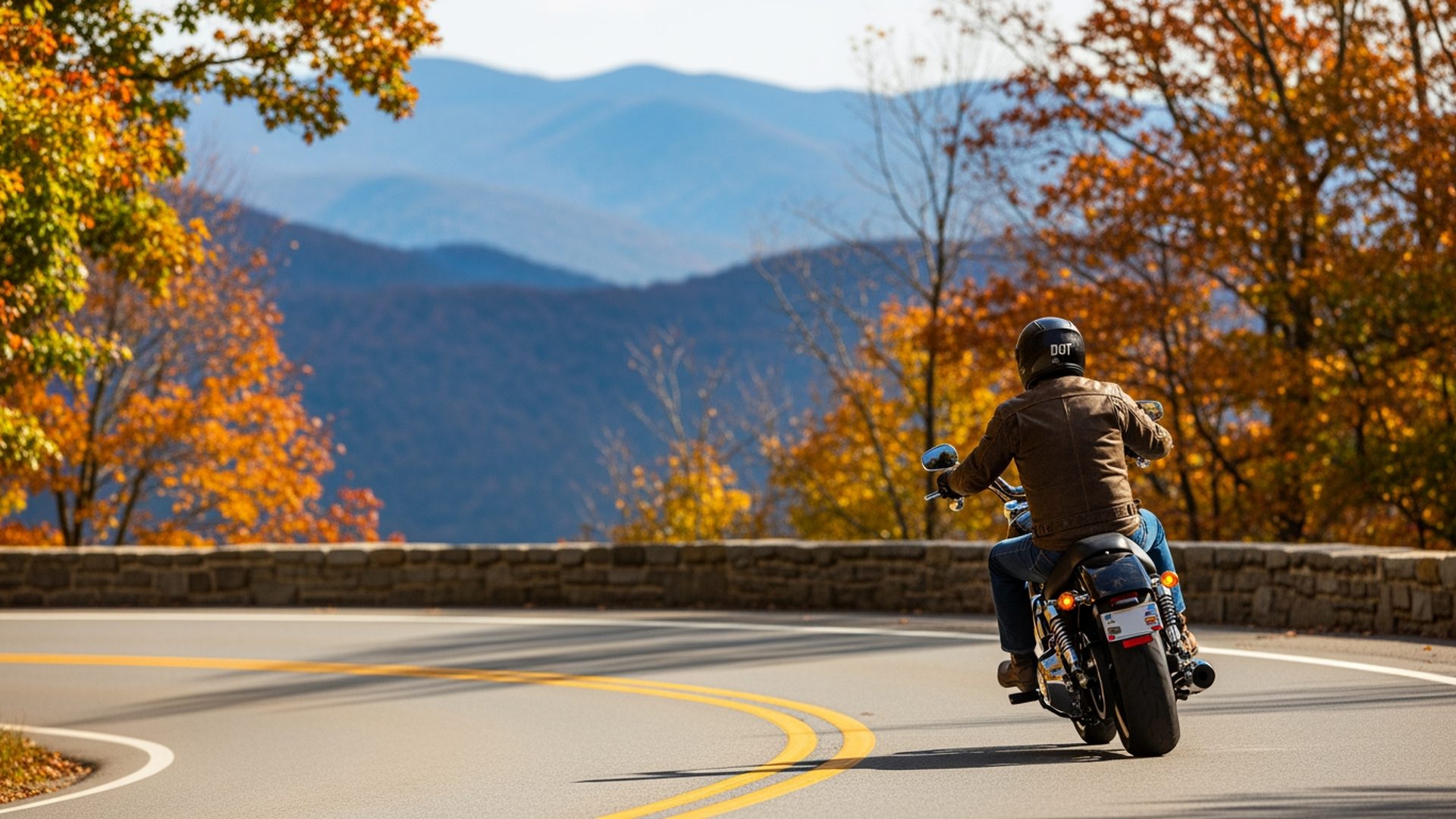
Run west out of the metro toward Front Royal and you reach the north entrance of Skyline Drive, 105 miles of two-lane road tracing the crest of the Blue Ridge through Shenandoah National Park. Overlook after overlook opens onto layered ridgelines, and in October the oaks and maples turn the whole spine of the mountain to fire. It is the signature ride within reach of Washington. The catch is that the park holds you to a 35 mph limit for a reason. The road is a constant string of curves with low stone walls and no runoff, sightseers braking hard or stopping for photos, and deer that step onto the pavement without warning at dawn and dusk. Fog settles fast at elevation, and shaded pavement stays damp. Ride it smooth and patient, because someone is always slowing just around the next bend.
The George Washington Parkway and Great Falls
For a ride you can start after work, the George Washington Parkway hugs the Virginia bank of the Potomac from the Beltway down past the CIA and toward Mount Vernon, all river views and tree canopy with no commercial trucks allowed. Pair it with a run up to Great Falls Park and you get some of the prettiest pavement inside the Beltway. The danger is exactly what makes it convenient. The parkway is a tight, curving commuter road with short sightlines, stone walls close to the lane, and drivers who know it well and take it fast on their way home. It stays damp under the trees, the surface heaves and cracks over the seasons, and rush-hour congestion leaves people rushed and distracted. Relaxed scenery is not the same as a safe road.
Sugarloaf Mountain and the Maryland Countryside
North of the city, the farm country around Sugarloaf Mountain near Dickerson gives you rolling two-lane roads winding past fields, horse farms, and the lone hump of Sugarloaf itself, with a paved road climbing partway up to overlooks over the Maryland piedmont. It trades speed for scenery, some of the gentlest riding near Washington. The hazards here are quiet ones. These are working farm roads with tractors and equipment pulling out, gravel and mud tracked onto the pavement, blind driveways and crests, and Sunday drivers who are never looking for a motorcycle. Fall brings harvest traffic and pick-your-own crowds that make it busier than it looks. Ride it like a car could pull out of any driveway, because one often does.
Harpers Ferry and the Antietam Battlefield Roads
For a full-day loop steeped in history, run northwest toward Harpers Ferry where the Shenandoah meets the Potomac, then wind through the narrow roads of the Antietam battlefield near Sharpsburg, Maryland. The riding threads through river towns, stone bridges, and open battlefield fields that light up in fall, some of the most atmospheric miles in the region. The roads demand respect. They are old, narrow, and rural, with tight curves, no shoulders, sudden gravel, and one-lane bridges. Tourist traffic slows and stops without warning, and cell service and fuel get thin between towns. Plan the ride, not just the destination, and give yourself room around every blind bend.
The Blue Ridge Foothills
When you want mountain roads without the full commitment of Skyline, the Virginia piedmont between the metro and the Blue Ridge is laced with them. The two-lane routes around Middleburg, The Plains, and up toward the gaps at Front Royal and beyond roll through hunt country, vineyards, and foothill farms before the land tilts up into the mountains. It is a bucket-list day in the fall. It is also distracted-driver country. Wine-country traffic tours the vineyards without watching for bikes, farm equipment shares the road, and deer are thick along the wood lines at dusk. The gentle scenery hides fast closing speeds when a car drifts across the center line in a curve.
The Hidden Risks Every DMV Ride Shares
No matter which route you pick, riding out of Washington comes with a few constants worth planning around. Ride like the road is not looking out for you, because it is not.
- ✓ Deer season. Blue Ridge, park, and foothill roads are thick with deer, especially at dawn and dusk in the fall rut, and a strike on a bike is a serious crash.
- ✓ Brutal potholes and rough pavement. DMV winters chew up the roads, and the Beltway, the parkways, and the back roads all hide edge cracks, patches, and potholes that can put a rider down.
- ✓ The left-turn driver. The most common motorcycle crash is a car turning left across a rider's path, and it happens at DC, Maryland, and Virginia intersections every day.
- ✓ Nation-leading congestion. The Capital Beltway, I-395, I-66, I-270, and US-50 carry some of the worst traffic in the country, leaving drivers rushed, distracted, and blind to a bike in the next lane.
- ✓ Wet leaves and traffic circles. Fall drops a slick layer of leaves onto shaded curves, and the region's traffic circles and painted lines turn treacherous when damp.
Why a DMV Crash Hits Riders Differently
Here is the part most riders never see coming until it is too late. DC, Maryland, and Virginia are among the last few places in the country that still follow contributory negligence. Under that rule, if you are found even 1 percent at fault for the crash, you can be barred from recovering anything at all. There is no reducing your award by your share the way most states do. It is all or nothing, which is exactly why insurance adjusters work so hard to pin even a sliver of blame on the rider. On top of that, all three jurisdictions require every rider and passenger to wear a DOT helmet, and a helmet that does not meet the standard gets twisted into a fault argument. Coverage minimums and filing deadlines also differ by jurisdiction, so where your crash happens matters. Maryland requires 30/60/15, DC requires 25/50/10, and Virginia requires 30/60/20, and all three require uninsured motorist coverage, which is a DMV rider's real backstop in this traffic. Deadlines generally run three years in Maryland and DC but only two years in Virginia, with shorter notice rules when a government vehicle or road is involved. It is worth checking your policy and your gear before your next ride, not after a crash.

Seann Malloy and the motorcycle accident lawyers in Washington DC metro at Malloy Law Firm represent riders hurt by negligent drivers. If you have questions after a crash, their team is here to help.