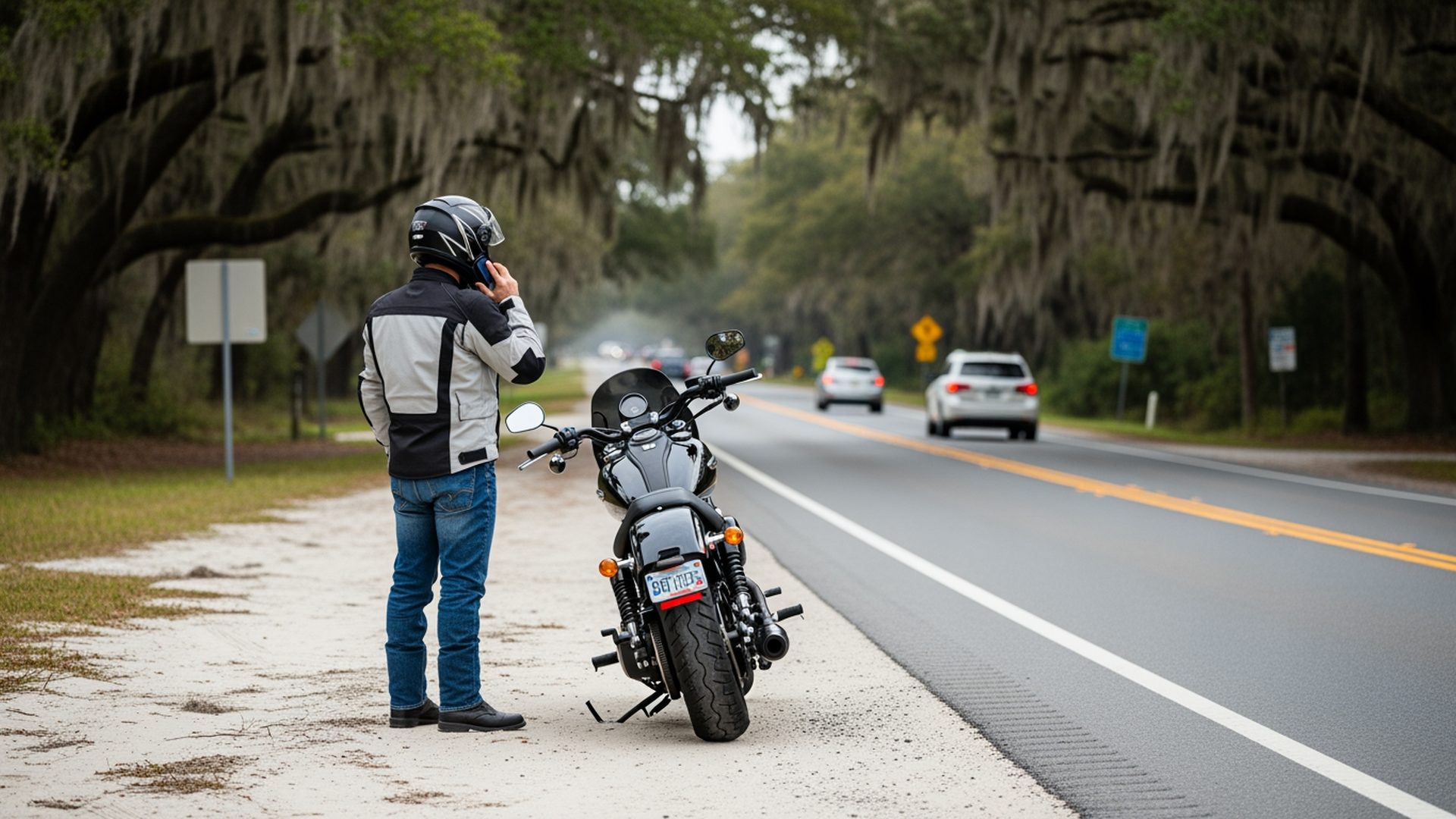
Dealing With the Insurance Adjuster After a South Carolina Motorcycle Crash
The phone rings a day or two after your crash. It is the other driver's insurance adjuster, and they sound genuinely nice. They are sorry this happened. They just need a few quick details to get your claim moving.
What the Adjuster Actually Wants
Strip away the friendly tone and an adjuster is usually chasing two specific things in those first calls. Both feel like cooperation. Both can wreck your claim. You are not required to give either one to the other driver's insurer, and in the early days after a crash, you usually should not.
- ✓ A recorded statement. They will frame it as routine, just so they have your account on file. What they are really building is a transcript of you, in pain and unprepared, saying something they can twist later.
- ✓ A signed release. Often a "medical authorization" that sounds harmless. Sign a broad one and you can hand them access to your entire medical history, years of unrelated records they will use to argue your injuries are old news.
The Out-of-State Rider Trap on the Strand
Myrtle Beach draws riders from all over, and adjusters know it. If you were visiting the Grand Strand when you went down, expect the fast, friendly offer to come even faster. They are betting you want to get home, that you will not come back to South Carolina to fight, and that a check waved in front of you now looks better than a claim that drags on from three states away. Do not take that bait. A quick offer to an out-of-state visitor is almost never what the claim is actually worth, and cashing it usually ends your right to ask for more once your real medical bills come in.
Why You Do Not Give a Recorded Statement
A recorded statement is a trap dressed up as a formality. Right after a crash you are rattled, medicated, and hurting. You do not yet know the full extent of your injuries, and some do not surface for days or weeks. If you tell the adjuster you are "feeling okay" out of politeness, and a herniated disc shows up later, that recording gets played back as proof you were not really hurt. They will also fish for admissions. A casual "I didn't really see him coming" becomes an argument that you were not paying attention. You have every right to decline. A simple, polite "I am not giving a recorded statement" is a complete answer.
Why Every Word Matters in South Carolina
Here is what makes an adjuster call so dangerous in South Carolina. The state follows modified comparative negligence with a 51 percent bar. Your recovery is reduced by your share of fault, and if the insurance company can push your share to 51 percent, you recover nothing at all. That rule turns every friendly question into a probe. A stray "I might have been going a little fast" or "I probably could have braked sooner" is not just a detail. It is a percentage point of fault, and enough of them either shrink your recovery hard or end your claim outright. This is why saying as little as possible is not rudeness. It is protecting your case.
The No-Helmet Angle They Will Try
South Carolina only requires helmets for riders and passengers under 21, so an adult who chooses to ride without one is riding legally. That does not stop an adjuster from bringing it up. On a rider claim, expect them to hint that a no-helmet choice makes you partly responsible for your own injuries and to fold it into the fault fight under the comparative rule. Do not argue the point with them on the phone and do not volunteer it. Whether your gear can be used against you at all is a legal question, and it is one for your attorney, not a casual admission for the adjuster.
Why You Do Not Sign a Blanket Release
The same caution goes for that authorization form. Your crash-related medical records are fair game once your claim is in motion. Your entire medical history is not. A blanket release lets the adjuster dig through old injuries, prior treatment, anything they can use to claim your pain came from somewhere else. On a rider claim, they will seize on any past back issue or old sports injury to argue the crash did not do the damage. Do not sign anything broad, and do not sign anything at all before you understand exactly what it authorizes. When in doubt, let a lawyer review it first.
The Tactics They Use on South Carolina Rider Claims
Motorcycle claims get a special kind of scrutiny, because adjusters know the public carries a bias against riders. They lean into it. On South Carolina motorcycle claims, watch for:
- ✓ The "reckless biker" script. They will imply you were speeding or riding aggressively, whether or not there is any evidence, to run up your share of the fault.
- ✓ Fault fishing. Because South Carolina reduces your recovery by your fault share and bars it at 51 percent, every question about what you "could have done differently" is aimed at building that percentage.
- ✓ The tourist rush. If you are visiting the Strand, they push a fast, small offer betting you will not come back to South Carolina to fight for the real value.
- ✓ The minimum-coverage framing. South Carolina only requires 25/50/25 liability coverage, so an adjuster may present a small offer as if it is all that could ever exist. Do not accept that before your own UM and UIM coverage and every other policy have been checked.
- ✓ The waiting game. The flip side of the rush. They stall, ignore calls, and let mounting bills wear you down into accepting less while your three-year deadline quietly runs.
None of this is personal. It is a playbook. Recognizing it is how you beat it.
What to Say and What Not to Say
Keep it short and factual. It is fine to confirm the basics, that a crash happened, the date, the location. Beyond that, hold back. Do not speculate about fault or apologize, because even reflex politeness like "sorry" can be turned into a percentage point of fault under South Carolina's comparative rule. Do not guess about your injuries or say you feel "fine," because you do not yet know how hurt you are. Do not give a recorded statement or sign a release without legal advice. Do stay calm, stick to facts, and say you will follow up, or that your attorney will.
Remember South Carolina's Three-Year Clock
While you are fending off adjuster calls, a deadline is running in the background. South Carolina generally gives you three years from the date of the crash to file most injury claims. Adjusters are in no hurry to remind you of that. A slow, friendly stall can quietly eat into the time you have to act, so do not let a drawn-out claims process run out your clock.
When to Hand It Off to a Lawyer
You do not have to deal with any of this yourself, and on a serious injury claim, you probably should not. Once a lawyer represents you, the adjuster deals with your attorney, not with you on your worst day. The recorded-statement pressure stops. The lowball offers meet someone who knows what the claim is actually worth. And in a comparative-fault state where every percentage point comes out of your recovery, having someone build and protect the fault side of your claim from the start can make all the difference. You get to focus on healing instead of fending off phone calls.

Led by Justin Lovely, The Lovely Law Firm in Myrtle Beach fights for injured motorcyclists. Reach out to their Myrtle Beach motorcycle injury attorneys anytime you need real answers.