Best Motorcycle Rides Near Myrtle Beach (and Their Hidden Risks)
Myrtle Beach is built for riding. The Grand Strand runs sixty miles up the coast, US-17 carries you south into moss-draped Lowcountry in half an hour, and the Francis Marion back roads sit just inland when you want pines and blackwater instead of ocean. The same roads that make the Strand a rider's town also carry risks that catch too many riders off guard, and South Carolina law adds a twist most people never think about until they are already hurt.
US-17 South Through Murrells Inlet and Pawleys
Point the bike south on US-17 and you leave the neon of the Strand behind fast. Within twenty minutes you are in Murrells Inlet, with the MarshWalk and the creek on your left, and then the road settles into the kind of easy Lowcountry cruising the coast is famous for. Brookgreen Gardens and its live oaks sit right off the highway, Pawleys Island opens up its old beach-house quiet a few miles on, and the whole run has a slow, salt-air rhythm to it. The catch is that US-17 down here is a busy tourist artery with constant driveways, turn lanes, and cars slowing to read signs for the next seafood shack or plantation garden. Left-turning traffic across your lane is the real danger, not the curves. Ride it patient, cover your brakes near the inlets, and never assume the car waiting to turn actually sees you.
The Run Down to Historic Georgetown
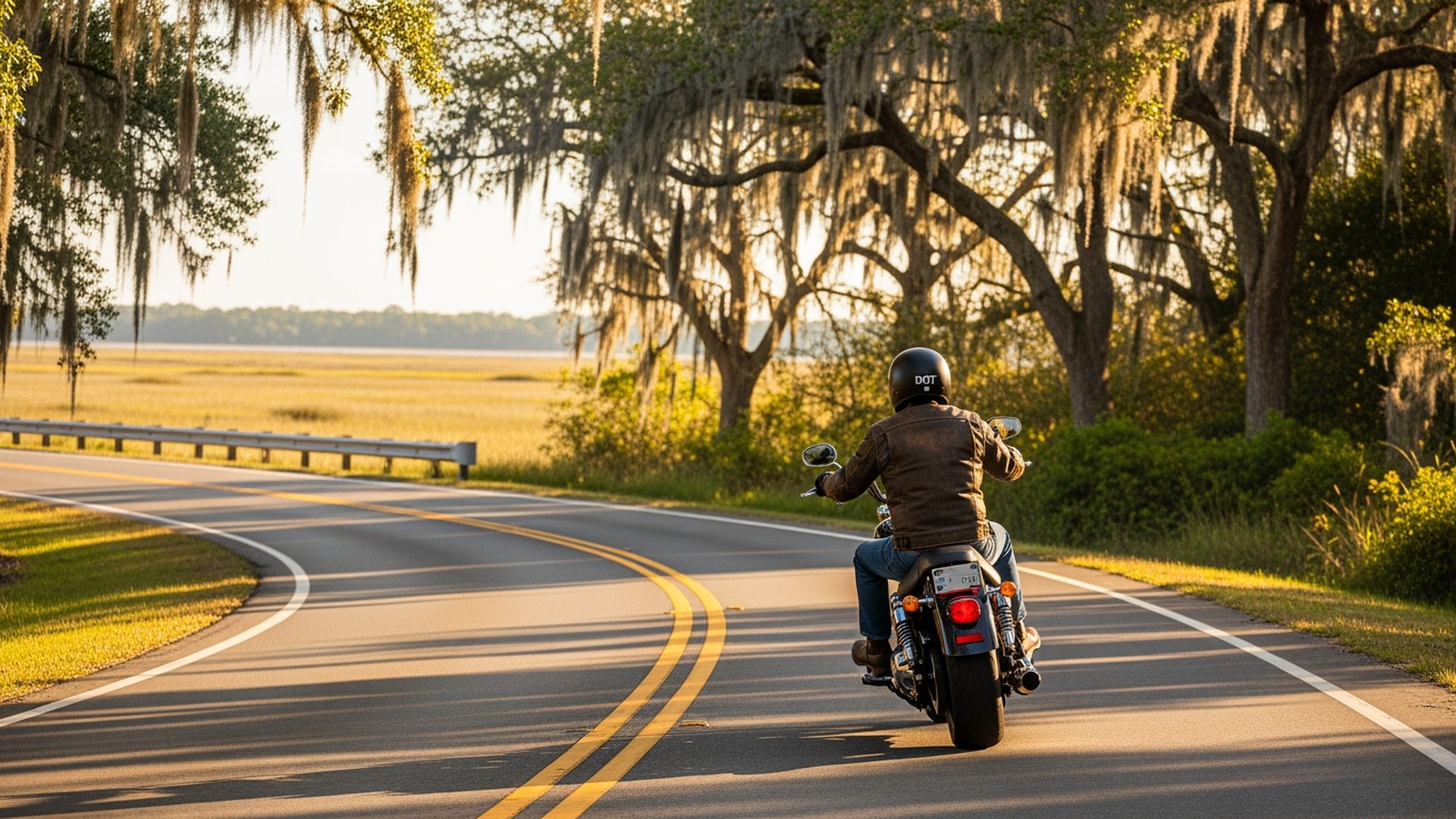
Keep going south on 17 past Pawleys and the country opens into some of the prettiest riding in the state, tunnels of live oak and long causeways over tidal marsh, before you roll into historic Georgetown on Winyah Bay. It is a genuine bucket-list day trip: colonial waterfront, working shrimp boats, and a downtown that feels a century removed from the beach. The hazards out here are quiet ones. The marsh causeways carry wind that shoves a bike around, standing water and sun-baked patches trade off across the pavement, and long open stretches lull drivers into drifting and speeding. Deer step out of the tree lines at dawn and dusk. It is a relaxed ride that punishes complacency, so keep your spacing and your eyes moving.
The Francis Marion and Swamp Fox Back Roads
When you want pines instead of ocean, cut inland toward the Francis Marion country and the old Swamp Fox back roads that thread through it. This is Revolutionary War ground, named for the Swamp Fox himself, and the two-lanes run arrow-straight through longleaf pine and blackwater swamp with almost no traffic. It is meditative riding, the kind where you forget the beach exists. The trade is real. These roads have sand and pine straw blown across the pavement, sudden shade that hides potholes and frost heaves, and long gaps between gas and cell service. Wildlife is thick and logging trucks pull out of unmarked cuts in the trees. Ride these like help is far away, because out here it is.
The Coastal Marsh Two-Lanes
Between the big routes, the Grand Strand hides a web of quiet marsh two-lanes, the roads locals use to reach the creeks, the boat landings, and the back sides of the barrier islands. Early on a fall morning, with the fog burning off the spartina and the tide coming in, they are as good as riding gets around here. They are also unforgiving. The pavement runs right to the water in places with no shoulder and no guardrail, blowing sand collects in the low spots, and the surface heaves where the marsh has worked at it for years. Locals take them fast because they know them. You should not. Treat every blind bend like a truck could be sitting just past it, because one often is.
North to Little River and Calabash
For a shorter fall run, head north instead, up through North Myrtle Beach to the old fishing village of Little River and across the state line to Calabash, North Carolina, the self-styled seafood capital just over the border. The waterfront at Little River, the Intracoastal Waterway, and the short hop into Calabash make an easy afternoon loop with a good meal at the turnaround. The catch is traffic. This is one of the most congested corridors on the north end, thick with tourists, turning traffic at every shopping center, and drivers from out of state who do not know the roads. The wide, busy intersections up here are exactly where riders get left-hooked. Slow down, ride like you are invisible, and give yourself an out at every light.
The Hidden Risks Every Grand Strand Ride Shares
No matter which route you pick, coastal South Carolina riding comes with a few constants worth planning around. Ride like the road is not looking out for you, because it is not.
- ✓ Tourist traffic. The Strand runs on out-of-state visitors who do not know the roads, drift between lanes reading signs, and never think to look for a motorcycle.
- ✓ Blowing sand and salt. Wind carries sand across coastal pavement and into the low spots on the marsh roads, and it hides in curves right where you need traction most.
- ✓ Sudden coastal storms. Fall is still hurricane and squall season on the coast, and a pop-up thunderstorm can put down slick, standing water on US-17 in minutes.
- ✓ The left-turn driver. The most common motorcycle crash is a car turning left across a rider's path, and it happens at Strand intersections every single day.
- ✓ Rally-season crowds. The Fall Bike Rally packs the Grand Strand with bikes and gawking traffic, and more riders on the road means more drivers who are still not watching for them.
Why Fall Is the Time to Ride It
The Grand Strand is a different place once the summer crowds thin out. The heat breaks, the beach traffic on US-17 and Ocean Boulevard eases, and the Lowcountry back roads empty out into exactly the kind of riding you moved here for. Fall is the sweet spot, cooler air, softer light through the live oaks, and room to actually enjoy the road, as long as you keep an eye on the coastal weather and the rally-season crush.
Why a South Carolina Crash Hits Riders Differently
Here is the part most riders never see coming until it is too late. South Carolina follows modified comparative negligence with a 51 percent bar: your recovery is reduced by your share of fault, and if you are found 51 percent or more at fault, you recover nothing, which is exactly why adjusters work so hard to blame the rider. The state also requires only minimum liability coverage of 25/50/25, which can vanish before a serious crash is paid for, so your own uninsured and underinsured motorist coverage is a Grand Strand rider's real backstop against the many uninsured and out-of-state tourist drivers on the road. And while South Carolina only requires helmets for riders and passengers under 21, meaning adults may legally ride without one, insurers still try to use a no-helmet choice against injured riders. It is worth checking your policy and your gear before your next ride, not after a crash. And if you do go down, South Carolina generally gives you three years from the date of the crash to file an injury claim.

Justin Lovely and the motorcycle accident lawyers in Myrtle Beach at The Lovely Law Firm represent riders hurt by negligent drivers. If you have questions after a crash, their team is here to help.