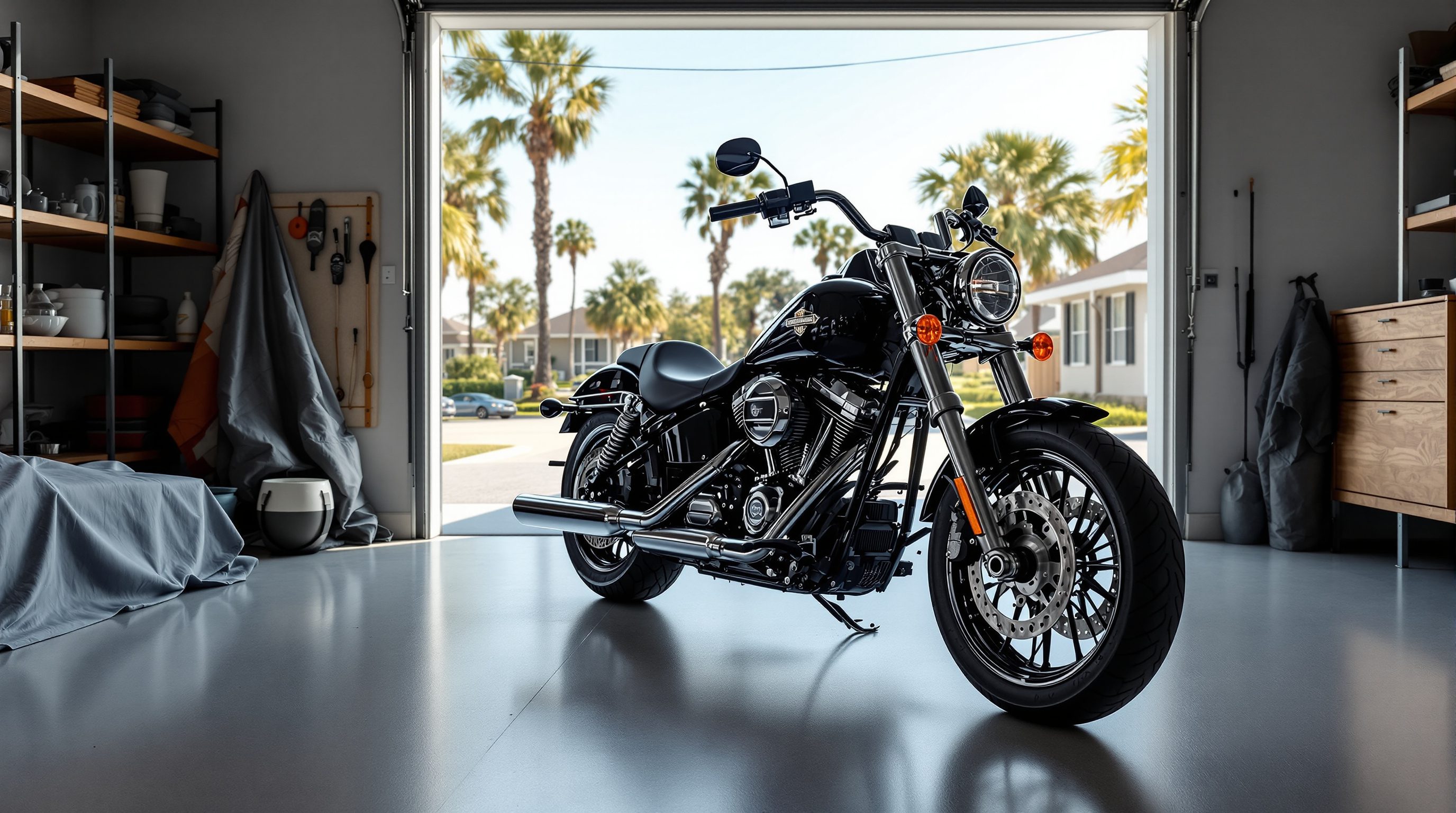
Winter Storage and Your Motorcycle Insurance on the Grand Strand: Should You Drop Coverage?
Coastal South Carolina winters are soft compared to the mountains, but plenty of Grand Strand riders still tuck the bike away for the coldest stretch from January into February and wait for the weather to turn. Right about then the renewal notice shows up, and stripping the policy down to save a few dollars while the bike just sits looks like an easy win. On the coast, that math is a trap. The months your motorcycle is parked are exactly the months a coastal storm, a flood, blowing salt, or a thief can total it, and how you handle the policy over winter follows you straight into your spring rate.
The Grand Strand winter is mild, but the storms are not
A garaged bike is not a safe bike just because it is not moving. Winter on the coast still brings nor'easters, coastal flooding, wind-driven rain off the Atlantic, and the constant salt in the air that eats at chrome and wiring. A tree limb through the shed, a flooded garage near the Intracoastal Waterway, a king-tide surge, or a break-in while the neighborhood is quiet does not care that you were not riding. The one coverage that pays for all of that is comprehensive, and it is also the cheapest part of your policy. Dropping it to save a small amount over a few idle months is how riders end up eating the full loss of a stored bike out of pocket.
What comprehensive actually covers while your bike sits
Comprehensive is the storage rider's coverage. It handles the damage that has nothing to do with a crash, which is nearly every way a parked motorcycle gets hurt on the coast. Keep it in force through the whole off-season and it does the work while you wait for spring.
- ✓ Storm and flood damage. A downed limb, wind-driven rain, a flooded garage, or coastal surge that reaches your bike is comprehensive territory, not collision.
- ✓ Theft and vandalism. A stored bike is a target, and a stolen or stripped motorcycle is only covered if comprehensive is still on the policy when it happens.
- ✓ Salt, corrosion, and falling objects. Sudden damage from the coastal environment and anything that falls on a parked bike is what this coverage exists for.
- ✓ Keep the policy unbroken. A winter lapse pushes you into a higher risk tier and breaks your uninsured-motorist continuity, so reduce coverages if you must but never let the policy go dark.
Why a coverage lapse costs you more than it saves
The bigger mistake is not trimming a coverage, it is canceling the policy outright and letting it lapse. Insurers treat any gap as a red flag, and even a short winter lapse can push you into a higher risk tier when you restart in spring. You come back to a higher premium than you left with, and the few dollars you saved over a couple of quiet months are gone many times over. A continuous policy keeps your rate where you earned it. If money is tight, reduce coverages you truly are not using while the bike is parked, but keep the policy alive and unbroken.
The uninsured-motorist line you never cut
Here is the coastal reality that makes a lapse worse than it looks. South Carolina is an at-fault state with no no-fault system and no required personal injury protection, so after a crash you lean on your health insurance, any optional MedPay, the at-fault driver, and your own uninsured and underinsured motorist coverage. On a coast full of uninsured locals and out-of-state tourist drivers, that UM coverage is your real backstop, and South Carolina requires it for a reason. Cancel the policy over winter and let it lapse and you are not just risking the bike, you are breaking the continuity of the coverage that protects you the moment you ride again in spring.
What your lienholder requires, and what you can safely trim
If the bike is financed, the choice may not even be yours. Almost every lienholder requires both comprehensive and collision for the life of the loan, parked or not, and dropping them lets the lender force-place its own far pricier coverage on you. Read the loan terms before you touch a financed bike's policy. If the bike is owned outright and genuinely will not turn a wheel until spring, ask your agent about a true storage or lay-up approach that reduces or suspends collision while keeping comprehensive and the policy itself active. The goal is to stop paying for road risk you are not taking on, without ever opening a gap, dropping the comprehensive that guards a stored bike, or breaking your uninsured-motorist protection.

Justin Lovely and the Myrtle Beach motorcycle injury attorneys at The Lovely Law Firm represent riders hurt by negligent drivers. If you have questions after a crash, their team is here to help.