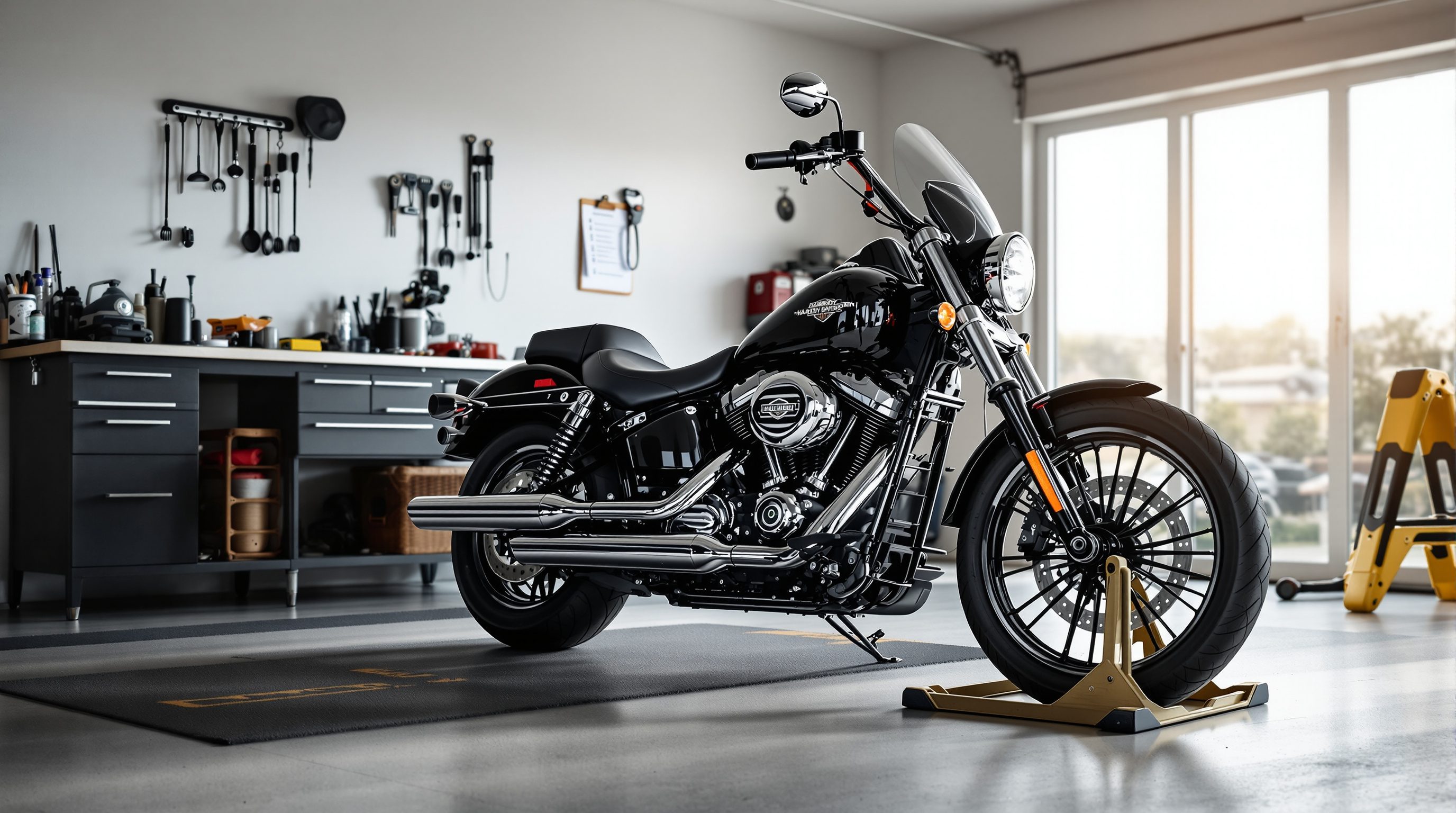
Spring-Ready: The Grand Strand Rider's Pre-Season Checklist
The first genuinely warm Saturday hits the Grand Strand and every rider feels it. The wind is off the ocean, US-17 is calling, and the bike has been sitting since the holidays. The temptation is to roll it out, thumb the starter, and go. Resist it for one afternoon. A machine that sat through a coastal winter and a rider whose reflexes have gone quiet are the two most common ingredients in an early-season crash, and salt air adds a wrinkle inland riders never deal with.
Start With T-CLOCS
The Motorcycle Safety Foundation's T-CLOCS inspection walks you through the whole machine in six categories so nothing gets skipped. After a winter layup, run all six before the first ride.
- ✓ Tires and wheels. Cold storage flat-spots tires and bleeds pressure. Set pressure to spec and look hard at tread, because old rubber gone hard grips like glass on cool spring pavement.
- ✓ Controls. Work the levers, cables, throttle, and hoses. Winter stiffens cables and lets a brake or clutch line weep. Everything should move smooth and return crisp.
- ✓ Lights and electrics. Salt air loves connectors. Test the headlight, brake light, signals, and horn, and clean corrosion off the battery terminals and grounds.
- ✓ Oil and fluids. Change oil that sat all winter, and check brake fluid and coolant. Old brake fluid absorbs moisture, which matters in a humid coastal climate.
- ✓ Chassis. Look at the frame, suspension, chain or belt, and fasteners. Set chain tension and lube it, and check nothing worked loose over the layup.
- ✓ Stands. Make sure the side stand and center stand spring back and hold. A tired spring drops a bike in a parking lot.
The Battery Is the Usual First Casualty
If one thing kills a spring ride before it starts, it is the battery. A motorcycle battery left through a cold layup slowly discharges, and a deeply drained one may never fully recover. Put it on a tender a day before you ride, load-test it if you can, and replace it before the season rather than getting stranded at the far end of a run down to Georgetown. A weak battery also starves your lights and horn, the exact gear that keeps you visible to spring tourists.
Salt-Air Corrosion Is the Coastal Rider's Tax
This is the check inland guides skip and Grand Strand riders cannot. Salt-laden air corrodes what road salt does to bikes up north, just slower and sneakier. Look at your brake caliper hardware, pins, and lines for corrosion that can make a brake drag or grab. Clean and protect electrical grounds and connectors, especially anything feeding your lights, since green crust on a connector is a dropout waiting to happen. Check cable ends and fasteners for rust before they fray or seize, and wipe down chrome and bare metal to slow the coast's steady work on the bike.
Your Skills Are Rusty Too
The machine is only half of it. Your riding reflexes fade over a winter off the bike, and the first warm ride is the worst time to discover it. Ease back in. Take the first outing somewhere quiet before you tackle a packed US-17 or Ocean Boulevard, and rebuild your braking, cornering, and slow-speed handling deliberately. Watch for the spring hazards that pile up now: sand and grit washed onto the roads over winter, potholes the cold season opened, and the surge of tourist traffic returning to the Strand.
Re-Check Your Insurance Before You Re-Check the Weather
Here is the box almost nobody ticks. South Carolina is an at-fault state with no required no-fault or PIP, so if you go down you lean on your health insurance, optional MedPay, the at-fault driver, and your own uninsured and underinsured motorist coverage. The state only makes drivers carry minimum 25/50/25 liability, which disappears fast in a serious wreck, and the Grand Strand is thick with uninsured and out-of-state tourist drivers. That makes your UM and UIM coverage your real backstop. Confirm you carry it, confirm the limits are worth having, and consider adding MedPay, in February, not from a hospital bed in April.

Justin Lovely and the Myrtle Beach motorcycle accident attorneys at The Lovely Law Firm represent riders hurt by negligent drivers. If you have questions after a crash, their team is here to help.