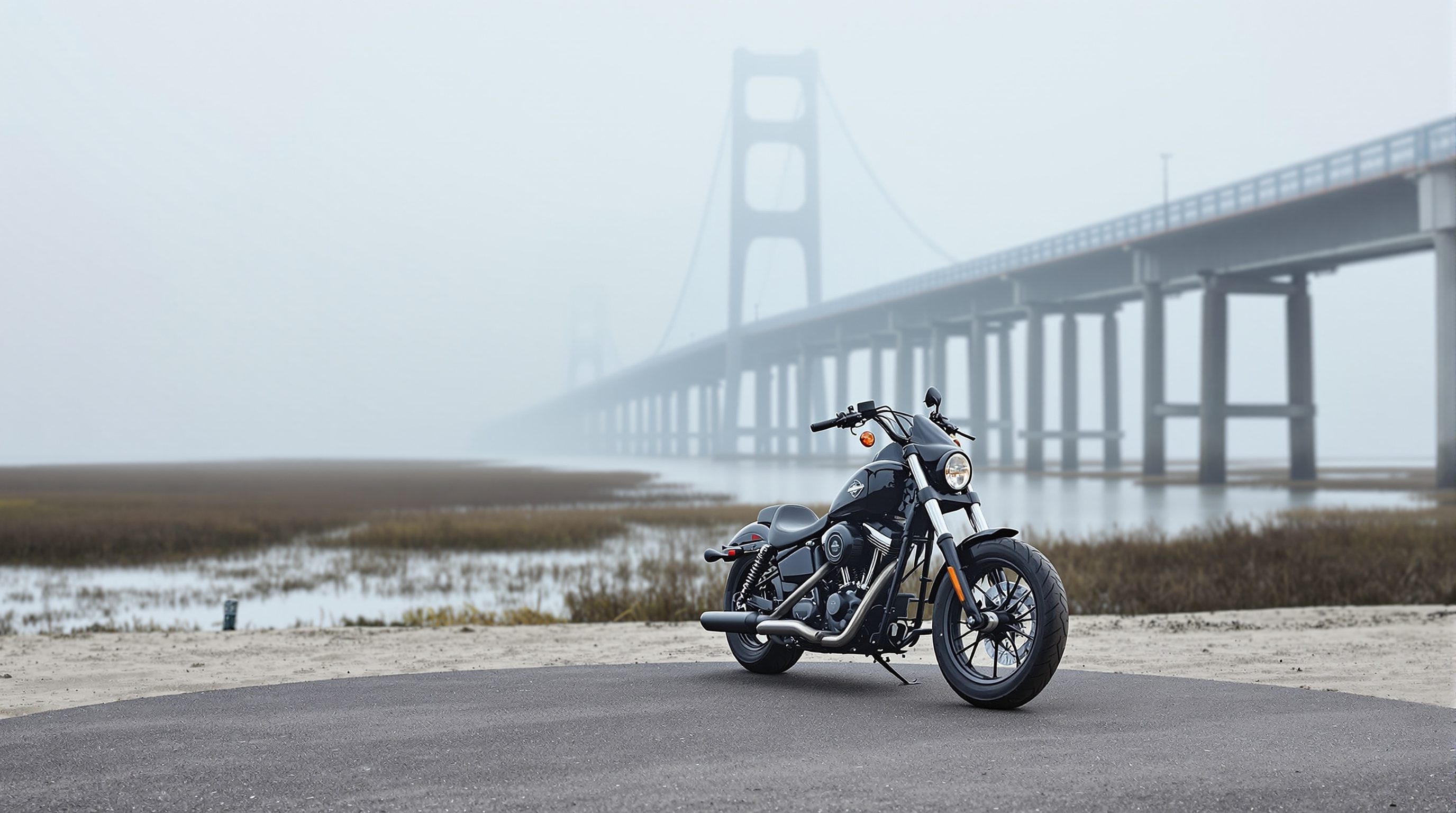
Coastal Fog, Wet Bridges, and Blown Sand: Winter Riding on the Grand Strand
A mild coastal winter tempts you out on days the calendar says you should be inside, and the Grand Strand rewards it with some of the emptiest, prettiest riding of the year. It also hands you a set of traction and visibility problems that have nothing to do with autumn leaves or summer heat. Dense sea fog rolls in off the Atlantic without much warning, quick winter rain glazes the bridge decks, salt and sand ride the wind across the pavement, and the low winter sun sits right in your line of travel morning and evening. Each one steals grip or sight, and on the coast in January they often show up together.
Sea fog that swallows the road
Coastal fog is a winter specialty on the Grand Strand. Warm, moist ocean air over cooler land can drop a thick fog across US-17, the Bypass, and the low ground near the Intracoastal Waterway in minutes, and it does not lift on a schedule. On a motorcycle the danger is double: you cannot see far ahead, and a driver behind or beside you cannot see your single taillight until they are almost on it. Fog also lays a fine film of moisture on the road and on your visor that quietly cuts your grip and your vision at the same time. If the fog is thick, get off the road and let it burn off. If you must ride through it, slow well down, run your low beam because high beam bounces back and blinds you, keep your visor clear, and put as much space as you can between yourself and the car ahead.
Wet bridge decks on SC-31 and SC-9
The Grand Strand is stitched together by bridges, and in winter the bridges are where grip goes to die. The spans on SC-31, the Carolina Bays Parkway, and SC-9 up toward the state line carry you over water and marsh where fog and moisture settle first, and their decks stay wet and cold long after the surrounding road has dried. Bridge surfaces cool faster than regular pavement, hold dew and drizzle, and often wear a dusting of salt and windblown sand that turns them greasy the instant they are damp. The expansion joints and any metal grating get slicker still. Cross a winter bridge the way you would cross ice: upright, off the brakes, with steady throttle and no sudden steering or lean. Do your slowing before the bridge, not on it.
Blown sand across Ocean Boulevard and the beach access roads
Wind off the beach is relentless in winter, and it carries sand well past the dunes. It drifts across Ocean Boulevard, the connector avenues, and the beach access roads, and it collects in the worst possible places, the curves, the turn lanes, and the shaded spots that stay damp. Dry sand on pavement acts like ball bearings under your tires, and a patch of it mid-corner can wash out your front end before you feel it going. Read the road ahead for the light-colored drift and treat it like a slick, getting your speed and your lean off before you reach the sand rather than on top of it. Where you can, ride around a visible patch. Where you cannot, cross it as upright and smooth as possible with no throttle or brake input.
The winter techniques that keep grip and sight
Cold coastal riding is a game of managing traction and visibility at the same time. A few habits carry you through the worst of it.
- ✓ Look for the sheen and the drift. A wet-looking bridge deck, a dark damp patch, or a light sand streak is your warning. Read it early and set your speed before you arrive, not once you are on it.
- ✓ Stay off the painted lines. Crosswalks, arrows, and lane markings get glassy when wet or salted. Place your tires on the grippier asphalt between them, especially through a damp intersection or turn.
- ✓ Be smooth on cold tires. Winter air keeps your tires from reaching grip temperature, so ease into throttle, brakes, and lean. Abrupt inputs on a cold, damp tire are how the front tucks.
- ✓ Beat the low sun. The winter sun sits low over the ocean at dawn and dusk and blinds both you and the drivers around you. Drop your speed into glare and assume the car facing the sun cannot see you.
- ✓ Own your lane with light. In fog and flat winter light you disappear. Run your headlight, add reflective or bright gear, and ride where mirrors and cross traffic can actually pick you out.
Why winter conditions become a fault fight
When a winter-condition crash lands in front of a South Carolina insurer, the weather becomes the adjuster's favorite weapon. South Carolina follows modified comparative negligence with a 51 percent bar, so your recovery drops by your share of fault and disappears entirely at 51 percent. The insurer will argue that the fog, the wet bridge, or the sand was obvious, that a reasonable rider would have stayed home, that you were going too fast for the conditions. Do not let a driver who turned across your lane in the fog hide behind the weather. Coastal conditions do not hand a careless driver a free pass, and the way the crash is documented is what decides whose fault it really was.

Justin Lovely and the Myrtle Beach motorcycle accident attorneys at The Lovely Law Firm represent riders hurt by negligent drivers. If you have questions after a crash, their team is here to help.