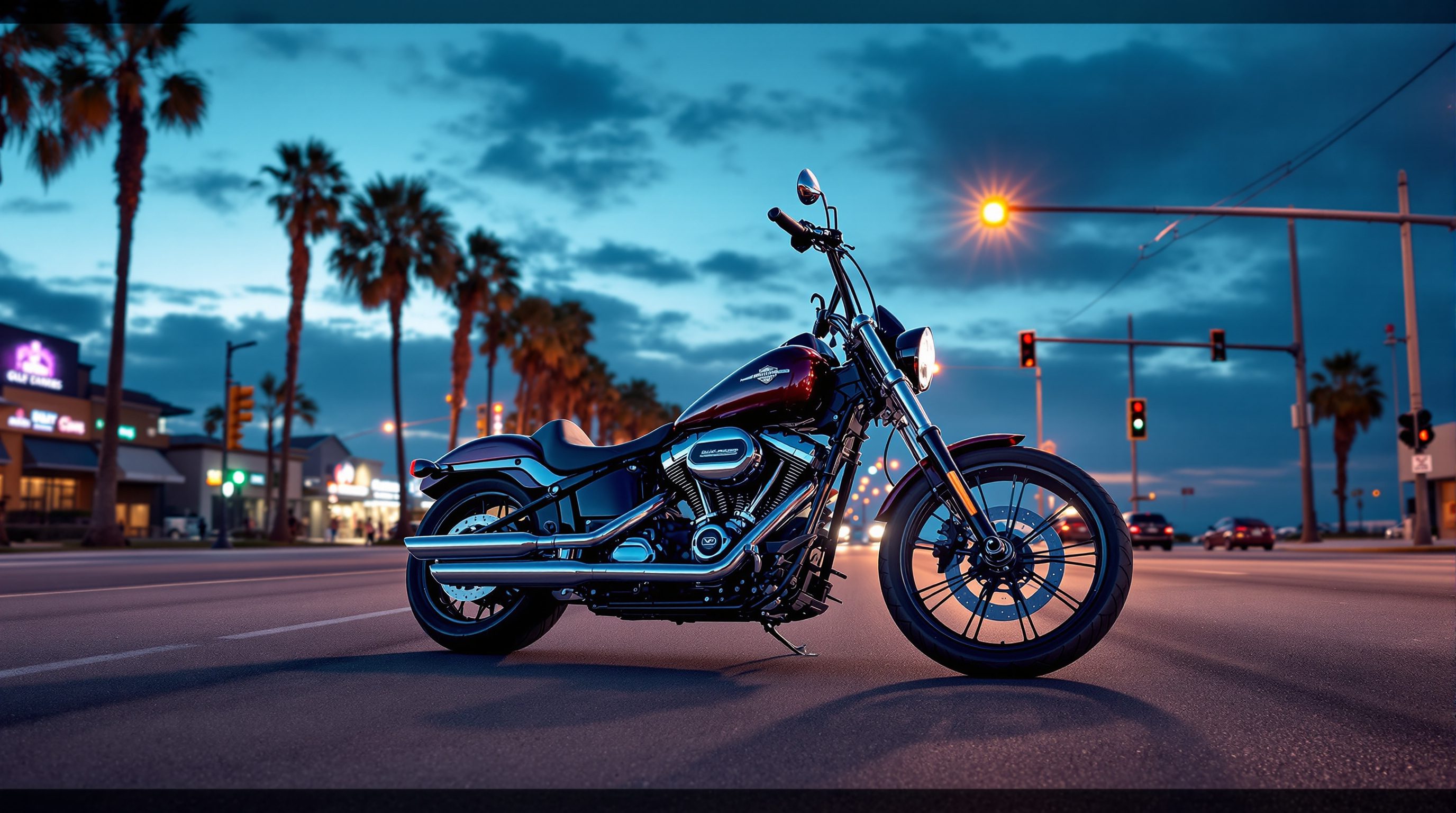
Left-Turn and Intersection Crashes on the Gulf Coast: Proving the Other Driver's Fault
You are rolling through an intersection on the Gulf Shores Parkway with the right of way, and a car coming the other direction turns left directly across your path. You had a fraction of a second and nowhere to go. It is the most common way riders get hurt in traffic, and it happens over and over at the busy intersections along Highway 59, the Foley Beach Express, and coastal AL-182. The driver climbs out and says the line every rider has heard: "I never saw him."
Why the Left-Turn Crash Is So Common, and So Dangerous for Riders
A car turning left has to judge the speed and distance of oncoming traffic and yield until the way is clear. Drivers are wired to look for other cars, and a motorcycle is narrow, quick, and easy to miss in a glance. So the driver looks, sees a gap that is not really there, and turns. The rider, doing everything right in their own lane, has almost no time to react. These are not fender benders. On the Gulf Coast the risk climbs in spring and summer, when tourist traffic floods the intersections around Gulf Shores and Orange Beach and drivers hunting for beach parking are not watching for bikes. Under Alabama law a driver making a left turn must yield to oncoming traffic, and failing to yield is negligence whether or not they were paying attention.
Why "I Never Saw Him" Is Not the End of the Story
Drivers say it because it feels like an excuse. It is actually an admission. If you had the right of way and a driver turned left across your lane, the law expected that driver to yield to you, and not seeing you does not lift that duty. It usually confirms they breached it. The danger is not the driver's excuse. It is what the insurance company does next. Knowing Alabama is a pure contributory negligence state, the adjuster will not argue about whether their driver failed to yield. They will go looking for any reason to put a percentage of fault on you, because even one percent is all they need to owe you nothing.
The One Percent That Ends Everything
In most states, if the left-turning driver was ninety percent to blame and you were ten percent, you still recover most of your damages. Not here. Alabama follows pure contributory negligence: if you are found even one percent at fault, you recover nothing at all. So the insurer's entire strategy becomes finding your one percent. Were you a few miles per hour over? Could you have braked sooner? Was your headlight on? None of it changes that the driver failed to yield, but any of it, if a jury buys it, can zero out your claim. That is why proving the other driver was one hundred percent at fault is not lawyer overkill on a Gulf Coast intersection crash. It is the whole ballgame.
How You Prove the Other Driver Was One Hundred Percent at Fault
You beat the one-percent game with evidence gathered fast, before it disappears. The goal is a record so clear that there is no room to hang any fault on you.
- ✓ Cameras. Intersections along Highway 59 and the beach roads often sit near businesses and gas stations, but that footage gets overwritten in days, so it has to be pulled quickly.
- ✓ Independent witnesses. A neutral driver or bystander who saw the car turn across your lane is powerful because they have no stake in the outcome. Collect names and numbers at the scene.
- ✓ The failure-to-yield violation. If the police cite the other driver for failing to yield on a left turn, that citation is strong evidence of their negligence.
- ✓ Physical evidence and scene facts. Skid marks, debris, vehicle damage, and the point of impact tell a reconstructionist the speeds and positions, which can shut down a bogus "he was speeding" argument.
- ✓ Your own conduct, documented. Establishing that you had the right of way, were in your lane, and rode lawfully removes the footholds the insurer needs to assign you that fatal one percent.
What to Do at the Scene of a Gulf Coast Intersection Crash
If you are able, get the other driver's insurance information and call the police so there is an official report. Look around for cameras on nearby buildings and note where they are. Ask any witnesses for their names and numbers before they drive off, because they will. Take photos of both vehicles, the intersection, the signals, and the final resting positions. And do not apologize or speculate about what you could have done differently, because in a contributory negligence state a stray word of self-blame is exactly the one percent the insurer is fishing for. The sooner the evidence is locked down, the harder it is for anyone to claim you shared the blame.
Noel Leonard and the motorcycle accident lawyers in Foley / South AL at Noel B. Leonard Attorney represent riders hurt by negligent drivers. If you have questions after a crash, their team is here to help.