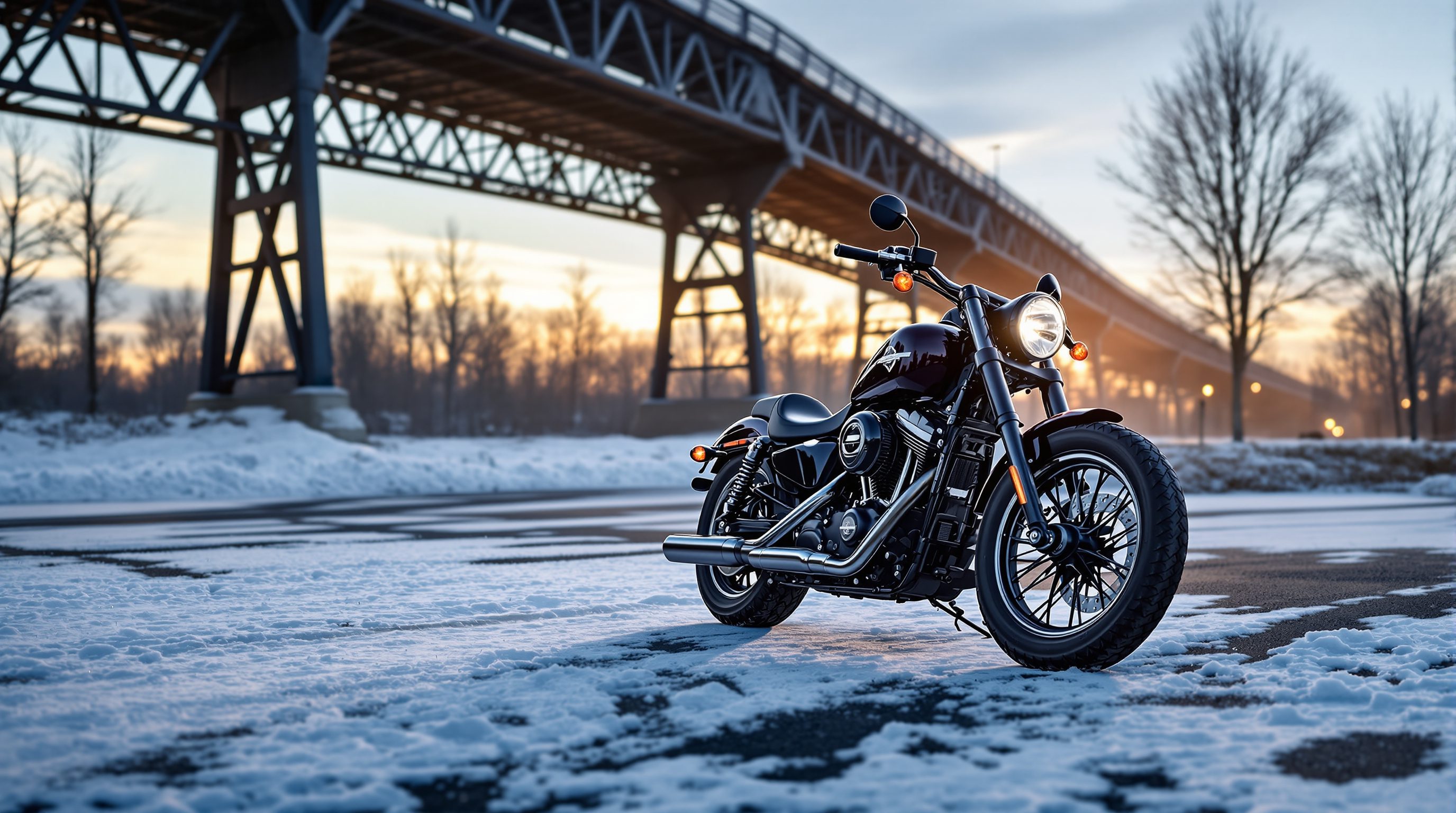
Black Ice and Bridge Decks: Winter Road Hazards in New Jersey
Some of us do not park the bike. If you commute year round in New Jersey, you already know the winter game is different: it is not about the cold in your hands, it is about the pavement you cannot read. And the most dangerous pavement in the state when the temperature drops is not the open road. It is the bridge deck, the elevated ramp, and the shaded overpass. The Pulaski Skyway, the Turnpike and Parkway bridge decks, the flyover ramps where two highways meet, these freeze first, hold ice longest, and hide it best. A car with four contact patches can catch a slide on black ice. A motorcycle on two has almost no margin. Respecting the first hard freeze is what keeps the die-hard commuter upright.
Why bridges and ramps freeze first
A road sitting on the ground steals a little heat from the earth underneath it, so it stays a touch warmer and dries a touch sooner. A bridge deck or an elevated ramp has cold air moving above it and below it, with nothing to hold heat, so it drops to freezing well ahead of the surrounding pavement and stays frozen after the road has thawed. That is why the Pulaski Skyway, the high bridge decks on the Turnpike and the Parkway, the Route 1 and Route 46 river crossings, and the tall flyover ramps where I-78, I-80, and I-287 tie together are the first surfaces to turn on you. You can ride a clear, dry road for miles and hit a frozen deck with no warning at all. The road did not change. The structure under your tires did.
Black ice is the ice you never see
Black ice earns its name because it is not white and crusted, it is a thin, clear film that lets the dark pavement show through, so it looks exactly like a harmless wet patch. It forms where meltwater, drizzle, or the residue from road salt and brine refreezes on a cold surface, and it loves the north side of an overpass that never sees sun and the shaded lane under a bridge. The worst window is the morning after a thaw and the hours around dusk, when a wet road quietly turns to glass. On a motorcycle you often do not know it is there until the front or rear steps out, and by then the options are gone. Reading the difference between wet and frozen at 45 miles an hour on a shaded deck is nearly impossible, which is exactly why the surface itself, not the thermometer alone, has to set your caution.
- ✓ Treat every bridge deck and ramp as frozen near 32 degrees. When the air is anywhere close to freezing, assume the Skyway, the highway crossings, and the flyover ramps are iced even when the road you just left was dry.
- ✓ Respect steel grating and expansion joints. The grated sections and metal joints on older crossings and the Pulaski Skyway go glassy the instant they are wet or frozen, so cross them upright and straight with steady throttle.
- ✓ Do not trust a warm afternoon. On the deceptive warm-then-freezing days, meltwater runs across the deck by day and refreezes at dusk, so the ride home can be far more slick than the ride in.
- ✓ Make no sudden inputs on a suspect surface. Get your braking and downshifting done on dry pavement before the deck, then hold a light, steady throttle across it with no abrupt lean or brake.
- ✓ Respect the salt and brine. The pre-storm brine lines and dried salt cut your grip, cake your tires, and hide refrozen patches, so a salted deck is not a safe deck.
The die-hard commuter has to respect the first freeze
There is no shame in leaving the bike home on the coldest mornings. The riders who get hurt in a New Jersey winter are usually not the ones who called it, they are the ones who treated a 33-degree ramp like a 60-degree one out of habit. If you are going to commute through the cold, build the freeze into the plan: leave later once the sun has been on the decks, pick a route with fewer elevated crossings when you can, watch the shaded overpasses and the north-facing ramps, and accept that some mornings the smart move is four wheels or the train. The first hard freeze of the year is the one that catches the most riders, because the reflexes are still tuned to fall.
If ice puts you down, fault still matters in New Jersey
If you do go down, remember how New Jersey treats riders. Your bike carries no PIP, so your own injury bills are not automatically paid, and recovering them usually turns on fault. The insurance company will lean hard on the weather, arguing that any rider out on an icy morning caused his own crash. Do not accept that framing. A driver who was following too close, changed lanes into you, or lost control of his own car on that same deck does not get a pass because it was winter. The upside of being outside the no-fault system is that you keep full tort rights and are not bound by the verbal threshold, though New Jersey's modified comparative negligence rule can reduce or bar your recovery if you are found more than 51 percent at fault. Document everything at the scene, the frozen deck, the shade, the salt, the exact ramp, and get medical care, because you generally have two years to file and the facts fade fast.

Led by Lawrence LeBrocq, Garces, Grabler & LeBrocq in New Jersey (New Brunswick) fights for injured motorcyclists. Reach out to their motorcycle accident lawyers in New Jersey (New Brunswick) anytime you need real answers.