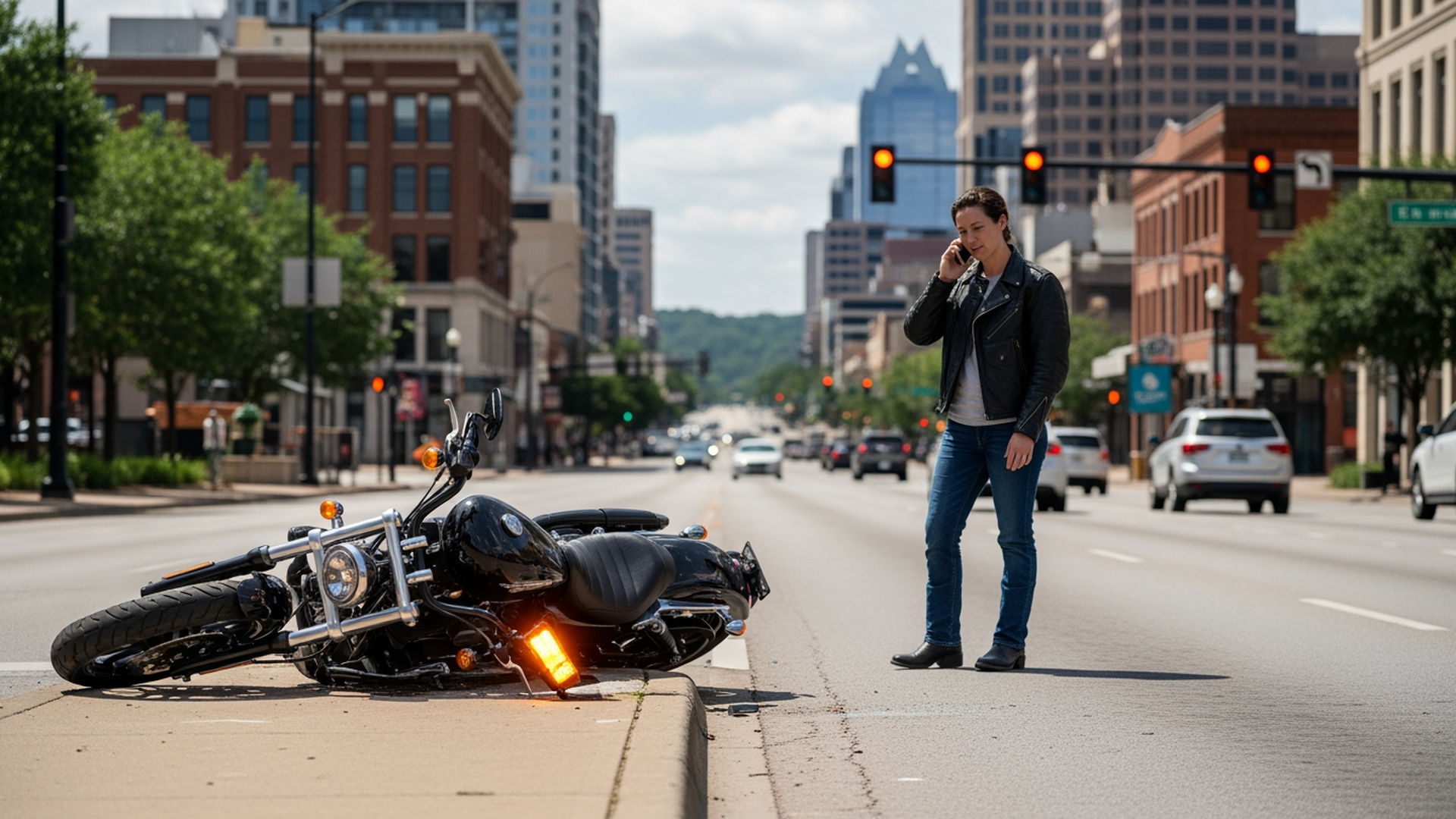
What to Do After a Motorcycle Accident in Austin: Step by Step
The minutes and days after a motorcycle crash decide far more than most riders realize. On a bike you are exposed, the injuries are usually worse, and the same insurers that undervalue every claim are already looking for reasons to blame you. What you do in the first hour on I-35, and in the first weeks after, can make or break your Texas injury claim.
First: Get Safe and Get Checked
Before anything else, your health comes first. A motorcycle crash can hide injuries behind adrenaline, and riders regularly wave off an ambulance only to wake up the next morning barely able to move. A downed rider on MoPac (Loop 1) or US-183 is in danger from the next wave of cars, so get clear of the lanes if you are able, then call 911 so police and paramedics are on the way. A Texas crash with injuries needs an official report, and you want medical professionals to actually look at you. Say yes to the ambulance or get to an emergency room the same day, because refusing care hurts your body and hands the insurer an argument that you were not really hurt.
Second: Document the Scene, Then Watch What You Say
If you are physically able, the scene is a source of evidence that disappears fast, and a phone is all you need. Photograph both vehicles, the damage, your bike's position, the road, skid marks, and traffic signals in wide shots and close-ups. Get the other driver's name, phone, insurance company, policy number, and plate. Find any neutral witness and get names and numbers before everyone drives off. Note the time, weather, lane, and anything the other driver says.
Then guard your words, because in Texas fault is not all-or-nothing. Under the state's modified comparative negligence rule, your recovery is reduced by your share of fault, and if you are found more than 50 percent at fault you recover nothing. That 51 percent bar is exactly what the other insurer is trying to push you past. A casual "I'm sorry" or "I didn't see him" can be twisted into an admission, so stick to the facts with police and do not guess about fault. You do not have to accept blame to be polite.
Third: Preserve Evidence and Handle the Insurer With Care
A Texas peace officer's crash report is a foundational document, so give your account clearly and get what you need to obtain the report later. Meanwhile the clock is running on the evidence itself. Traffic and business camera footage near the crash is often overwritten within days, skid marks on RR 2222 or RM 360 fade, and witnesses move and forget. Within a day or two an adjuster will likely call sounding friendly, but remember who pays that person. Their job is to close your file for as little as possible, and they are especially aggressive with motorcycle claims because they know juries can be biased against riders.
- ✓ Do not give a recorded statement. The other driver's insurer will ask for one. It exists to catch you saying something they can use against you, and you are not required to provide it.
- ✓ Do not accept a fast, early offer. The first check almost always lands before you know the full extent of your injuries, and once you sign, the claim is usually over even if you need surgery next month.
- ✓ Do not sign a blanket medical release. A broad authorization lets the insurer dig through your entire medical history hunting for a pre-existing condition to blame.
- ✓ Keep records of everything. Bills, treatment, missed work, and how the injuries affect your daily life all build the real value of your claim.
- ✓ Know your deadline. Texas generally gives an injured rider two years from the crash to file suit, but evidence degrades long before that, so acting early keeps the case strong.
The Short Version for Austin Riders
A motorcycle crash on an Austin freeway or a Hill Country backroad is chaotic and painful, and no one is thinking clearly in the moment. That is exactly why these steps are worth knowing before you ever need them. Get medical care the same day even if you feel fine. Document the scene if you safely can. Guard your words so a comparative fault argument cannot be built on them. Decline the recorded statement and the quick offer. And get the specifics of your crash reviewed while the evidence is still fresh and the two-year deadline is still comfortably ahead.

Have questions after a wreck? Glen Larson and the motorcycle accident lawyers in Austin at Biker Wolf Pack (glenlarsonlaw.com) review rider claims and explain your options.