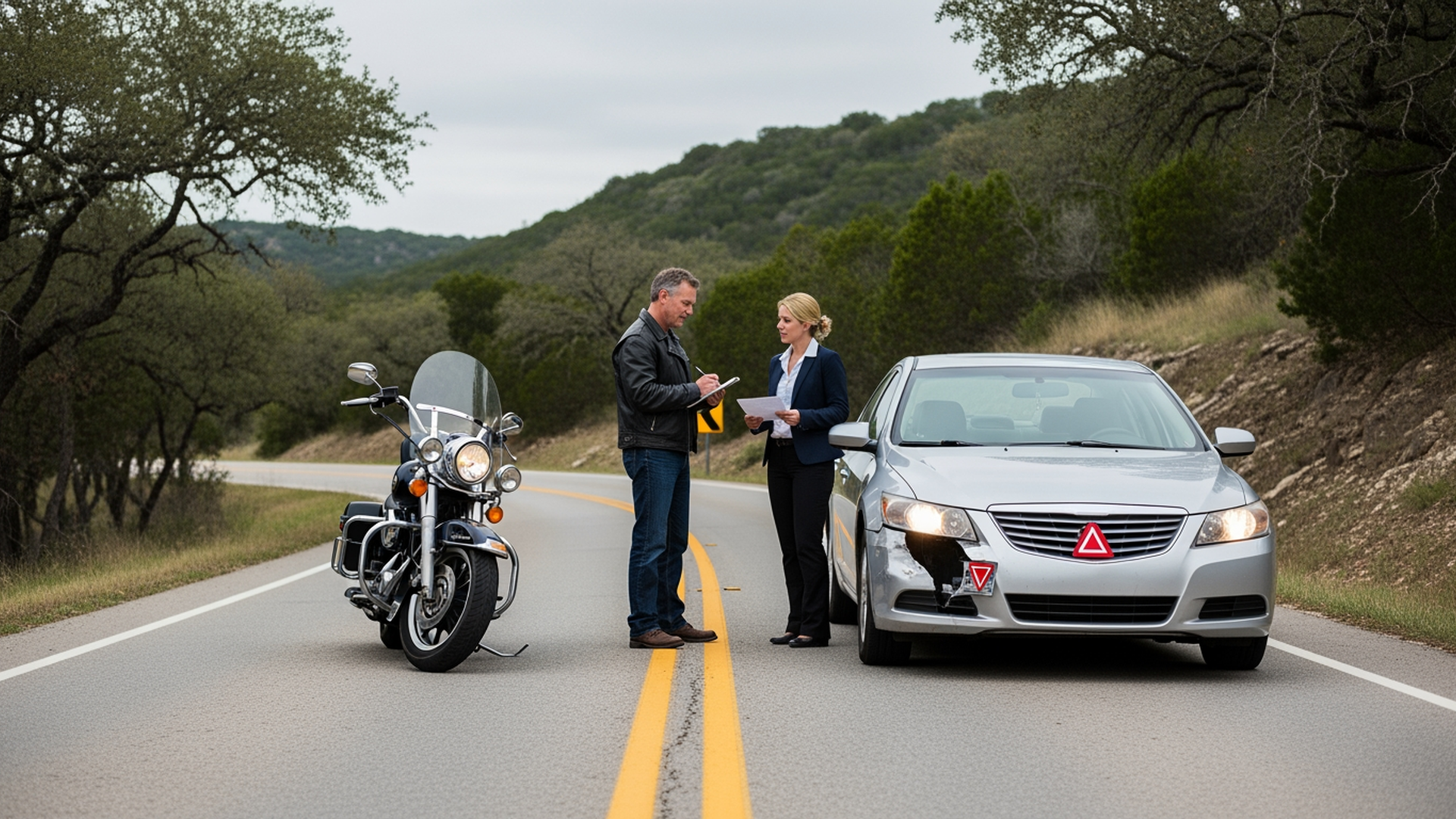
Hit by an Uninsured Driver on Your Motorcycle in Texas
You did everything right. You watched your mirrors and rode your lane, and a driver on I-35 still pulled out and put you on the pavement. Then comes the gut punch that turns a bad day into a crisis: the driver has no insurance. No policy to file against, no coverage for your hospital bills, and a lot of talk about "making it right" that is worth exactly nothing.
Why This Happens So Often in Central Texas
Texas requires drivers to carry minimum liability coverage of 30/60/25, meaning 30,000 dollars for injuries to one person, 60,000 dollars per crash, and 25,000 dollars for property damage. That is the law, and plenty of drivers ignore it anyway. Across the Austin metro a meaningful number of drivers carry no insurance at all. Some let a policy lapse, some never bought one, and some are driving a car that is not even theirs. When one of them hits a motorcycle on US-183 or the frontage roads along I-35, the rider ends up in the ambulance and the at-fault driver has nothing to offer. The legal right to be paid is real, but the other driver's ability to pay it is often zero, and closing that gap is the whole game.
Your Real Backstop: Uninsured Motorist Coverage
The single most important protection against an uninsured driver is coverage you buy for yourself. Uninsured motorist coverage, usually paired with underinsured motorist coverage as UM/UIM, sits on your own auto policy and steps in when the at-fault driver cannot pay. Under Texas law an insurer has to offer UM/UIM when it writes your policy, and any rejection has to be in writing. A lot of riders learn only after a crash that they waived this coverage without understanding it. It is worth checking today: pull your declarations page and look for UM and UIM limits, because on a motorcycle this coverage is the difference between a covered claim and a financial hole.
- ✓ Full medical documentation. Records that tie your injuries directly to the crash are the backbone of the claim.
- ✓ Proof the other driver was at fault. Your carrier only pays if the other driver was legally responsible for the crash.
- ✓ Proof the other driver was uninsured. That is the trigger the entire UM claim depends on.
- ✓ A complete picture of your damages. Include future treatment and lost earning capacity, not just the bills already in hand.
- ✓ Careful handling of your own insurer. Open the UM claim, but do not give a recorded statement or sign a broad medical release.
Your Own Insurer Is Not Automatically on Your Side
Here is what blindsides riders. A UM claim is filed against your own insurance company, and that company does not simply hand over the money. It investigates, questions your injuries, and disputes how much you are owed. The friendly brand from the commercials can behave a lot like the other driver's insurer once real dollars are on the table. Fault still matters too. Texas uses a modified comparative negligence rule, so your recovery is reduced by your share of fault and disappears entirely above 50 percent, and your own insurer stands in the shoes of the at-fault driver and can raise the same blame-the-rider arguments. That is why the scene evidence, the police report, and the witness accounts still matter enormously, and why Texas generally giving you two years to file suit is a reason to act early rather than wait quietly. An experienced Central Texas motorcycle attorney levels that field by proving the other driver's fault, confirming and stacking the coverage that applies, and holding your carrier to the protection you paid for.

Glen Larson and the Austin motorcycle accident attorneys at Biker Wolf Pack represent riders hurt by negligent drivers. If you have questions after a crash, their team is here to help.