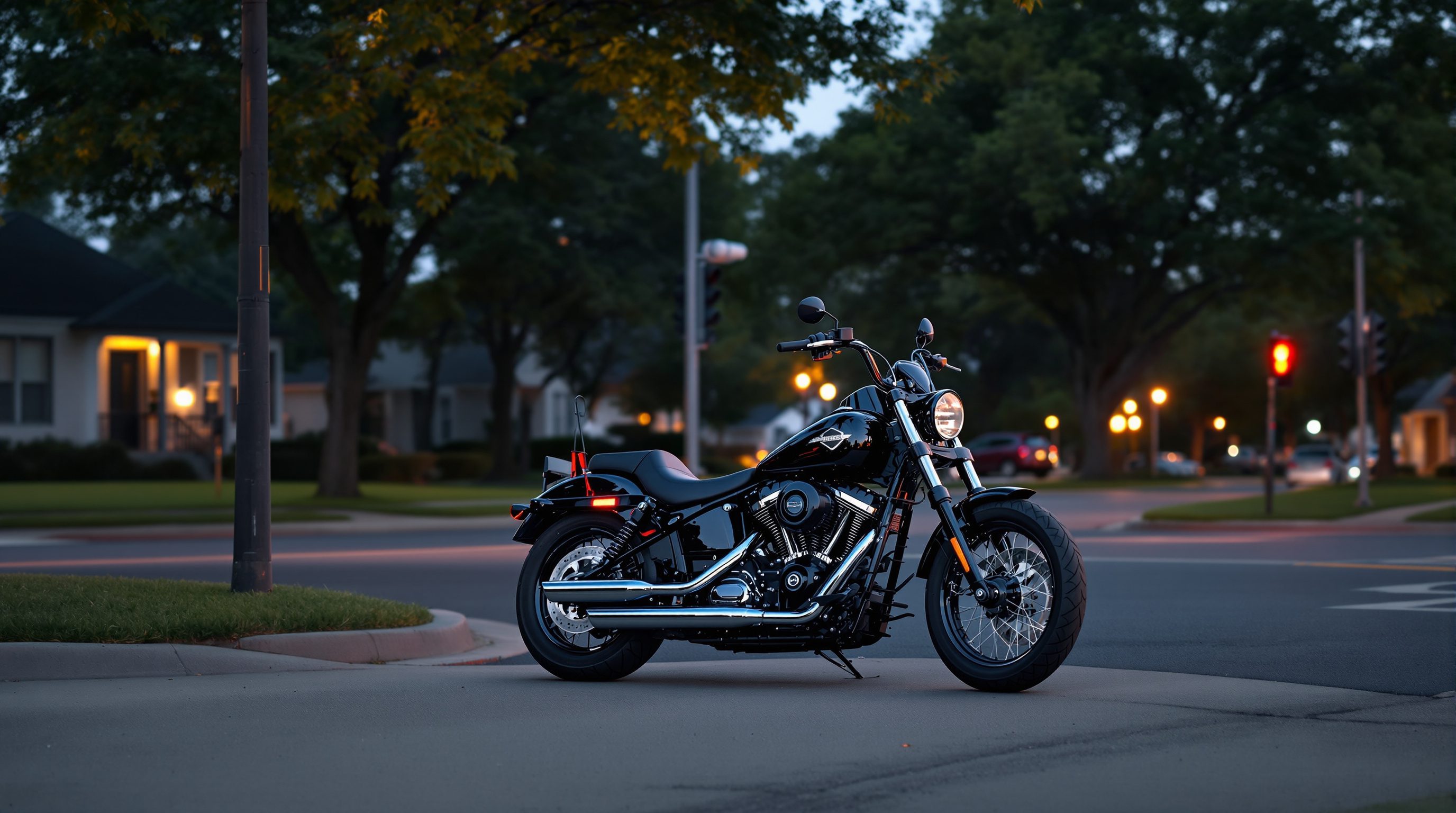
Left-Turn and Intersection Crashes in Austin: Proving the Other Driver's Fault
It is the crash every rider dreads and almost every rider has seen coming. You are going straight through a green light, a car in the oncoming lane suddenly cuts across your path to make a left, and there is nowhere to go. It happens at Austin intersections every single day, on the access roads along I-35, at the lights feeding onto US-183, and at the crossings out toward the Hill Country. The driver climbs out, looks at your bike on the ground, and says the four words that start every one of these fights: I never saw him.
Why "I Never Saw Him" Is Not a Defense
Drivers say they never saw the motorcycle because, often, they genuinely did not. A bike is narrow, and a distracted or hurried driver scanning for cars simply does not register it. That failure feels like an excuse to the rider on the ground, and legally it is not a defense at all. It is a description of the driver's negligence. Texas law requires a driver turning left to yield the right of way to oncoming traffic that is close enough to be a hazard, and a rider going straight through an intersection with the right of way is exactly that traffic. When a driver turns across your path, the failure to see you is the negligence, not an excuse for it. The problem is never the law on left turns. The problem is proving what happened when the only two people who saw it disagree.
The 51 Percent Bar and the Fault-Shifting Game
Here is why the insurer fights so hard even in a clear left-turn case. Texas uses modified comparative negligence with a 51 percent bar, so if you are found more than half at fault you recover nothing, and even a smaller share of fault reduces what you collect by that percentage. That rule hands the other side a strategy: do not deny the crash, just shift enough blame onto the rider to shrink or erase the claim. So the story starts to change. Suddenly you were speeding, you were lane splitting, you came out of nowhere, your headlight was off. None of it has to be true to be useful to an adjuster, because every point of fault they pin on you is a point off your recovery. The whole game is fought over percentages, and that is exactly why the evidence you gather in the first days matters so much.
Proving the Other Driver's Fault
You beat the fault-shifting game with proof, not argument. The rider who documents the scene and preserves the evidence is in a far stronger position than the one who relies on being obviously right.
- ✓ Cameras. Traffic cameras, nearby business security footage, doorbell cameras, and other riders' helmet or dash cams can capture the turn directly, but that footage gets overwritten fast.
- ✓ Independent witnesses. The neutral driver stopped at the same Austin intersection is worth more than any argument, so their names and numbers matter before they drive off.
- ✓ The scene itself. Point of impact, vehicle rest positions, debris fields, and skid marks all tell the story of who was where, and they disappear within days.
- ✓ The crash report and citations. An officer's findings and any citation for failure to yield carry real weight against the other driver's version.
The First Minutes and Hours Matter Most
The evidence that wins a left-turn case is also the evidence that vanishes fastest. Footage loops and overwrites, witnesses leave, the scene gets swept and reopened to traffic, and the other driver's story gets told to an adjuster, unchallenged, while you are still in the emergency room. If you are able, get photos of everything at the scene, from the wide angle to the close details, and collect witness contact information before anyone leaves. If you cannot, because you are hurt, someone acting on your behalf can start preserving proof, including sending preservation requests for camera footage before it loops. Do not apologize or speculate at the scene, do not give the other insurer a recorded statement, do not let a wrong version stand in the report, and do not wait to preserve footage. The left-turn crash starts as a case you should win, and whether you actually win it comes down to who controls the proof, which is decided in the first hours, not the courtroom.
Glen Larson and the motorcycle accident lawyers in Austin at Biker Wolf Pack represent riders hurt by negligent drivers. If you have questions after a crash, their team is here to help.