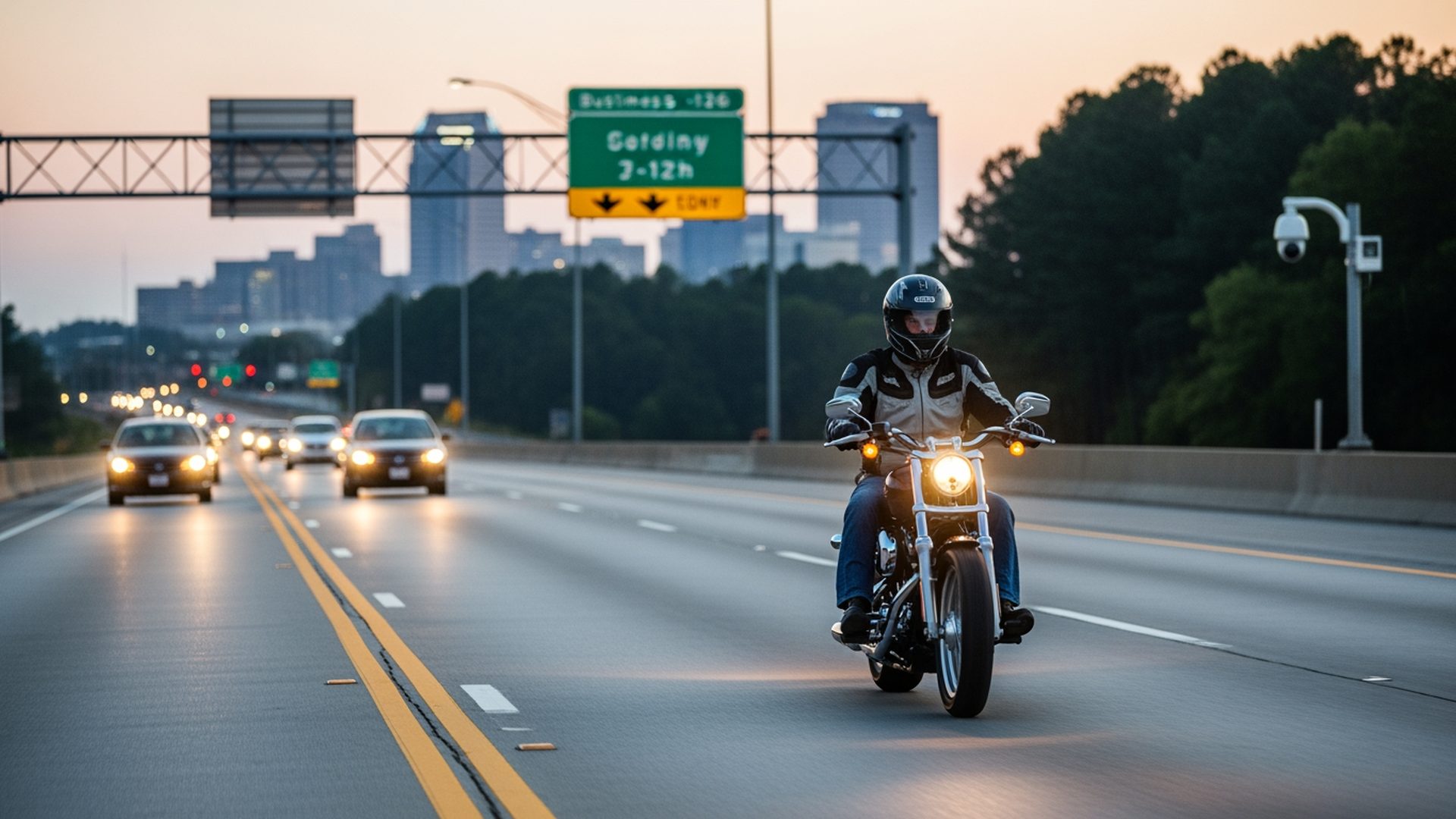
Motorcycle Hit-and-Run in Columbia: What to Do and How UM Coverage Helps
A hit-and-run is one of the cruelest things that can happen to a rider. One moment a car is drifting into your lane on I-126, the next you are on the ground, and by the time you look up the driver who caused it is gone. No plate, no name, no apology. Just you, a wrecked bike, and injuries you did not choose.
First, Protect Yourself and Preserve What You Can
In a hit-and-run, evidence is everything, because the usual source of information just fled. If you are physically able, the scene is where your case is built or lost. Get medical care the same day, because adrenaline hides head, spine, and internal injuries, and same-day treatment protects your health while tying your injuries to the crash. Call 911 immediately so police respond and an official South Carolina crash report documents that a hit-and-run occurred, since that report is a cornerstone of the claim. Write down anything you saw of the vehicle: color, make, model, a partial plate, a dent, a bumper sticker, the direction it fled. Photograph your bike, the damage, the road, debris, and skid marks on the interstate or wherever it happened. Find witnesses fast, because a witness who caught a plate or a description can change the entire case.
Why Camera Footage Is a Race Against Time
The single biggest reason to move fast after a hit-and-run is video. Traffic cameras around Malfunction Junction and the I-20, I-26, and I-77 interchanges, business security cameras up and down Main Street and Two Notch Road, doorbell cameras, and other drivers' dash cams may have captured the vehicle and even its plate. The problem is that most of that footage runs on a short loop and gets overwritten within days. Nobody preserves it unless someone goes and asks quickly. A shopping center along Garners Ferry or US-378 is not going to save its own camera footage on your behalf. Moving early, or getting help that moves early for you, can turn an unidentified driver into an identified one, and when that works the whole picture changes, because now there is another driver and another policy to pursue.
When the Driver Stays Unknown: UM Coverage Steps In
Sometimes the driver is never found no matter how hard anyone looks. This is where the coverage most riders overlook becomes the hero of the story. Uninsured motorist coverage, written as UM/UIM on your own auto policy, is built to cover hit-and-run crashes. In a classic hit-and-run where the at-fault driver is never identified, there is no other policy to chase, so your own UM coverage becomes the claim. It treats the phantom driver as an uninsured driver and lets you recover under the protection you already carry. South Carolina requires UM coverage on every auto policy in the state, so if you have a policy, you almost certainly have this protection. If you are not sure of your limits, pull your declarations page and look, because on a motorcycle this is the line that stands between a hit-and-run and financial ruin.
- ✓ The crash report. An official record documenting the hit-and-run promptly after the crash anchors the claim.
- ✓ Physical evidence of contact. Paint transfer, damage patterns, or debris show another vehicle was involved.
- ✓ Witness accounts. Statements confirming another vehicle caused the crash and fled carry real weight.
- ✓ Full medical documentation. Records tying your injuries to the crash answer the insurer's questions about severity.
- ✓ Prompt reporting to your insurer. Delay gives the carrier an easy argument, so open the UM claim quickly.
The Catch: Fault, the Clock, and a Carrier That Plays Hardball
Do not expect your own company to simply write a check because a driver ran. A UM hit-and-run claim is filed against your own insurer, and it will scrutinize the claim closely, questioning whether a hit-and-run really happened, whether another vehicle was involved, and how serious your injuries truly are. South Carolina's fault rule does not disappear either. The state follows modified comparative negligence, so being found 51 percent or more at fault ends your recovery, and any lesser share still cuts what you collect. Because the fleeing driver is not there to blame, insurers sometimes try to shift more fault onto the rider. The deadline still runs too. South Carolina generally gives an injured rider three years from the crash to file suit, and UM claims carry their own notice and timing requirements on top of that, often much shorter than the three-year window. An experienced Midlands motorcycle attorney can chase the footage before it is erased, work with investigators to identify the fleeing driver, and hold your carrier to the UM coverage the law required it to provide.

Michael Jeffcoat and the Columbia motorcycle injury attorneys at The Jeffcoat Firm represent riders hurt by negligent drivers. If you have questions after a crash, their team is here to help.