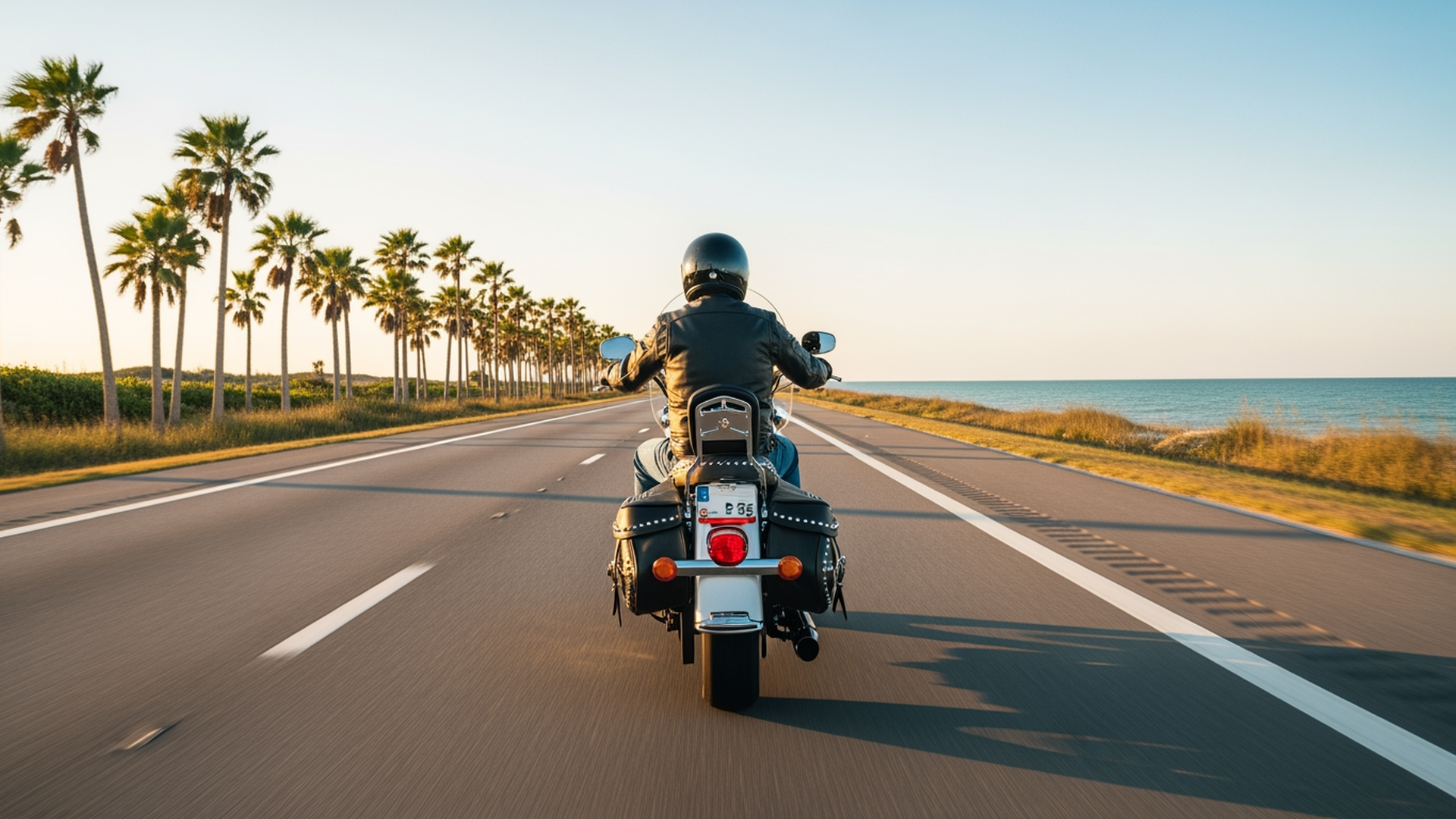
Fall Riding Hazards on Florida's Gulf Coast
Fall is the payoff season for Gulf Coast riders. The humidity breaks, the snowbird traffic has not fully arrived, and a morning run up US-19 feels like the reason you bought the bike. But fall in Florida is not fall up north, and the hazards that put riders down between October and December are specific to this part of the state.
The afternoon shower has not gone anywhere
Plenty of riders treat the end of summer as the end of rain season. On the Gulf Coast that is wishful thinking. Warm Gulf water keeps pop-up storms in the forecast well into October, and the first few minutes of a Florida shower are the most dangerous stretch of pavement you will ride all year. Oil, rubber, and road grime that baked into the asphalt all summer float to the surface the moment it gets wet, and traction disappears before the road even looks soaked. If you can wait fifteen minutes under an overpass for a cell to blow through, do it. Gulf storms move quickly, and the road is far more predictable once the surface has been rinsed.
Low sun turns a routine commute dangerous
As the days shorten, sunrise and sunset slide right into rush hour. A driver heading east on a Tampa Bay arterial at 7 a.m., or west toward the Gulf at 6 p.m., can be staring straight into a blinding sun. That driver is not looking for a motorcycle. They may not be able to see one at all. This is one of the most underrated fall hazards because it feels like a nice day, not a dangerous one. Assume the driver facing the sun cannot see you, keep your headlight on, and give yourself an escape lane at intersections, where a sun-blinded left-turning driver is the classic motorcycle collision.
Deer, wildlife, and returning snowbird traffic
Fall is breeding season for deer, and the rural stretches north of Tampa Bay, out toward Spring Hill and the Nature Coast, see more of them on the road than most riders expect. Deer are most active at dawn and dusk, the same low-light hours you are most likely to be riding a cool fall morning or evening. A deer strike on a bike is not a fender bender. On top of that, by late fall the seasonal population climbs and the driving mix shifts: more out-of-state plates, more drivers unfamiliar with US-19 and the I-275 interchanges, and more slow, hesitant left turns. Ride the roads you know as if the driver next to you has never seen them.
Why a Florida crash hits riders harder than they expect
Here is the part too many Gulf Coast riders learn after the crash instead of before. Florida is a no-fault PIP state, but PIP does not cover motorcyclists. Motorcycles are carved out of the personal injury protection system that automatically pays medical bills for car drivers. If a car pulls out of a wet Tampa Bay parking lot and puts you down, that no-fault coverage you assumed would catch you does not apply to your bike. It gets tighter from there. Florida does not require drivers to carry bodily injury liability coverage, so the person who hits you may legally have no insurance to pay for your injuries at all. That is why uninsured and underinsured motorist coverage is a rider's real lifeline in this state.
- ✓ PIP will not help you on a motorcycle. Your own health insurance and UM/UIM coverage carry the load.
- ✓ The at-fault driver may carry no injury coverage. UM/UIM is what protects you when they do not.
- ✓ Fault is not all-or-nothing. Florida uses a modified comparative negligence rule with a 51 percent bar, so you can still recover if you were partly at fault, but not if you were more than half responsible.
- ✓ The clock is shorter than it used to be. Florida's 2023 tort reform cut the deadline to file most injury claims from four years to two.

Led by Jason Melton, Whittel & Melton in Spring Hill fights for injured motorcyclists. Reach out to their motorcycle accident lawyers in Spring Hill anytime you need real answers.