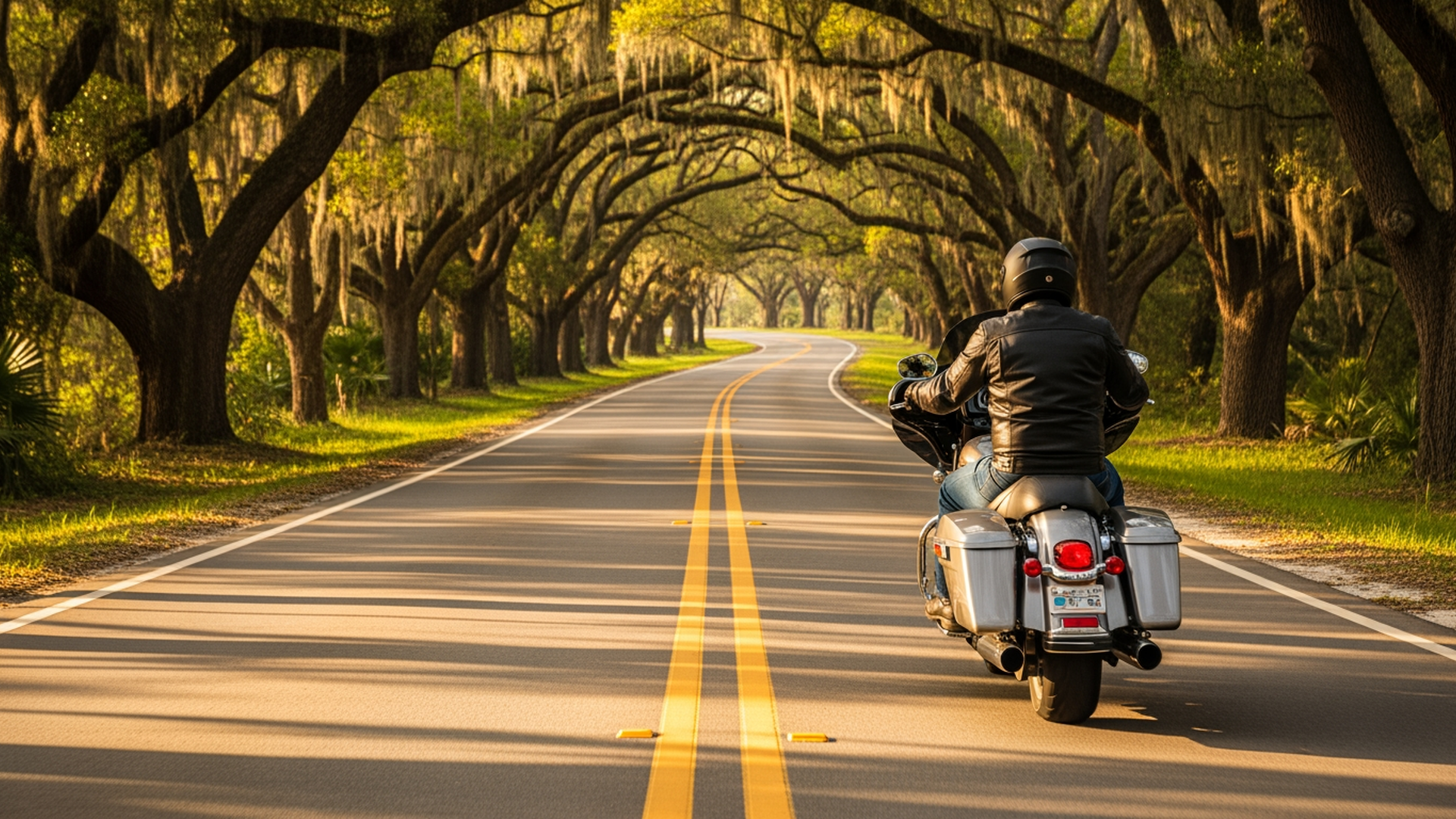
Best Motorcycle Rides Near Tampa (and Their Hidden Risks)
Tampa Bay is a rider's town. Warm air most of the year, water on three sides, and enough open road within an hour of downtown to fill a lifetime of Saturdays. The same roads that make this a great place to ride also carry risks that catch too many riders off guard, and Florida law adds a twist most people never think about until they are already hurt.
The Sunshine Skyway and the Pinellas Bayfront
Few rides in Florida beat the climb up the Sunshine Skyway Bridge on I-275, with Tampa Bay spread out on both sides and the Gulf opening up ahead. Pair it with a slow cruise down the Pinellas waterfront and out toward Fort De Soto and you have a half-day loop that shows off why people move here. The catch is that this is a high-speed, high-wind corridor shared with heavy interstate traffic. Crosswinds coming off the open water can shove a bike a lane over in a heartbeat, and drivers distracted by the same view you came for are not always watching for a motorcycle beside them. Respect the wind, hold your lane position, and give yourself room.
Sugarloaf Mountain and the Clermont Hills
Head northeast toward Clermont and Florida finally gives you something it is famous for not having: hills. Sugarloaf Mountain and the surrounding Lake County back roads deliver real elevation, tight curves, and a rolling ride that feels a world away from the flat coast. Those same qualities are the risk. Blind crests, shaded curves, and sudden changes in grade hide oncoming cars, gravel, and slow-moving farm and cyclist traffic. The road rewards a smooth, patient pace and punishes anyone who treats it like a racetrack.
US-19 and the Nature Coast Run
Point the bike north on US-19 and the sprawl gives way to the Nature Coast, with springs, small Gulf towns, and long open stretches heading up toward Spring Hill and beyond. It is a favorite for riders who want distance and scenery without the interstate. US-19 is also one of the most crash-heavy corridors in the region: a wide, fast, multi-lane road packed with turning traffic, driveways, and intersections where drivers pull out without ever seeing a bike. The danger here is not curves. It is cross traffic and left-turning cars.
Bayshore Boulevard and the Courtney Campbell Causeway
Closer to home, Bayshore Boulevard gives you one of the prettiest low-speed cruises in the city, hugging the water with downtown Tampa on the horizon. The Courtney Campbell Causeway offers a straight, breezy run across the bay toward Clearwater when you want the salt air without a full day in the saddle. City and causeway riding carries its own hazards: heavy pedestrian and cyclist traffic on Bayshore, drivers making sudden U-turns, and causeway crosswinds not far behind what you feel on the Skyway. These are relaxed rides, but relaxed is not the same as safe.
The Hidden Risks Every Tampa Ride Shares
No matter which route you pick, Gulf Coast riding comes with a few constants worth planning around. Ride like the road is not looking out for you, because it is not.
- ✓ Afternoon storms. Tampa summers build fast, violent thunderstorms that turn dry pavement into a slick, low-visibility mess in minutes. Watch the sky and get off the road early.
- ✓ Sand and shell on the shoulder. Coastal and rural roads collect loose sand near curves and driveways, exactly where you least want to lose traction.
- ✓ Tourist and snowbird traffic. Drivers unfamiliar with the roads brake late, turn wide, and change lanes without warning, from the beaches to the bridges.
- ✓ The left-turn driver. The single most common motorcycle crash is a car turning left across a rider's path, and it happens at Tampa intersections every day.
- ✓ Sun glare. Low morning and evening sun off the water blinds drivers to a bike they might otherwise see.
Why a Florida Crash Hits Riders Differently
Here is the part most riders never see coming until it is too late. Florida is a no-fault PIP state, but motorcycles are specifically excluded from PIP coverage. The automatic medical coverage car drivers rely on after a crash does not extend to you on a bike. On top of that, Florida does not require drivers to carry bodily injury liability coverage at all, so the driver who pulls out in front of you may have nothing to pay for your injuries. For a Tampa rider, that makes your own uninsured and underinsured motorist coverage a genuine lifeline, often the difference between a covered injury and a financial disaster. It is worth checking your policy before your next ride, not after a crash. And if you do go down, Florida's deadline to file an injury claim is now two years from the crash under the 2023 tort reform, shorter than many riders assume.
Jason Melton and the motorcycle accident lawyers in Spring Hill at Whittel & Melton represent riders hurt by negligent drivers. If you have questions after a crash, their team is here to help.