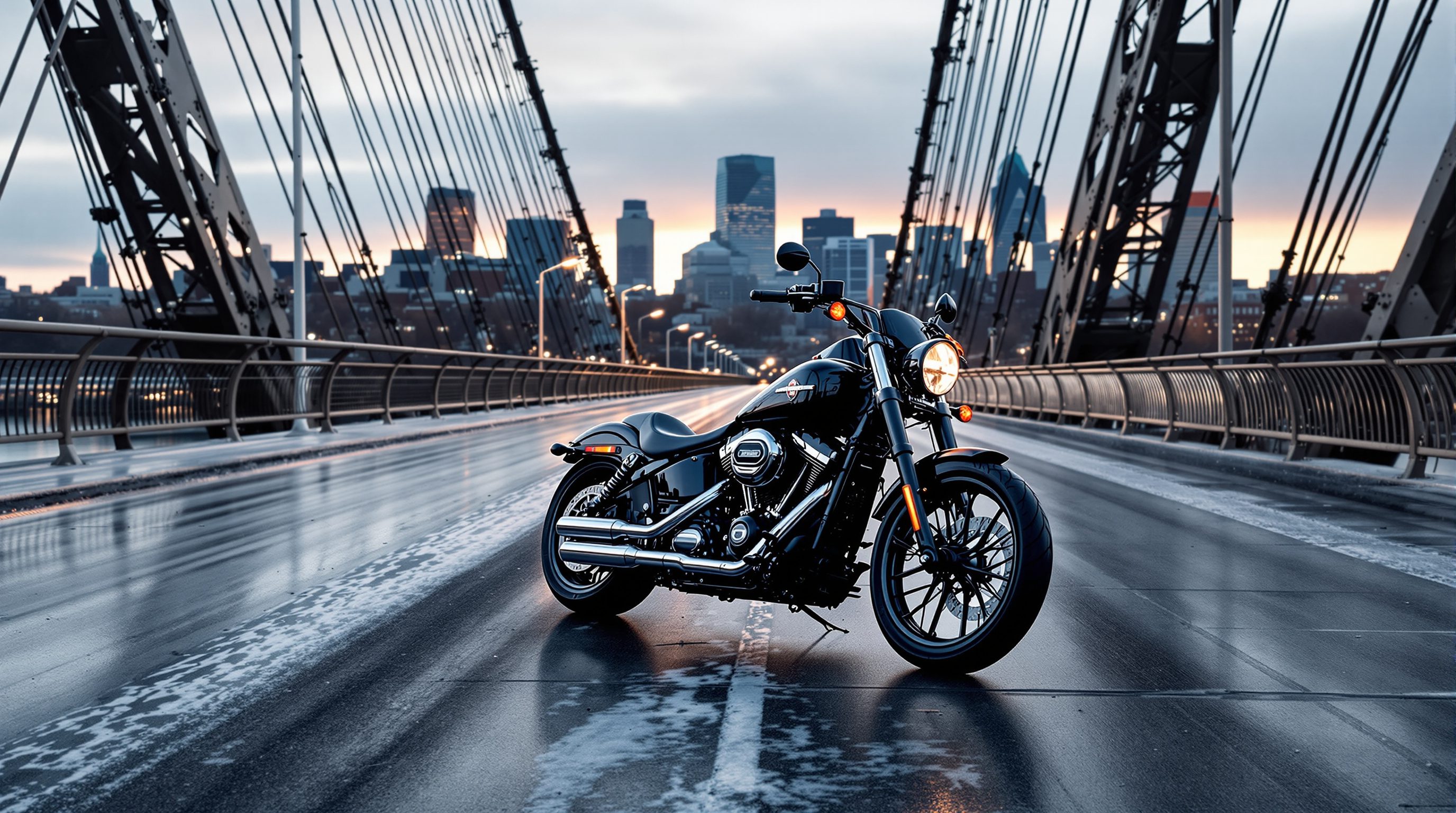
Black Ice and Bridge Decks: Winter Road Hazards in the Boston Metro
If you are one of the die-hards who keeps commuting into January, you already know that most Boston-area drivers treat the first freeze as a surprise every single year. On two wheels you cannot afford to. The difference between a gripping road and an invisible sheet of ice is the difference between getting to work and going down in traffic on the Zakim. Winter riding in the Boston metro is not really about the cold. It is about ice, and about knowing exactly where it hides.
Why bridge decks freeze first
This belongs in every winter rider's muscle memory: bridges and overpasses ice over before the roads on either side of them do. A normal stretch of pavement sits on the ground, and the earth underneath holds warmth that keeps the surface a few degrees higher after the air drops below freezing. A bridge deck has cold air moving above it and below it, so it loses heat from both sides at once and freezes faster. That means the Zakim, the Tobin, the elevated ramps where I-93 and Route 128 stack over one another, and every overpass on the Mass Pike can be glazed while the approach road felt dry ten seconds earlier. You feel grip, then you feel nothing, and on a bike that transition mid-span is exactly what puts riders in the hospital.
Black ice, steel, and shade
Black ice is clear, not black, so a thin frozen film reads as wet or even dry asphalt in low winter light. It forms in shaded cuts where the sun never reaches, under overpasses, and anywhere snowmelt or brine has run across the surface and refrozen. The permanently shaded stretches of Storrow Drive and Memorial Drive are classic traps well after the open roads have thawed. Frost loves metal too, so manhole covers, expansion joints, steel plates, and trench patches glaze first and offer almost no grip.
- ✓ Treat every bridge and overpass as iced. Do your slowing and lane changes before the span, then hold a steady throttle and an upright bike across it with no braking or leaning.
- ✓ Respect the shade. Shaded cuts on Storrow and Memorial Drive, north-facing ramps, and tunnel mouths stay frozen long after open pavement thaws.
- ✓ Watch the steel. Manhole covers, expansion joints, steel plates, and trench patches frost over first. Cross them square and upright.
- ✓ Give yourself room and time. Cold tires do not grip for the first several miles, and your cold-morning stopping distance is far longer than your summer instinct expects.
The Massachusetts law that changes everything
If you go down on ice, no-fault PIP does not pay your bills the way it would for a car occupant, because PIP does not cover motorcyclists in this state. Your own uninsured and underinsured motorist coverage, required at 20/40, is your real backstop when another driver is involved and carries too little or nothing. And if another driver was part of your crash, expect their insurer to blame you for riding in winter at all. Massachusetts uses a modified comparative negligence rule with a 51 percent bar, so if you are found more than half at fault you recover nothing. That gives an adjuster every incentive to argue you should not have been out there. It is a legal argument, not a fact. Document the conditions, photograph the ice and the location, get the other driver's information, and get checked out even if the adrenaline has you feeling fine.

Led by Jeff Glassman, Glassman Injury Lawyers in Boston fights for injured motorcyclists. Reach out to their motorcycle accident lawyers in Boston anytime you need real answers.