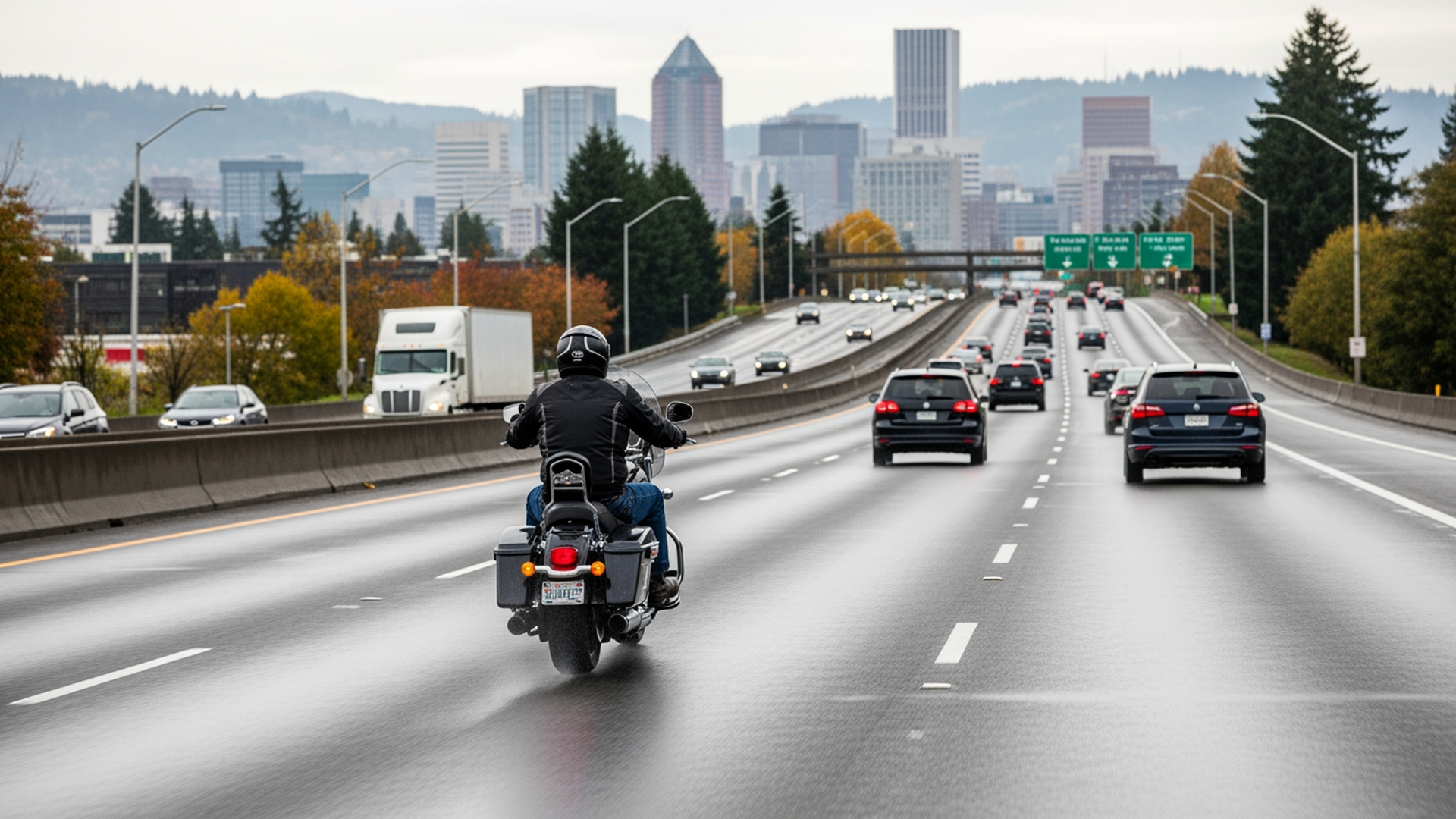
The Most Dangerous Roads for Portland Motorcyclists, and How to Ride Them
Ask any Portland rider and they can name the roads that make them tense up. It is not superstition. Certain corridors around the metro concentrate the exact conditions that put motorcyclists down: heavy merging traffic, blind lane changes, tight curves, slick surfaces, and drivers with too much to watch. Knowing which roads carry the most risk, and why, is not about avoiding them, because most of them you cannot avoid. It is about riding them with a plan. Here is an honest look at the corridors that demand the most from Portland riders, and how to give yourself the best odds on each one.
I-5 through the Rose Quarter and the I-405 loop
The stretch of I-5 through the Rose Quarter is one of the most congested and crash-prone pieces of freeway in the state, and for a rider it is a wall of merging, weaving, and sudden braking. Lanes appear and vanish, on-ramps dump traffic straight into the flow with almost no room, and the whole thing bunches up and stops without warning. The I-405 loop through downtown is the same problem in a tighter package: short ramps, hard curves, quick lane drops, and drivers cutting across three lanes to reach an exit. On both, the danger to a rider is the lane change into a bike the driver never saw, and the rear-end into stop-and-go traffic. Ride these with a following gap bigger than feels necessary, keep yourself out of the blind-spot pockets beside trucks and cars, cover your brakes, and read the traffic two or three cars ahead so a sudden stop never surprises you. Have an escape lane in mind at all times.
I-84 and the Gorge, US-26 the Sunset Highway, and OR-217
Head east on I-84 and the road opens into the Columbia Gorge, which is a spectacular ride and a demanding one. The Gorge funnels wind that can shove a bike across a lane, the pavement stays wet and leaf-strewn under the canopy long after the city has dried, and fast semi traffic shares a corridor with sightseeing drivers who slow and change lanes without warning. US-26, the Sunset Highway heading west toward the coast, mixes high-speed traffic, curves through the coast range, tunnels, and rain that arrives harder the closer you get to the ocean. OR-217, the short connector between US-26 and I-5 through Beaverton and Tigard, packs a remarkable amount of danger into a few miles: closely spaced on-ramps and off-ramps, constant weaving, tight curves, and chronic congestion that turns into sudden stops. On all three, the theme is speed differential and forced merging. Match the flow rather than fighting it, give merging traffic room to see your headlight before the gap closes, and back your speed down for wind, wet, and the curves.
The Terwilliger curves and the downtown track grid
Closer in, two very different roads earn their reputations. The Terwilliger curves, where I-5 bends through the south end of downtown near the hills, combine tight radius turns with heavy merging traffic and a surface that gets slick in the rain, a combination that has humbled plenty of drivers and riders alike. Take them at a pace that leaves margin, especially when wet, and do not let a car crowding your lane push you into a line you are not comfortable with. Downtown, the hazard is underfoot. The MAX light-rail and streetcar tracks, the steel bridge grates over the Willamette, and the painted lines everywhere turn greasy in the rain and grab a tire that crosses them at an angle. Cross tracks and metal as close to a right angle as you can manage, upright, off the brakes, with steady throttle, and keep an eye out for the car doors, buses, and pedestrians that make the downtown grid its own kind of obstacle course.
- ✓ Live outside the blind spots. On I-5, I-405, and OR-217, the crash that gets riders is the lane change into a bike the driver never saw. Position yourself where mirrors can find you and never linger beside a vehicle.
- ✓ Keep a gap you can stop in. Congested merges turn into sudden stops. A larger following distance is your buffer against the rear-end crash and gives you room to swerve.
- ✓ Cross tracks, grates, and paint upright. Downtown rails, bridge decks, and lane lines are slickest in the wet. Hit them straight up, off the brakes, at as close to a right angle as the situation allows.
- ✓ Respect the curves and the wind. On the Terwilliger curves, the Gorge, and the Sunset Highway, slow before the corner and expect gusts and wet pavement to eat into your grip.
- ✓ Make yourself seen. Reflective gear, a clean and aimed headlight, and lane position that keeps you visible all cut down the "I never saw the motorcycle" crash that these corridors specialize in.
When a driver puts you down on one of these roads
You can ride every one of these corridors perfectly and still get hit, because most rider crashes come down to another driver merging, turning, or changing lanes into a motorcycle they never looked for. When that happens, Oregon law shapes what comes next. The state follows modified comparative negligence with a 51 percent bar: your recovery drops by your share of fault, and if you are found more than 50 percent at fault you recover nothing. Insurers know this, so after a crash on a road with a bad reputation they love to argue the rider chose a dangerous route or was going too fast for it, trying to shift blame off their driver. The road's reputation is not your fault, and it does not excuse a driver who failed to yield or check a blind spot.
- ✓ PIP does not follow the motorcycle. Oregon exempts motorcycles from the PIP requirement, so most riders have no PIP on the bike for their own medical bills unless they bought it separately. Strong health coverage and UM/UIM are your backstop.
- ✓ Minimum liability is only 25/50/20. A serious injury on I-5 or OR-217 can blow past those limits fast, which is why the UM/UIM coverage Oregon requires matters so much.
- ✓ The 51 percent bar makes documentation everything. How the crash is recorded can decide whether you recover in full, in part, or not at all.
- ✓ Two years to file. The statute of limitations on an Oregon injury claim is generally two years, with a shorter notice deadline against public bodies, so act well before the clock runs.
If you go down on one of these corridors, get medical care first, then document everything you can: the lane, the merge, the road surface, the traffic, and the exact spot. The more a road is known for crashes, the harder the insurer will lean on that reputation to blame you, and the more those details matter.

Dave Eltringham and the Portland motorcycle accident attorneys at ELG Injury Lawyers represent riders hurt by negligent drivers. If you have questions after a crash, their team is here to help.