Hit by an Uninsured Driver on Your Motorcycle in Oregon
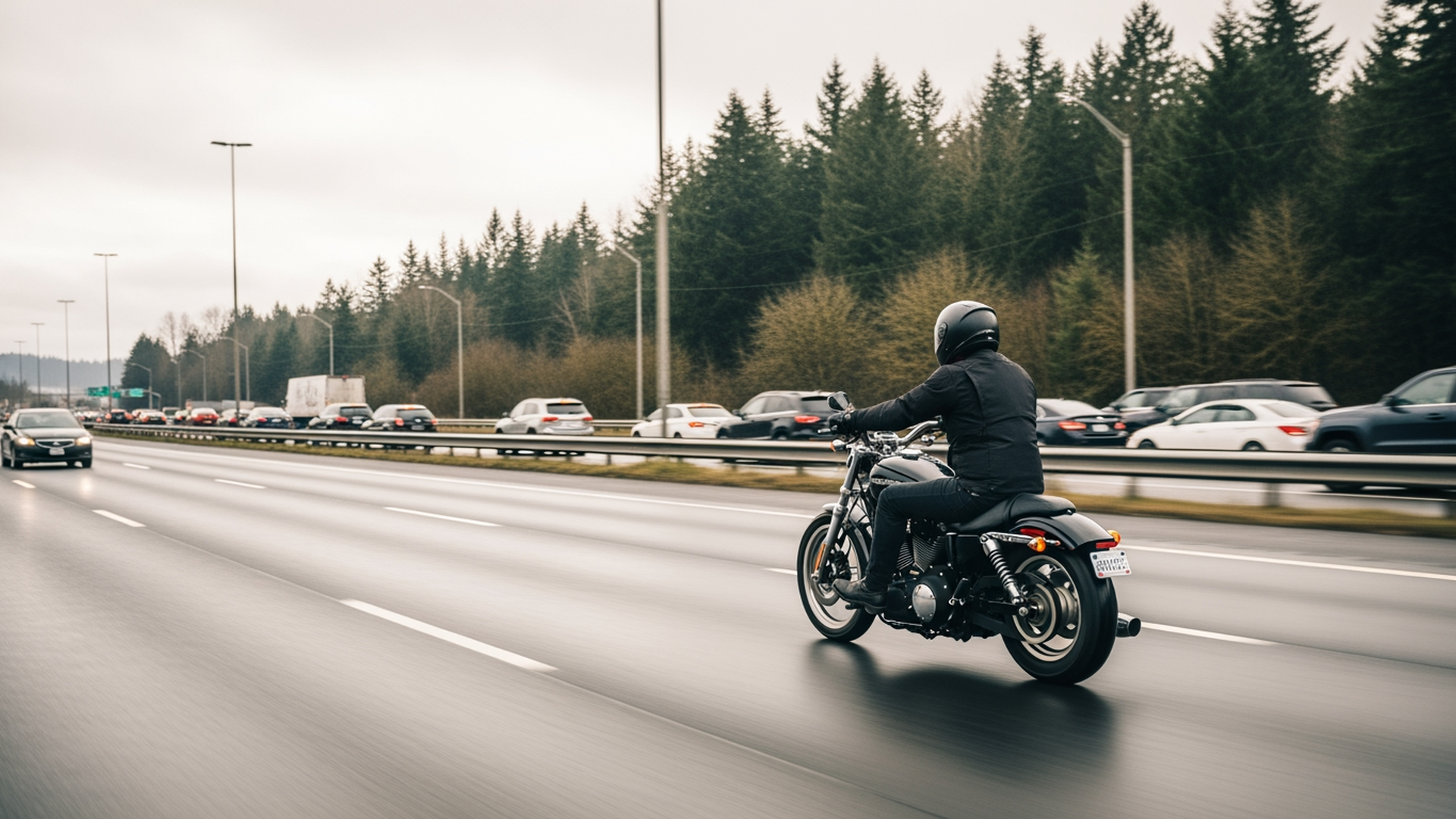
You did everything right. You watched your mirrors, you held your lane, and a driver on I-205 still pulled across and put you on the pavement. Then comes the gut punch that turns a bad day into a crisis. The driver has no insurance. No policy to file against, no coverage to pay your hospital bills, and a lot of talk about "making it right" that is worth exactly nothing.
Why This Happens So Often on Oregon Roads
Oregon requires drivers to carry minimum liability coverage of 25/50/20, meaning 25,000 dollars for injuries to one person, 50,000 dollars per crash, and 20,000 dollars for property damage. That is the law. Plenty of drivers ignore it anyway. Industry estimates put roughly one in eight Oregon drivers on the road with no insurance at all, and the real number in a given corridor can run higher. Some let a policy lapse, some never bought one, and some are driving a car that is not even theirs. When one of them hits a motorcycle on US-26, the Sunset Highway, or the frontage roads along I-5, the rider is the one who ends up in the ambulance, and the at-fault driver has nothing to offer. The legal right to be paid is real. The other driver's ability to pay it is often zero. That gap is the whole problem, and closing it is the whole game.
Your Real Backstop: Uninsured and Underinsured Motorist Coverage
The single most important protection against an uninsured driver is coverage you buy for yourself. Uninsured motorist coverage, usually paired with underinsured motorist coverage as UM/UIM, sits on your own auto policy and steps in when the at-fault driver cannot pay. Oregon does not leave this to chance, because it requires UM coverage on every auto policy in the state.
- ✓ Uninsured motorist (UM). Pays when the driver who hit you had no liability insurance at all, and also covers many hit-and-run situations where the driver flees and is never identified.
- ✓ Underinsured motorist (UIM). Pays when the other driver had some insurance, but not nearly enough to cover a serious motorcycle injury.
- ✓ Coverage you control. Unlike the other driver's policy, this is protection you choose and pay for, so the limits are yours to set high enough to matter.
- ✓ Extra weight for riders. Because your motorcycle is exempt from Oregon's PIP requirement, you likely have no PIP on the bike, so UM/UIM often becomes the primary source that pays your medical bills.
Why the Missing PIP Makes This Even More Important for a Rider
In a car, Personal Injury Protection would cover the first stretch of your treatment right away, no matter who caused the crash. Oregon requires PIP on auto policies, but motorcycles are exempt, so most riders carry none on the bike. That means when an uninsured driver hits you, there is no PIP cushion absorbing the early bills while the claim plays out. Your UM coverage is not a nice-to-have in that situation. It is frequently the only insurance standing between a serious injury and a financial hole. This is exactly why we tell every Portland rider to check that UM/UIM line on their own policy and set the limits well above the state minimum, because a single surgery blows past 25,000 dollars fast.
The Catch: Your Own Insurer Is Not Automatically on Your Side
Here is what blindsides riders. A UM claim is filed against your own insurance company, and that company does not just hand over the money. It investigates, questions your injuries, and disputes how much you are truly owed. The friendly brand from the commercials can behave a lot like the other driver's insurer once real dollars are on the table, because every dollar it pays you comes out of its pocket. So even with good coverage, an uninsured-driver claim is still a fight, and the evidence that wins it looks a lot like any other injury claim: full medical documentation tying your injuries to the crash, proof the other driver was at fault, proof the other driver was actually uninsured, and a complete picture of your damages including future treatment and lost earning capacity.
Fault Still Matters, Even Against an Uninsured Driver
Do not assume that because the other driver was uninsured, fault is a formality. Oregon uses a modified comparative negligence rule. Your recovery is reduced by your share of fault, and if you are found more than 50 percent at fault you recover nothing. That 51 percent bar applies to a UM claim too, because your own insurer stands in the shoes of the at-fault driver and can raise the same blame-the-rider arguments, and on Oregon's wet roads they will try. That is why the scene evidence, the crash report, and the witness accounts still matter enormously. Proving the other driver caused the crash is what unlocks your own coverage.
What to Do After an Uninsured-Driver Crash
The steps look familiar, with a few that matter even more when the other driver has nothing. Get medical care the same day, because adrenaline hides serious injuries and same-day treatment ties them to the crash. Call the police and get a report, because an official Oregon crash report documenting the other driver's lack of insurance is important support for your UM claim. Document the scene and the driver with photos, the driver's information, the plate, and witness contacts. Notify your own insurer to open the UM claim, but remember you are not required to give a recorded statement or accept a fast, low offer, and you should not sign a broad medical release that lets the insurer dig through your entire history for something to blame. Oregon generally gives you two years from the crash to file suit, so waiting quietly rarely helps.

Dave Eltringham and the Portland motorcycle accident attorneys at ELG Injury Lawyers represent riders hurt by negligent drivers. If you have questions after a crash, their team is here to help.