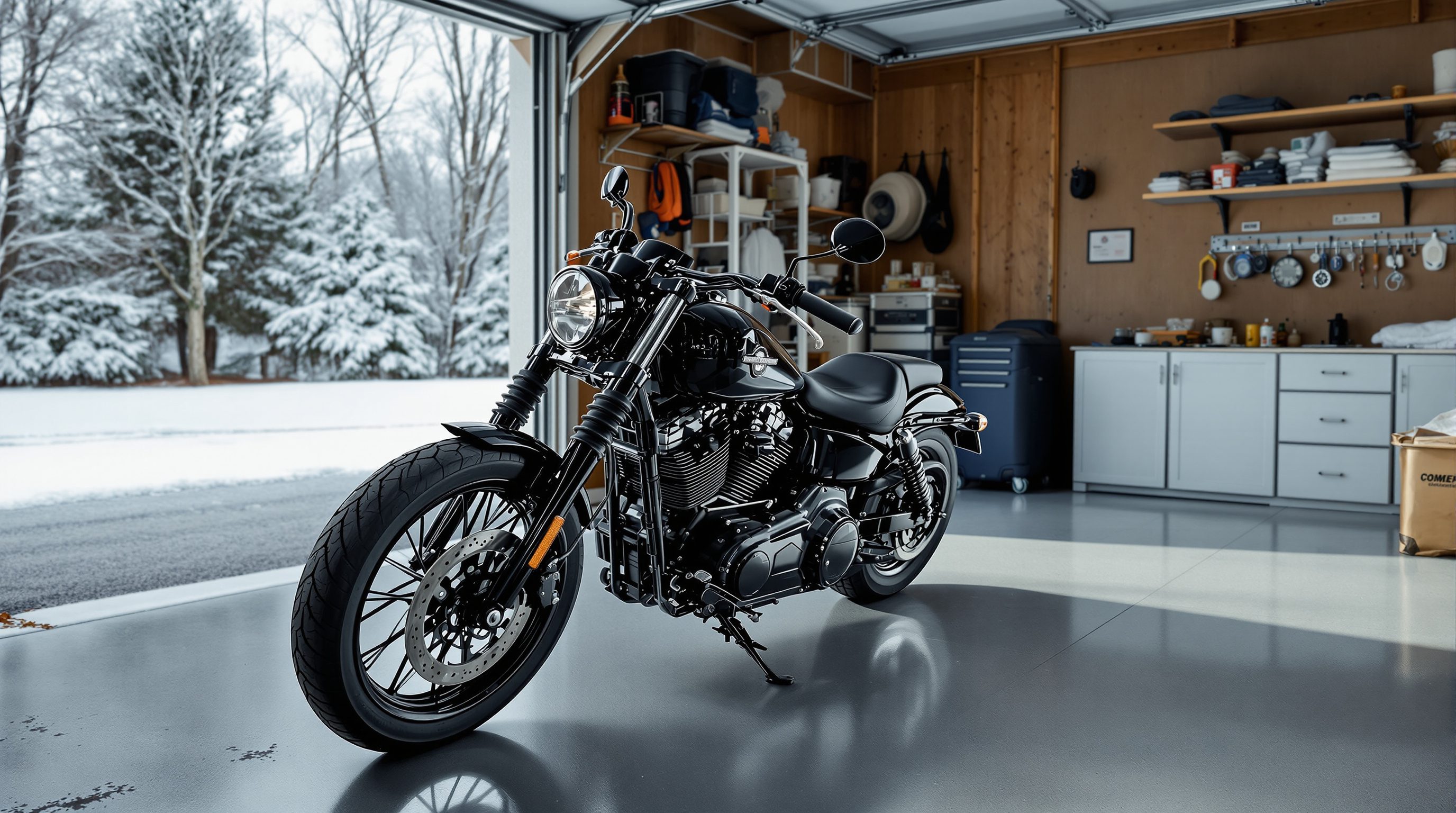
Winter Storage and Your Motorcycle Insurance in Oklahoma: Should You Drop Coverage?
Come January in Tulsa the bike goes under a cover for a while. The ice storms roll through, Skelly Drive glazes over, and even the die-hards give the salt trucks and the sleet a few weeks off. So the yearly question comes up: if the motorcycle is just sitting in the garage, why keep paying full insurance on it? Dropping coverage over the cold months sounds like an easy way to save a few dollars. In Oklahoma it is one of the fastest ways to hand yourself a bigger bill in the spring, or worse, a hole in your protection right when hail season starts. Here is how to think about winter coverage like someone who has seen what happens when riders cut the wrong thing.
What you can safely trim while the bike is parked
If the motorcycle is genuinely off the road, up on a stand, battery on a tender, not being ridden, then the coverages that exist to protect you and others while you are moving do less for you. Liability coverage pays for the damage you cause to other people and their property in a crash, and a parked bike in your garage is not going to rear-end anyone. Collision coverage pays to fix your bike after a crash you are involved in, same idea. Some riders, with their insurer's blessing, move to a reduced storage or lay-up arrangement for the coldest stretch that trims those riding-related pieces while keeping the policy itself alive. The key phrase is keep the policy alive. There is a real difference between adjusting a policy that stays in force and canceling it outright. The first is a normal seasonal move. The second is a lapse, and a lapse is what bites you.
The Oklahoma reason to keep comprehensive: hail, storms, and theft
Here is what separates Oklahoma from a lot of the country. Comprehensive coverage is the part of your policy that pays for damage to the bike that has nothing to do with riding it. Hail. Falling limbs in an ice storm. A tree that comes down on the garage. Fire. And theft. Every one of those can happen to a motorcycle that has not moved an inch all winter. We sit in the middle of hail country. Oklahoma gets some of the most frequent and most destructive hail in the nation, and the storms do not politely wait for riding season. A supercell in late winter or early spring can put dents and cracked bodywork all over a bike sitting in a carport or under a cheap cover. Ice storms bring down branches and whole trees onto garages and driveways. And a parked, quiet bike that nobody is riding for weeks is exactly the kind of target thieves like. Drop comprehensive to save a little over the winter and you are betting your whole motorcycle that none of that finds you before spring. In Oklahoma that is a bad bet.
Do not create a coverage lapse
This is the mistake that costs the most, and it is the one riders make without realizing it. When you cancel a motorcycle policy entirely, even for a couple of months, insurers see a lapse in coverage. To them a lapse reads as risk, and risk means a higher price. Riders who drop everything over the winter routinely come back in the spring to a quote that is higher than what they were paying before, wiping out the savings and then some.
- ✓ A lapse can raise your spring rate. Insurers price continuous coverage as lower risk, so the policy you buy back in March can cost more than the one you dropped.
- ✓ A lapse can open a UM/UIM gap. Uninsured and underinsured motorist coverage is your protection against Oklahoma's high share of uninsured drivers, and letting it lapse can leave you exposed the first day you ride again.
- ✓ Keep comprehensive on a stored bike. Hail, ice-storm damage, fire, and theft hit parked motorcycles too, and comprehensive is usually cheap next to replacing bodywork or the whole bike.
- ✓ Adjust, do not cancel. Ask your insurer about a storage or lay-up option that trims riding coverages while keeping the policy in force, so you never show a gap.
- ✓ Time the change around real riding. If a warm dry week in February pulls the bike out, get full coverage back on before the wheels turn, not after.
If you still owe on the bike, you may not have a choice
If your motorcycle is financed, read your loan paperwork before you touch anything. Lienholders almost always require you to carry full coverage, comprehensive and collision included, for the entire life of the loan, winter included. It protects the money they still have riding on the bike. Drop that coverage and you are likely breaking the terms of your loan. Many lenders will notice, and some will buy expensive force-placed insurance on your behalf and add it to what you owe, which is far more costly than just keeping your own policy. If the bike is paid off and titled in your name you have more freedom to adjust, but the hail and theft math above still argues for keeping comprehensive.
Why the coverage you keep matters so much in Oklahoma
Oklahoma is an at-fault state, which means when a crash happens somebody's insurance pays based on who caused it, and there is no no-fault or PIP system to fall back on. The state only requires drivers to carry 25/50/25 in liability, and a large share of Oklahoma drivers carry no insurance at all. That combination is exactly why the uninsured and underinsured motorist coverage on your own policy is the single most important protection you own as a rider. It is what pays your medical bills and your losses when the driver who hit you has nothing or nowhere near enough. Letting that coverage lapse over the winter, even by accident, means you could be riding uncovered against the very drivers most likely to leave you holding the bill, so keep it continuous. When you do pull the bike out in the spring, take five minutes to confirm your full coverage is active again and your limits are where you want them before your first real ride. In a state with a 51 percent fault bar and a lot of uninsured drivers, the coverage in force on the day of a crash decides what you can recover.

Tony Edwards and the Tulsa motorcycle injury attorneys at Edwards & Patterson represent riders hurt by negligent drivers. If you have questions after a crash, their team is here to help.