The Most Dangerous Roads for Tulsa Motorcyclists, and How to Ride Them
Tulsa is an easy town to ride until it is not. The metro is laced with fast expressways, tight interchanges, and a few legendary stretches of road that pack a lot of traffic into a little space, and on a motorcycle the margin for a distracted driver is a lot thinner than it is in a car. This is not about scaring you off the roads you use every day. It is about naming the corridors honestly, understanding why each one is hard on a rider, and riding them like you know what they can do. Here are the Tulsa-area roads that demand the most from a motorcyclist, and how to give yourself the best odds on each.
I-44 and Skelly Drive
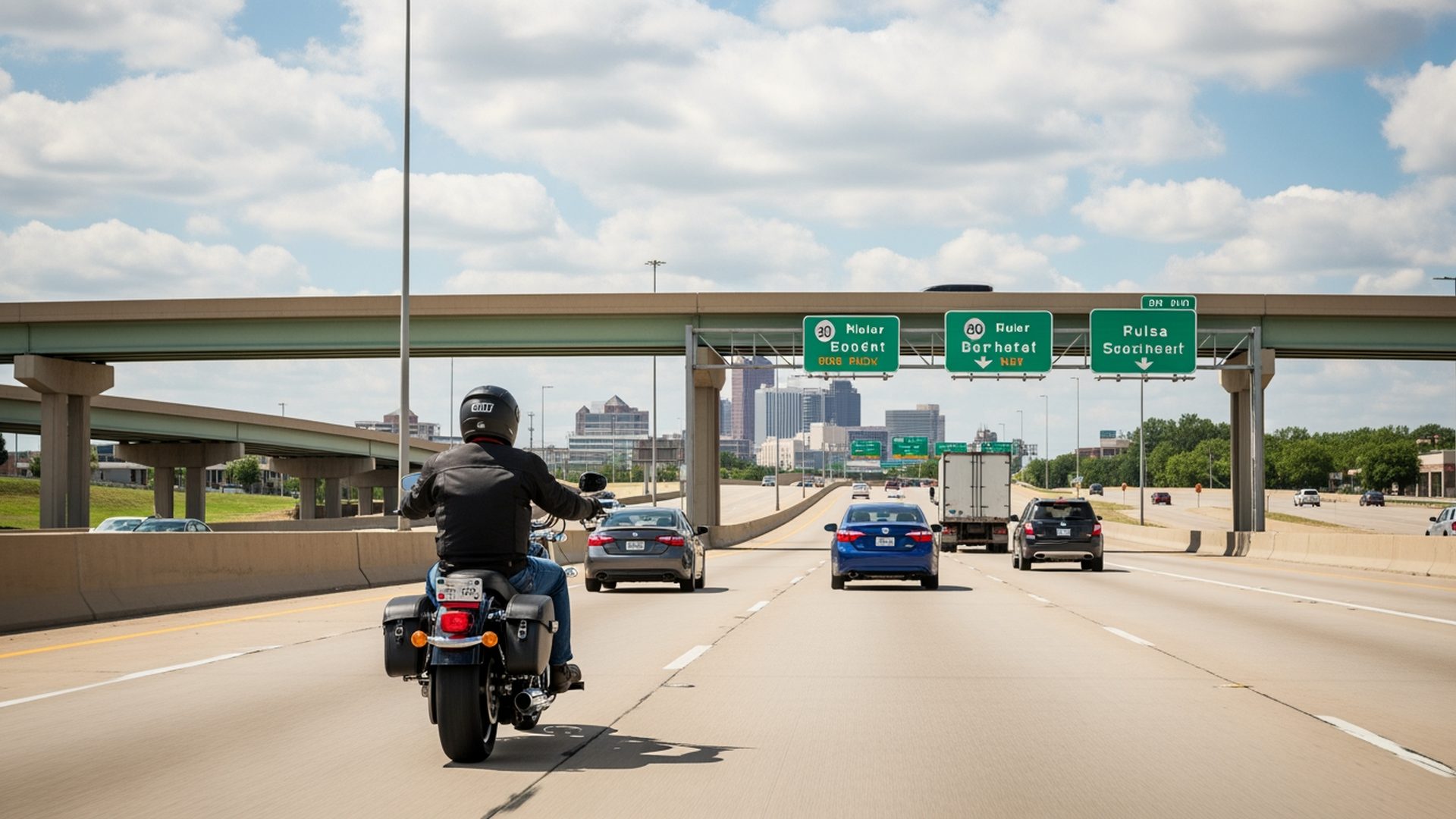
I-44 through the middle of Tulsa, the stretch a lot of riders still call Skelly Drive, is the backbone of the metro and one of its busiest, most stressful pieces of road. Traffic runs fast, the lanes are packed at rush hour, and the on and off ramps come quick with drivers merging across multiple lanes to reach an exit. That constant lane-changing is where a motorcycle disappears, because a driver checking a mirror for a car-sized gap will not register a bike. The fix is space and position. Leave a big following distance so a sudden brake-check ahead does not trap you, do not linger in the blind spot beside a car, pick the lane position that keeps you visible in the driver's mirror, and treat every ramp and merge point as a place where somebody is about to change lanes into your space.
The US-169 Mingo Valley Expressway
US-169, the Mingo Valley Expressway, carries a heavy load of commuter and truck traffic up the east side of Tulsa toward Owasso and down toward Broken Arrow, and it moves fast. The combination of high speeds, frequent interchanges, and a lot of trucks makes it one of the more demanding rides in the metro. Trucks throw wind and spray, they have enormous blind spots, and the speed differential between a merging vehicle and through traffic can be brutal. Give trucks a wide berth, never ride alongside one longer than you have to, and keep your eyes far up the road so you see the brake lights and the lane changes early instead of reacting to them late.
The Broken Arrow Expressway and SH-51
The Broken Arrow Expressway, SH-51, is the pipeline between downtown Tulsa and Broken Arrow, and it is one of the most congestion-heavy corridors in the region. Heavy volume, tight spacing, and the daily stop-and-go crunch mean rear-end risk and sudden lane changes are the constant threats here. In dense, slowing traffic a rider has to watch behind as much as ahead, because a driver who fails to notice the pack braking will not notice the motorcycle in front of it either. Keep an escape route open, cover your brakes, watch your mirrors in slowdowns, and make sure your brake light is bright and working so the car behind you gets the earliest possible warning.
The I-44 and US-75 interchanges
Where the big routes tie together, the risk concentrates. The I-44 and US-75 interchanges bring high-speed traffic from different directions into short merge zones, with drivers reading signs, choosing lanes, and cutting across at the last second all at once. Interchanges are decision-overload zones, and an overloaded driver is exactly the one who changes lanes without seeing a bike. Slow down before you reach the split rather than sorting it out inside the merge, know your exit ahead of time so you are not making a last-second move yourself, and give the drivers around you room to make their own mistakes without taking you with them.
Route 66 through the city
Historic Route 66 through Tulsa is a great ride and a different kind of hazard. The Mother Road runs as surface-street arterials like 11th Street and Southwest Boulevard, lined with signals, driveways, parking lots, and businesses, which means intersections and turning traffic instead of merges. This is prime territory for the crash that kills the most riders: the driver turning left across your path who never saw you, or the car pulling out of a lot or side street. Ride the city stretch of 66 expecting cars to turn and pull out in front of you, cover your brakes through the busy blocks, watch the front wheels of any car waiting to turn because they move before the car does, and keep your speed where you can actually stop for the intersection that goes wrong.
The high-wind turnpike stretches
Out past the metro, the Turner Turnpike toward Oklahoma City and the Creek Turnpike ring around Tulsa open up into fast, exposed country where the Oklahoma wind takes over. Sustained crosswinds and hard gusts shove a bike across its lane, and the punch is worst in the gaps between a treeline and open ground or when a semi passes and the air dumps back into your lane. Turnpike speeds leave little room to correct a big gust. Ride the wind with a loose grip so the bike can move under you, back your speed down when it is really honking, give trucks extra space so you are not caught in their wind wash, and plan for the fact that a long turnpike run in an Oklahoma wind is tiring, and a tired rider reacts late.
Why how the crash is documented decides everything
You can ride every one of these roads flawlessly and still get hit by a driver who was not looking. When that happens on a fast, complicated Tulsa corridor, the insurance company will do everything it can to shift blame onto the rider, because Oklahoma law gives them a reason to try.
- ✓ Oklahoma follows modified comparative negligence with a 51 percent bar. Your recovery is reduced by your share of fault, and if you are found more than 50 percent at fault you recover nothing, so how a highway crash is documented is everything.
- ✓ UM/UIM is your real backstop. Oklahoma has a high uninsured-driver rate and only requires 25/50/25 in liability, so the uninsured and underinsured motorist coverage your insurer must offer is what protects you when the at-fault driver has little or nothing.
- ✓ The helmet law applies only under 18. Only riders and passengers under 18 must wear a helmet in Oklahoma, and adults may legally ride without one, but insurers still try to twist a no-helmet choice into rider fault.
- ✓ Two years to file. The statute of limitations on an Oklahoma personal injury claim is generally two years, so protect your claim early.
After a crash on any of these corridors, get medical care first, then document what you can: the lane you were in, the merge or interchange or intersection where it happened, the traffic, the weather and wind, and the position of the vehicles. On a busy Tulsa expressway the other driver's story tends to shift, and the details you capture are what hold the truth in place.

Tony Edwards and the Tulsa motorcycle accident attorneys at Edwards & Patterson represent riders hurt by negligent drivers. If you have questions after a crash, their team is here to help.