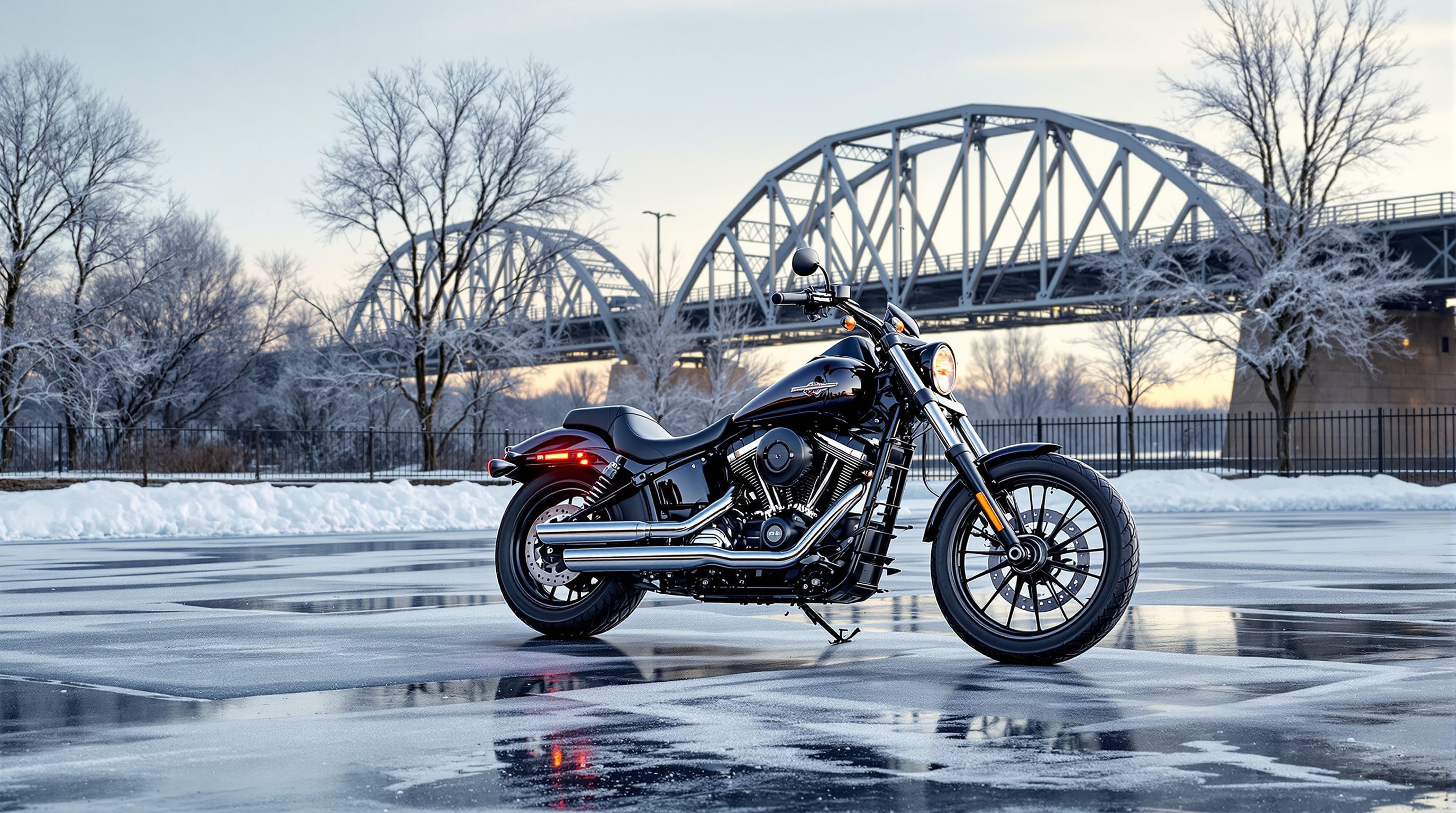
Ice Storms and Bridge Decks: Winter Road Hazards in Tulsa
Most Tulsa riders park the bike for the worst of winter, and that is the smart call. But there is always a crew that keeps commuting through it, chasing the dry, sunny days that Oklahoma sprinkles into January and February. If that is you, the single thing you have to respect is ice. Not snow, which you can see and avoid, but the ice you cannot: black ice, sleet glaze, and the frozen bridge deck that looks exactly like the dry pavement leading up to it. Oklahoma's winters are not gentle. Our ice storms are some of the most punishing in the country, and they turn ordinary roads into skating rinks. This is about that specific hazard, the ice and the bridge decks, and why the first freeze deserves more respect than any rider gives it.
Why bridge decks and overpasses freeze first
This is the piece of winter physics every rider has to understand. A road built on the ground holds warmth from the earth beneath it, so it cools slowly and freezes later. A bridge deck or an overpass has open air both above and below it, so it loses heat from both sides and drops to freezing well before the roadway on either end. That is why you can be rolling along on bare, dry pavement, cross onto a bridge, and hit ice you never saw coming. Around Tulsa that means the Arkansas River bridges, the I-44 and Skelly Drive overpasses, the flyovers on the Broken Arrow Expressway and the US-169 Mingo Valley Expressway, and every expressway ramp that lifts off the ground. On a cold morning after any moisture, those decks are the first surfaces to ice and the last to thaw, and they do it silently.
Black ice and the ice-storm glaze
Black ice earns its name because you cannot see it. It is a thin, clear sheet that lets the dark pavement show through, so it looks like wet road or even dry road in the wrong light. It forms where moisture freezes on the surface overnight or in shaded spots the sun never reaches, under overpasses, in tree shadow, on the north side of a cut. A car with four tires and traction control might catch a little slip and recover. A motorcycle has two contact patches the size of your palm and no such safety net. Hit black ice mid-corner or under braking and the bike is simply gone, with no warning and nothing you can do. Then there is the Oklahoma ice storm, which is its own beast. When freezing rain or sleet moves through, it does not pile up like snow you can read. It lays down a glaze of clear ice over everything, roads, bridges, signs, and every surface at once. Our ice storms have brought down power lines and whole trees across the region, and the roads they leave behind are impossible for a motorcycle. There is no line, no technique, and no tire that makes riding a glazed road safe. The only correct response to an ice storm is to not ride.
- ✓ Treat every bridge and overpass as iced. Assume the deck is frozen even when the road up to it is dry, and cross it upright, steady, and gentle with no braking, accelerating, or leaning.
- ✓ Watch for the warm-then-freezing trap. A sunny afternoon can melt ice that refreezes the second the sun drops, so the evening commute home can be far icier than the ride in.
- ✓ Read the pavement for the tell. Wet-looking pavement below freezing, a strange sheen, or spray off other vehicles that suddenly stops all say the surface may be ice.
- ✓ Make no sudden inputs on the cold. Smooth throttle, smooth brakes, and no abrupt steering, because cold tires are already hard and low on grip and a jerky input on a slick patch is what puts you down.
- ✓ When in doubt, do not ride. If the temperature is near freezing and there has been any moisture, the bike stays home, because no commute is worth a bridge deck.
The warm-then-freezing day is the classic trap
Oklahoma winters play a mean trick. A January day can hit the fifties in the afternoon sun, dry the roads, and tempt a rider out. Then the sun drops, the temperature falls back below freezing in an hour, and every bit of melt, every damp shaded spot, and every bridge deck flashes back to ice for the ride home. The rider who checked the road at noon and found it fine gets caught at dusk on a surface that refroze while the bike was parked. This is exactly how experienced winter commuters go down. They trusted the afternoon and did not account for the evening. If you ride a warm winter day, plan to be home before the sun gets low, and treat the return trip as a completely different, colder, icier ride than the one out.
Why an Oklahoma ice crash is a legal fight too
When a winter crash happens, Oklahoma law puts the rider on defense. We are an at-fault, tort state with modified comparative negligence and a 51 percent bar, meaning any share of fault reduces your recovery and being found more than half at fault bars it entirely. After an ice-related wreck, the insurance company's first move is to hang it on you: you should not have been riding, you were going too fast for conditions, you should have known the bridge was frozen. If another driver lost control on the ice and slid into you, or a road authority failed to treat a known-dangerous overpass, that blame-shifting is exactly what a rider has to push back against. And note that claims against a city or the state over an untreated or defective road carry short notice deadlines under the Oklahoma Governmental Tort Claims Act, far shorter than the general two-year window, so those cases move fast. Document everything at the scene: the ice, the bridge, the temperature, the lack of treatment or signs, and get medical care before the adrenaline hides an injury.

Tony Edwards and the Tulsa motorcycle accident attorneys at Edwards & Patterson represent riders hurt by negligent drivers. If you have questions after a crash, their team is here to help.