Fall Riding Hazards in Oklahoma: What the Season Throws at Green Country Riders
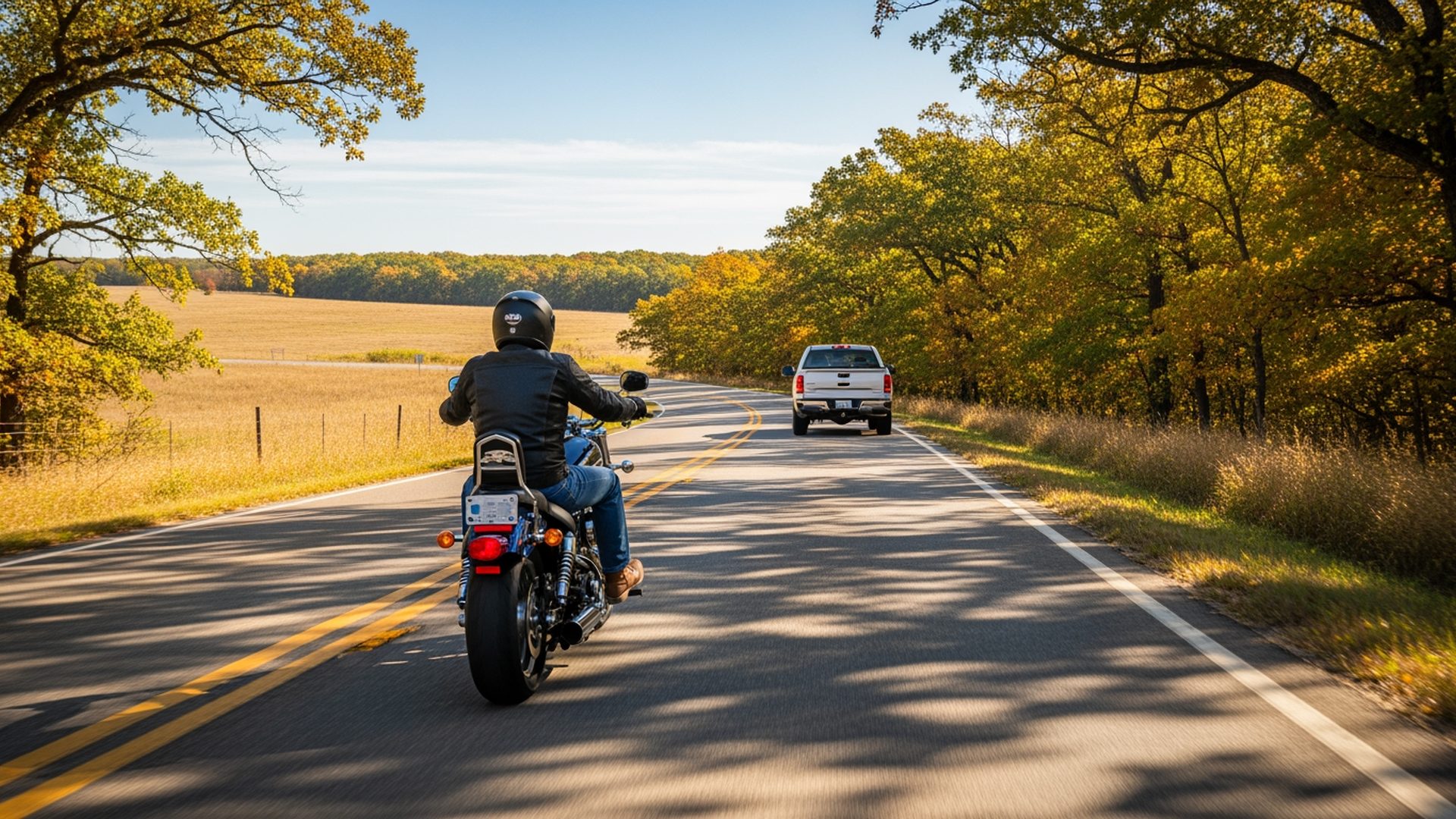
Ask any Tulsa rider when the riding is best and the answer is fall. The heat finally breaks, the humidity drops, the Osage and the Green Country backroads light up gold and rust, and a run out to Grand Lake or the Tallgrass Prairie is about as good as two wheels get in Oklahoma. It is also the season that hides the most traps. Fall is not one hazard but a stack of them: deer moving hard through the rut, gusty crosswinds on the open highways and turnpikes, cold fronts that slam in with sudden storms, wet leaves matted into the shaded river-bottom curves, and daylight that runs out earlier every week. None of it should keep you off the bike. All of it should change how you ride. Here is what the Oklahoma fall really throws at you, and how to handle it.
Deer in the rut are the season's deadliest hazard
Nothing in the Oklahoma fall will put a rider down faster than a deer. From October into December the rut is on, bucks are chasing does, and animals that normally hold still and stay hidden start crossing roads at a dead run without ever looking. The crashes cluster in the low-light hours at dawn and dusk, which are exactly the hours a lot of fall riding happens. Green Country is thick with them: the wooded two-lanes through the Osage, the backroads around Grand Lake O' the Cherokees and Keystone Lake, the river bottoms along the Arkansas and the Verdigris, and any stretch where timber runs right up to the shoulder. A deer gives you almost no warning, and where there is one there are usually more. Back your speed down on rural roads at first and last light, scan the ditches and tree lines and not just the pavement, and if a deer bolts across in front of you, brake hard and straight rather than swerving into the oncoming lane or off the edge.
Wind, cold fronts, and wet leaves
Oklahoma wind is no joke, and fall is when it turns on riders. The open highways and turnpikes around Tulsa, the exposed stretches of the Turner and Creek Turnpikes, the ridgelines out toward Pawhuska and the prairie, all funnel hard crosswinds that shove a bike across its lane and hit hardest in the gaps between a treeline and open ground or when a semi passes and the air dumps back. Then there is the front itself. Oklahoma cold fronts arrive fast, and a warm afternoon can flip to a cold, gusty, spitting mess in an hour, dropping the temperature twenty or thirty degrees and greasing the first rain with the summer's oil before enough water falls to wash it clean. And once the leaves come down, a wet, matted layer in the shaded curves along the river bottoms and the tree-lined backroads is close to riding on ice, hiding the pavement, the paint, and the potholes underneath.
- ✓ Ride the wind loose and look ahead. Relax your grip so the bike can move under you, weight your outside peg in a steady crosswind, and read the terrain ahead so a gust at a treeline gap or a passing semi does not catch you cold.
- ✓ Treat the first rain like ice. When a fall front breaks a dry spell, oil floats up before the road washes clean. Give yourself extra room, brake sooner and softer, and stay off aggressive throttle until the pavement has had a real soaking.
- ✓ Do your braking upright and early. Get your speed off before the leaves, the wet paint, or the corner, not on top of them, so you are never asking a slick surface for grip mid-lean.
- ✓ Dress for the front, not the driveway. An Oklahoma afternoon that starts warm can turn cold and wet fast. Cold, numb hands are slow hands, so carry layers and waterproof gloves once October hits.
- ✓ Respect cold, hard tires for the first few miles. Rubber needs heat to grip, and on a 40-degree morning your tires are stiff. Ease into it, and check your pressures more often, since they drop about a pound for every ten-degree fall in temperature.
The light runs out earlier every week
The other thing fall steals is daylight. Through October and into November the sun drops earlier, and after the clocks fall back in early November the ride home turns into a dusk or night ride whether you planned it or not. That matters twice over. You are harder to see in flat, low light, and a driver who "just didn't see the motorcycle" has more cover for it. And the low sun of a fall evening, right in a driver's eyes as they head west on Skelly Drive or an east-west arterial, can blind them to a rider in the lane ahead. Give yourself more space in the low-light hours, keep your headlight clean and aimed, add reflective gear, and ride at a speed where your own light and your own reaction time actually reach far enough to handle what shows up, deer included.
Why a fall crash hits Oklahoma riders harder
Here is the part too many Tulsa riders learn after a wreck instead of before it. Oklahoma is an at-fault state that follows modified comparative negligence with a 51 percent bar. Your recovery is reduced by your share of fault, and if you are found more than 50 percent at fault, you are barred from recovering anything at all. That is exactly why the insurance company fights so hard to pin a slice of blame on the weather and on you after a fall crash, arguing you were going too fast for a wet corner, should have expected the wind, or should have seen the deer. Do not let "it was raining out" or "he came out of nowhere" get twisted into "the rider caused it." A careless driver who turns across your path does not get a free pass because the pavement was wet or the light was low.
- ✓ The 51 percent bar cuts both ways. Fault below that line only reduces your recovery, so how the crash is documented is everything after a weather-related wreck.
- ✓ UM/UIM is your real backstop. Oklahoma has a high uninsured-driver rate and only requires 25/50/25 in liability coverage, so the uninsured and underinsured motorist coverage your insurer must offer is what protects you when the other driver has little or nothing.
- ✓ The helmet law applies only under 18. In Oklahoma only riders and passengers under 18 are required to wear a helmet, and adults may legally ride without one, but insurers still try to use a no-helmet choice against injured riders, so know that a legal choice is not fault.
- ✓ Two years to file. The statute of limitations on an Oklahoma personal injury claim is generally two years, so do not wait to protect your claim.
If a fall crash does happen, get medical care first, because hidden injuries have a way of surfacing days later. Then document the conditions while they are fresh: photograph the leaves, the wet pavement, the deer if it is there, the low sun angle, the wind-blasted open stretch, and the exact spot it happened. In a state with a 51 percent bar, those details are not a formality, they are the difference between a claim and nothing.

Led by Tony Edwards, Edwards & Patterson in Tulsa fights for injured motorcyclists. Reach out to their motorcycle accident lawyers in Tulsa anytime you need real answers.