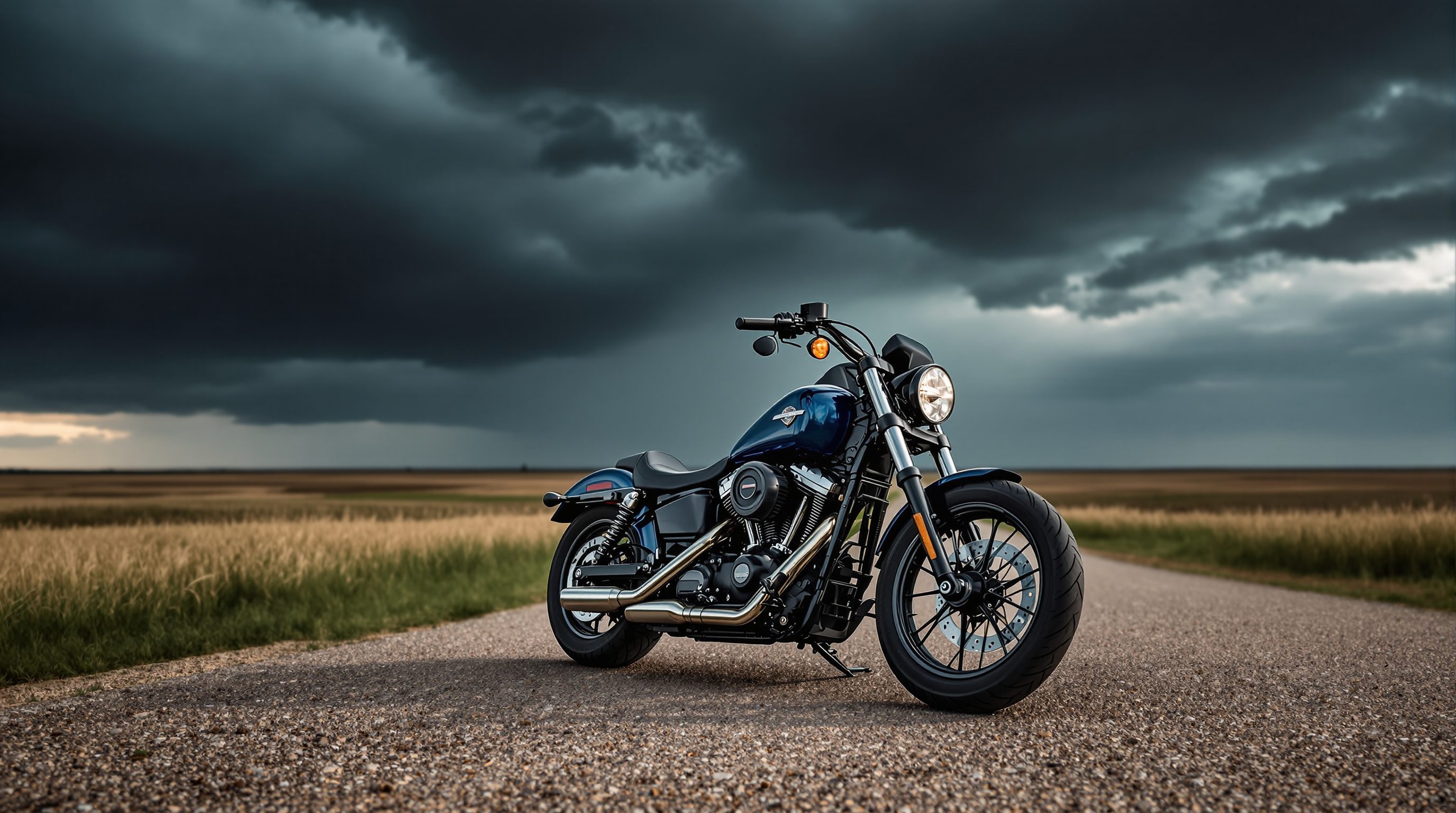
Crosswinds, Gusts, and Sudden Storms: Riding the Oklahoma Wind
The wind in Oklahoma is not weather that shows up once in a while. It is the baseline. Point a motorcycle down the Turner or the Creek Turnpike, roll out across the open prairie north of Tulsa, or cross one of the Arkansas River bridges on a breezy afternoon, and the wind is right there with a hand on your shoulder trying to move you out of your lane. Add the way an Oklahoma sky can turn from clear to a wall of black in half an hour, throwing gusts, rain, and hail at you, and you have a riding environment that punishes anyone who treats wind as an afterthought. This is not the general fall-hazard talk. This is specifically about the wind and the storms, and how to keep the bike under you when both come at once.
Why Oklahoma wind is different
Oklahoma sits where the plains open up and the wind has nothing to stop it. We are one of the windiest states in the country, and a rider feels every bit of it. A steady crosswind leans the bike and forces you to hold a constant correction just to track straight. A sudden gust is worse, because it hits without warning and shoves the whole motorcycle a foot or more across the lane before you can react. On the open turnpikes and the exposed stretches of I-44 and Skelly Drive, on US-75 and the US-169 Mingo Valley Expressway, and out on the prairie roads, there is no treeline or terrain to break it up. The wind arrives full strength. And the crossings that scare experienced riders most are the Arkansas River bridges, where you come out of a sheltered approach into open air over the water and the crosswind slams you the instant you clear the bank.
How gusts and wind walls actually move a bike
Wind does not push a motorcycle evenly. It works on the tall, flat surfaces, your body, the fairing, a windshield, a set of hard bags, and it levers the bike over. To hold a line in a steady crosswind you naturally lean slightly into it and steer a hair toward the wind. The problem is what happens when the wind changes. Ride out from behind a stand of trees, a cut in the terrain, an overpass, or a big rig, and the crosswind you were leaning against suddenly stops, and now you are leaning into nothing and drifting to the downwind side. Then it slams back. That on-off, on-off is what tanks riders on windy days, not the steady blow itself. The passing semi is its own hazard and a daily one on the turnpikes and I-44. As a big truck comes alongside it first blocks the crosswind, giving you a pocket of dead air that pulls you toward the truck, then as you clear the front of it the wind dumps back and the truck's own turbulence hits you like a wall, shoving you away. Getting passed, or passing, in a strong crosswind means bracing for both jolts.
- ✓ Loosen your grip on the bars. A death grip fights the bike's natural stability, so relax your hands and arms and let the motorcycle move a little underneath you and settle itself.
- ✓ Weight the pegs and lower your body. Press down on the pegs, tuck your knees to the tank, and get low to shrink the sail area the wind has to work on and plant the bike.
- ✓ Slow down before the exposed stretch. Wind force climbs fast with speed, so backing off ten or fifteen miles per hour on an open, gusty bridge or turnpike makes every gust smaller.
- ✓ Read the terrain for where wind starts and stops. Treeline gaps, overpasses, bridge approaches, and the space beside a passing truck are all spots where the wind will suddenly switch, so see them coming.
- ✓ Brace for the pass, both ways. Whether a semi passes you or you pass it, expect the pocket of calm and then the wall of turbulence, and hold a firm but loose line through both.
Sudden storms and the edge of tornado season
The other half of the Oklahoma wind story is how fast a storm builds here. A clear afternoon can turn into a towering black cell in under an hour, and when it breaks it does not ease in. Oklahoma storms bring straight-line gusts that can top highway speeds, blinding rain, and hail that ranges from stinging to genuinely dangerous on an exposed rider. And from spring into early summer this is tornado country, where the same systems that make the wind can put a warned cell right over your route. A motorcycle is the worst possible place to meet any of that. There is no cage, no roof, and nothing between you and a hailstone or a flying limb. Respecting a storm means acting early, before it is on top of you. Watch the sky and the forecast on a day you plan to ride, and if a line of storms is coming, do not try to beat it home. When the wind picks up hard, the temperature drops fast, and the sky goes green-black, get off the road. Pull under a solid overpass or into a real building, gas station canopy, or garage, not just under a lone tree, and wait it out. Fifteen minutes off the bike is nothing. Riding into an Oklahoma hail core or a microburst gust is how riders get hurt or killed.
When the wind causes a crash, the insurer blames the rider
Here is the legal reality Tulsa riders need to carry with them. Oklahoma is an at-fault state with modified comparative negligence and a 51 percent bar, which means if you are found more than half at fault for a crash you recover nothing, and any fault below that line still cuts your recovery. After a windy-day wreck, insurers lean on that hard. They will argue you should have expected the gust, should have slowed down, should not have been out in the weather at all, trying to move enough blame onto you to gut or bar your claim. A gust that pushes you into another vehicle, or a driver who blows a lane change and blames the wind, becomes a fight over percentages. Do not let the weather do the other side's work for them. If a driver's carelessness put you down, the wind does not erase that. Document the conditions, the gusts, the exposed stretch, the truck that passed, and get the facts recorded before the story hardens into rider error.

Led by Tony Edwards, Edwards & Patterson in Tulsa fights for injured motorcyclists. Reach out to their motorcycle accident lawyers in Tulsa anytime you need real answers.