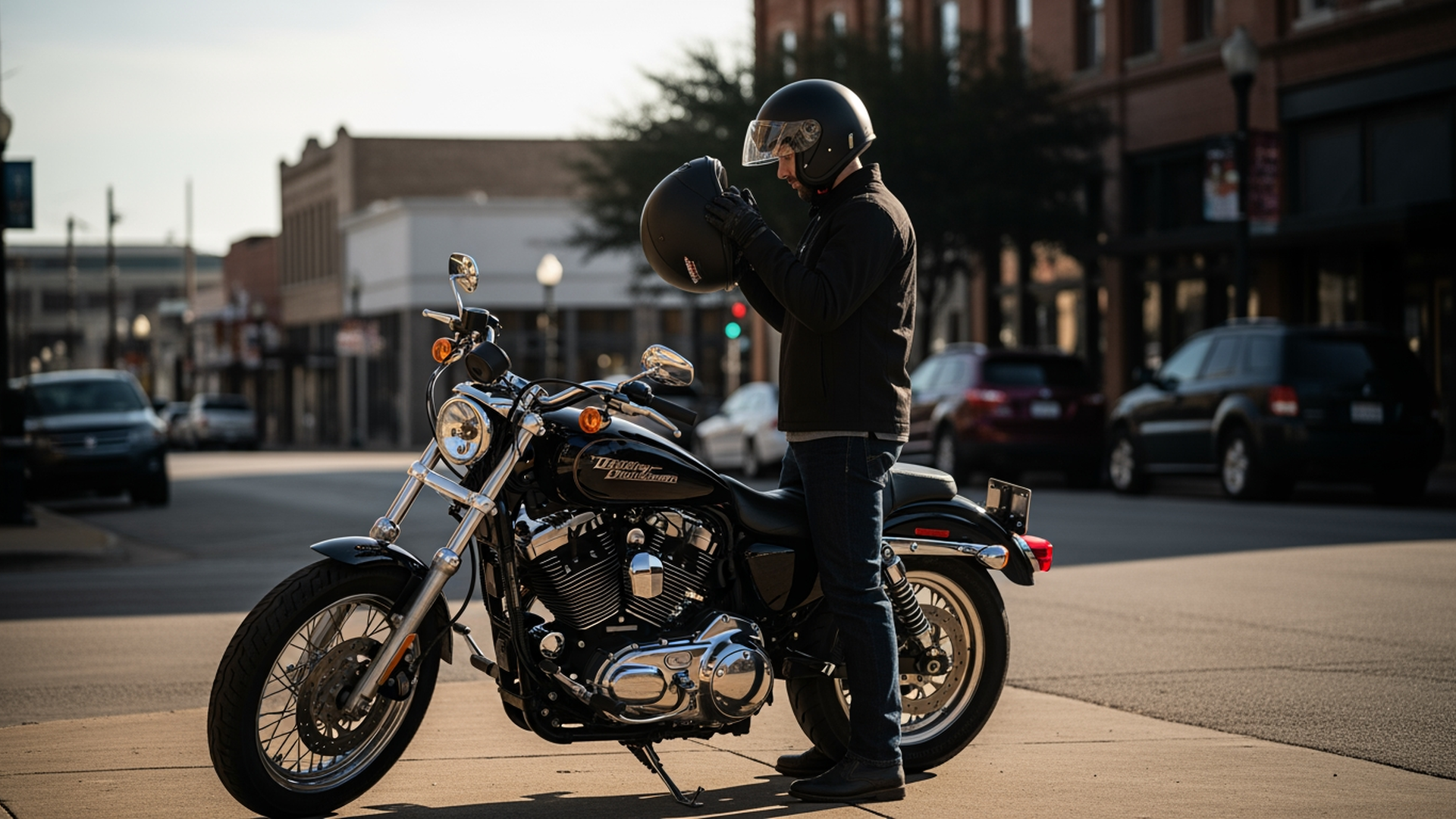
Texas Motorcycle Helmet Law: The Over-21 Exemption and What It Really Requires
Ask ten riders in Dallas-Fort Worth whether Texas is a helmet state and you will get ten confident answers, half of them wrong. The truth sits in between. Texas does require helmets, but it also carves out an exemption for adult riders who meet two specific conditions, and knowing exactly where that line falls matters for more than a traffic stop.
The Basic Rule and the Two Conditions
Under Texas law, motorcycle riders and passengers under 21 must wear a helmet. There is no exemption for them. For riders 21 and older, the law opens a door. You may legally ride without a helmet, but only if you have either completed an approved motorcycle safety course, which Texas recognizes through specific rider training programs, or you carry at least 10,000 dollars in medical insurance coverage for injuries sustained in a motorcycle accident. One or the other is enough. You do not need both, but you do need at least one, and if you cannot show that you meet one of them, you are not actually exempt no matter your age.
There is a wrinkle a lot of riders miss. Texas law limits when an officer can stop a rider solely to check helmet-exemption status, which means a rider is not supposed to be pulled over just to prove they took the course or carry the coverage. That is a narrow protection, though, and it should never be mistaken for a green light to skip both requirements, because the helmet law is only half the story.
Why the Helmet Question Follows You Into the Claim
Even in a state that lets qualified adults ride uncovered, whether you wore a helmet becomes a talking point for the other side after a serious crash. Insurance companies look for any angle to reduce what they pay, and a rider who was not wearing a helmet gives them one to try. The insurer may claim that head or neck injuries would have been less severe with a helmet, and try to knock down that portion of your damages. Even when a helmet had nothing to do with the injury, adjusters use the fact to paint the rider as reckless in front of a jury or a claims committee. And in a state with a 51 percent fault bar, anything that makes the rider look careless can be used to nudge the fault percentage in the wrong direction.
None of this changes who caused the crash. A driver who turned left across your path on US-75 Central Expressway is still the one who caused the wreck, helmet or not. But you should expect the helmet question to come up, and you should not let the other side use it to rewrite the case.
What This Means for Your Own Coverage
The 10,000 dollar medical insurance condition is worth a second look, because that figure is a legal minimum for one narrow purpose. It is not a measure of what a real motorcycle injury costs. A single serious crash can run into five figures of trauma care before you even leave the hospital, plus surgery, months of rehabilitation, and lost income while you cannot work. Ten thousand dollars does not begin to cover that, so while carrying it can satisfy the helmet exemption, no rider should treat it as real financial protection. The backstops that actually matter are strong health coverage and solid uninsured and underinsured motorist coverage on your auto policy.
- ✓ Under 21 means helmet, always. There is no exemption to rely on for a rider or passenger under that age.
- ✓ Over 21 means helmet unless you qualify. Complete an approved safety course or carry the required coverage, and keep proof of whichever applies.
- ✓ A helmet is still your best injury protection. The legal exemption is about the law, not about physics. In a crash, the helmet does a job no policy can.
- ✓ Do not let the helmet question define your claim. Whether or not you wore one, the other driver's fault is what caused the crash.

Led by Manuel Diaz, Diaz Law Firm in Dallas-Fort Worth fights for injured motorcyclists. Reach out to their Dallas-Fort Worth motorcycle accident attorneys anytime you need real answers.