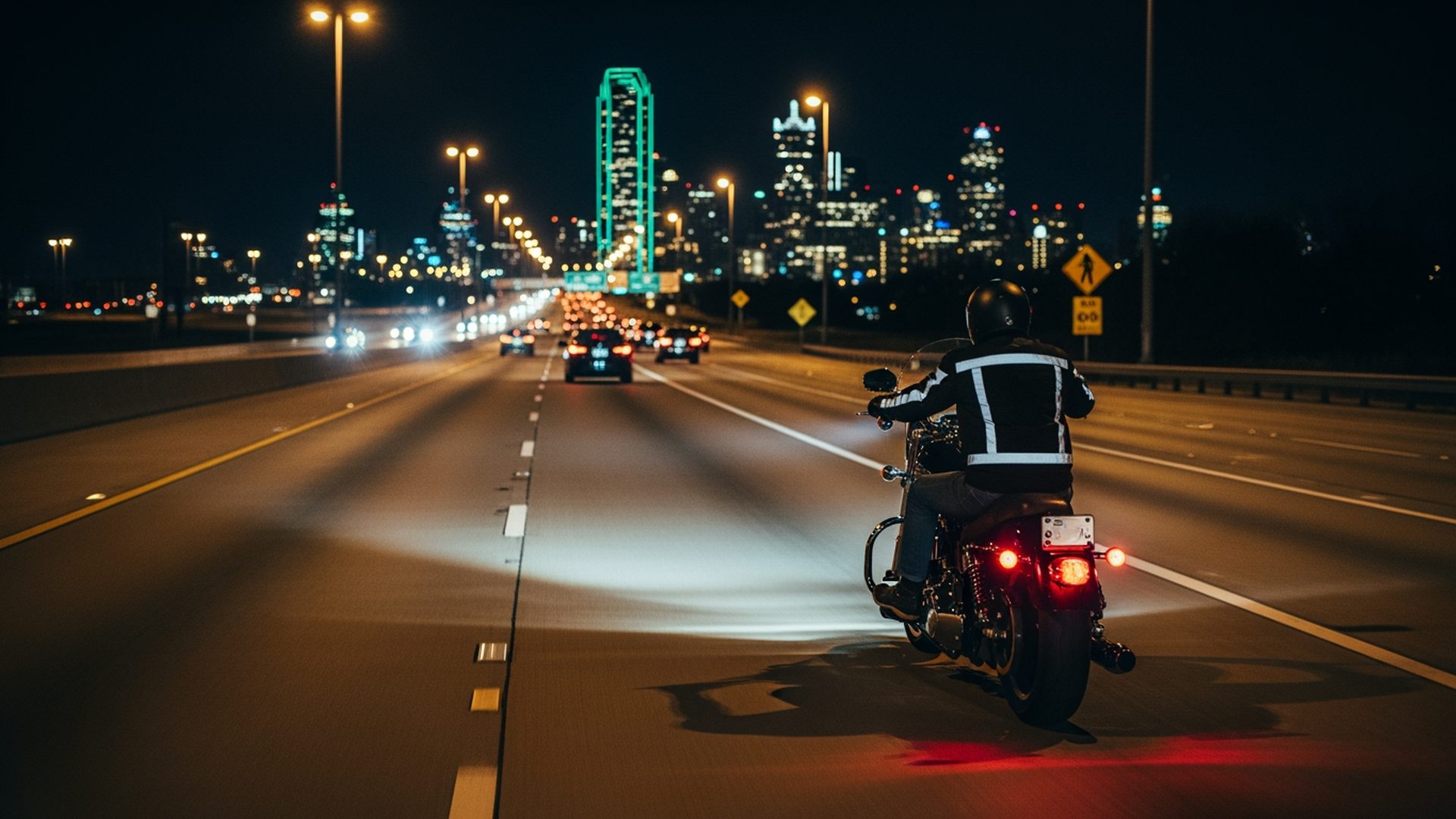
Night Riding on the DFW Freeways: Staying Visible on I-35, Central, and LBJ
Once the clocks change in the fall, a big share of North Texas riding happens after dark. The evening commute home on US-75 Central Expressway or I-635 LBJ now starts under streetlights, and a Saturday night ride is just part of the calendar. Night riding is not something to avoid, but it does stack the deck against you.
The whole game is making yourself seen
During the day a driver has your whole silhouette, your gear, and your movement to pick you out of traffic. At night all of that collapses down to a couple of lights, and on a busy freeway your single headlight can disappear into a wall of headlights behind you. A driver glancing at the I-35 on-ramp is scanning for the wide, bright signature of a car. A lone motorcycle light does not trigger the same recognition, which is how riders get merged into by drivers who swear the lane was empty.
The cheapest safety upgrade you can make is being brighter. Dark gear that looks great in the daytime turns you into a shadow after sunset, so reflective material where it moves, a bright or reflective helmet, and a clean clear visor all do real work. Your own lights matter just as much, since a dim or misaimed headlight and a dirty taillight lens undo everything else. Wipe them down and aim them right before every night ride.
Where you put the bike on US-75, I-635, and the Dallas North Tollway decides who can see you and who cannot. Move through the space beside a car instead of lingering where the driver has no mirror and no reason to look. Follow at a safe distance so a car ahead can light up debris, potholes, and lane shifts before you reach them. And slow to your sight distance, because outrunning your headlight on a dark stretch of tollway is how a stalled car or a piece of debris becomes a crash. DFW freeways at night carry a specific set of threats: blown truck tire treads on I-35 and I-820, stalled and unlit vehicles on shoulders and in lanes, work zones that drop pavement edges, and the sharply higher risk of an impaired driver late at night.
- ✓ Add reflective material where it moves. Tape on your helmet, cuffs, and boots reads as a person, not a sign, because it moves.
- ✓ Carry a clear visor for after dark. A scratched or tinted visor scatters light and steals vision you cannot afford to lose.
- ✓ Do not park in a blind spot. Move through the space beside a car and use the lights of vehicles ahead to read the road.
- ✓ Slow to your sight distance. Ride only as fast as your headlight lets you see and stop, and give yourself extra following room.
What Texas law and the helmet rule mean after dark
Night riding raises the stakes on a crash, and Texas law shapes what happens after one. The helmet rule has a catch riders forget. In Texas, riders under 21 must wear a helmet, and riders 21 and older may ride without one only if they have completed an approved safety course or carry at least $10,000 in medical insurance coverage. That $10,000 does not go far after a serious nighttime crash, so know what your own coverage actually is before you need it.
Fault decides everything, and the bar is 51 percent. Texas uses modified comparative negligence, so more than half at fault and you recover nothing, half or less and your recovery is reduced by your share. Adjusters love to argue a rider was hard to see at night, which makes the fight over who is really at fault the whole case. The minimum liability of 30/60/25 often will not cover a serious injury, which is why uninsured and underinsured motorist coverage is a rider's real lifeline when the other driver has too little or none. And you have two years from the crash to file most injury claims, so waiting can quietly end a valid case.
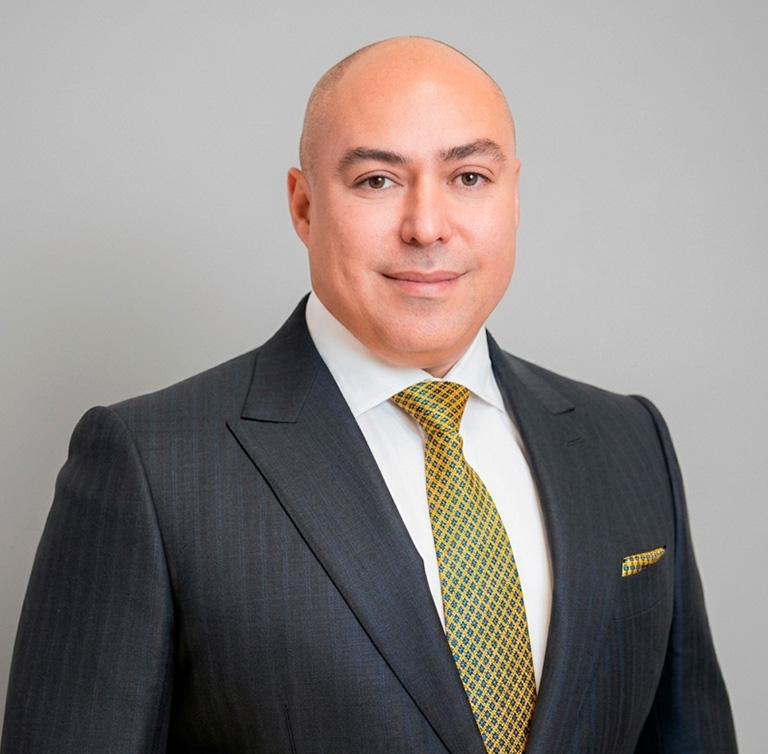
Have questions after a wreck? Manuel Diaz and the Dallas-Fort Worth motorcycle injury attorneys at Diaz Law Firm (diazlf.com) review rider claims and explain your options.