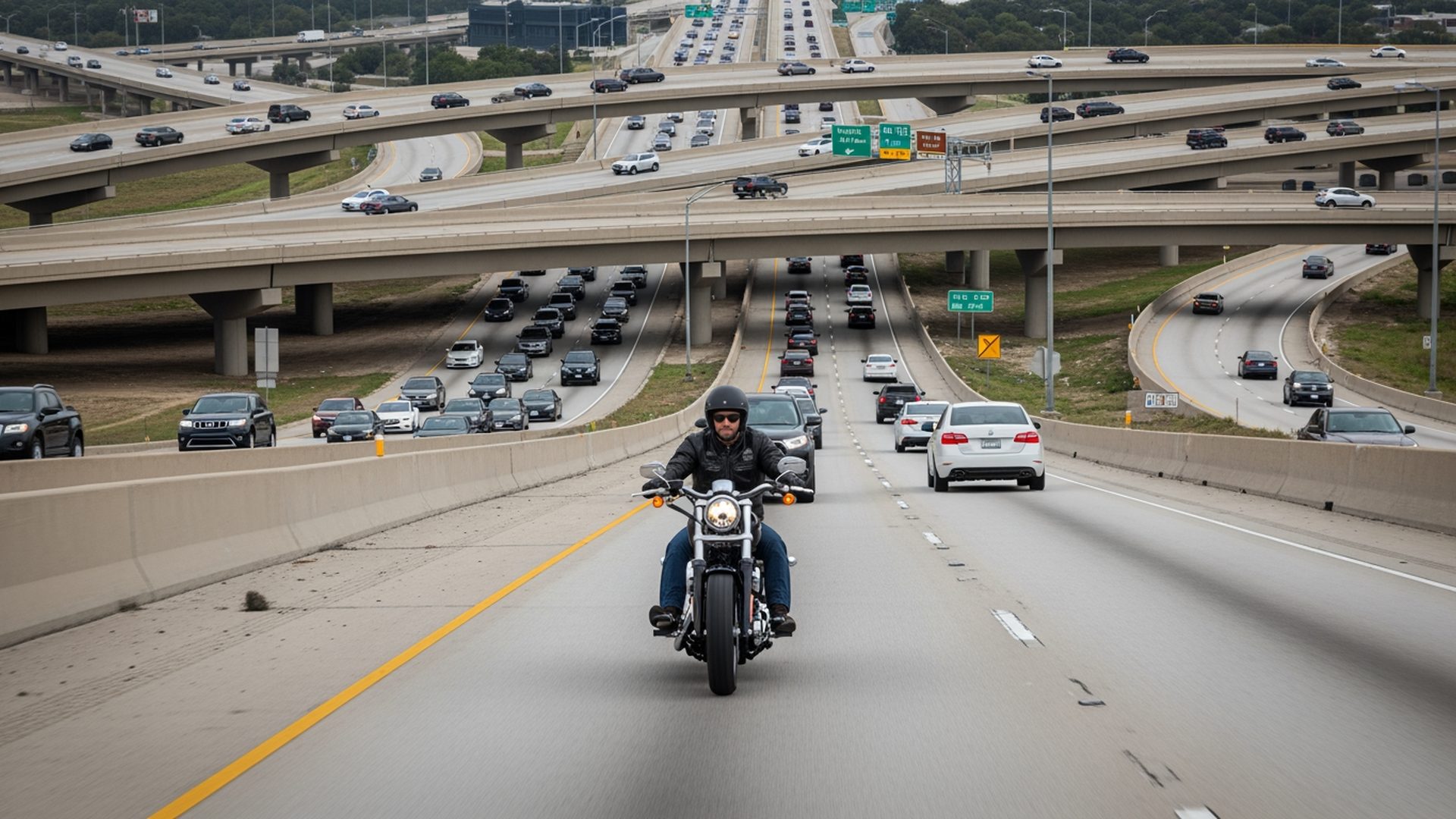
Dallas–Fort Worth's Most Dangerous Roads and Interchanges for Motorcyclists
Every rider in North Texas has a stretch of road that makes them tighten up. For a lot of us it is the same handful of interchanges and high-speed corridors where four or five lanes of traffic all try to change lanes at once. You cannot always avoid these roads, but you can ride them with your eyes open and your plan ready.
The interchanges and corridors that demand the most
The big DFW interchanges are dangerous for one simple reason. They ask a wall of traffic to sort itself out at highway speed in a very short distance, and drivers change lanes fast, late, and often without looking for a bike. The Central and LBJ interchange at US-75 and I-635 packs in heavy merging, short weaves, and drivers cutting across multiple lanes to catch an exit. The I-35 splits, where the interstate divides into 35E through Dallas and 35W through Fort Worth, create sudden lane choices that back traffic up and provoke last-second moves. The Dallas North Tollway feeders mix high speed with tight on-ramps and toll-plaza transitions, and the I-30 and I-820 junctions around Fort Worth funnel fast traffic between the two cities with little room for error.
The long, fast corridors are unforgiving in a different way. Runs like US-75 Central Expressway, I-635 LBJ, and the Dallas North Tollway are not technical, but speeds are high, traffic is dense, and the gaps between cars close in a heartbeat. A driver checking a phone at 65 miles an hour covers the length of a football field in the few seconds their eyes are down. Position is everything here. Ride where drivers can see you, stagger your following distance so you always have an out, and keep moving through blind spots instead of parking in them.
It is easy to fixate on the freeways, but a huge share of motorcycle collisions happen at ordinary intersections on DFW arterials. The classic crash is a driver turning left across your path who says they never saw you, and they are often telling the truth. A motorcycle is a narrow target, and a driver scanning for cars can look right through you. Construction only moves the hazards around, since the metroplex is full of shifting lanes, temporary striping, uneven pavement edges, and loose gravel through work zones on I-35, LBJ, and the Tollway corridors.
- ✓ Pick your lane early on the interchanges. Assume someone is about to come into your lane and keep a cushion you can move into.
- ✓ Never linger beside a car on the corridors. Ride out of blind spots on US-75 and LBJ instead of sitting in them.
- ✓ Cover your brakes at every intersection. Watch the front wheel of the waiting car, since it moves before the car does.
- ✓ Slow down and stay smooth in work zones. Grooved pavement and steel plates get squirrely, so relax your grip rather than fight the bike.
What Texas law means when one of these roads bites
If you go down on one of these corridors, Texas law shapes what happens next more than most riders realize. Texas uses modified comparative negligence with a 51 percent bar, so if you are found more than half at fault you recover nothing, and if you are 50 percent or less at fault your recovery is reduced by your share. On a chaotic interchange, the fight over who caused the lane change is the entire case, and adjusters will try to load the blame onto the rider.
The coverage numbers explain why the fight is worth so much. The state minimum liability is only 30/60/25, and a serious injury on I-635 can blow past those limits fast, leaving the at-fault driver's policy short. Uninsured and underinsured motorist coverage is your real backstop, and it is what protects you when the other driver has too little insurance or none. Documentation is what wins these fault fights, so photos, witness names, and the crash report matter enormously when the whole case turns on who moved into whom. Just remember the clock: Texas sets a two-year deadline for most injury claims, and waiting can quietly end a valid one.
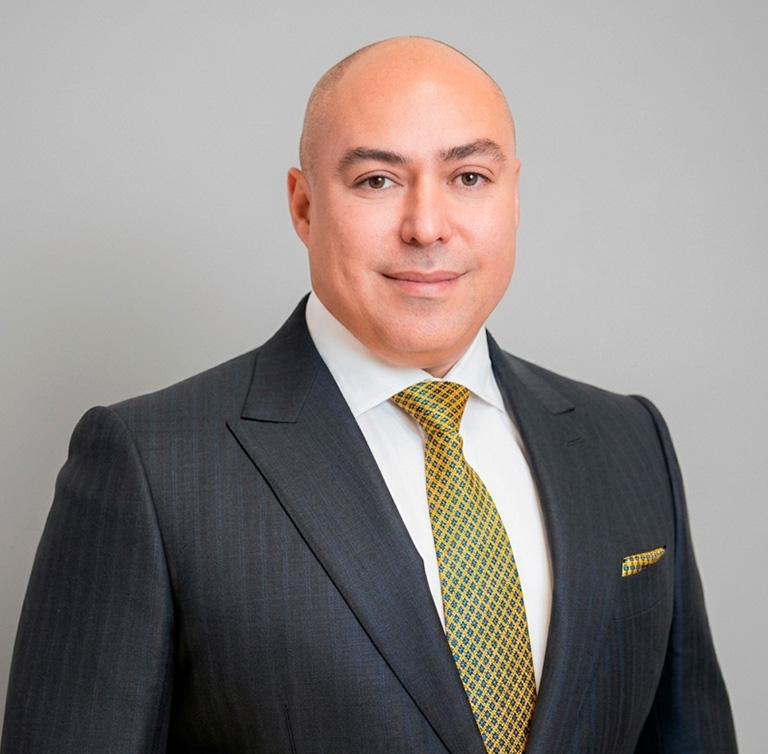
Manuel Diaz and the Dallas-Fort Worth motorcycle accident attorneys at Diaz Law Firm represent riders hurt by negligent drivers. If you have questions after a crash, their team is here to help.