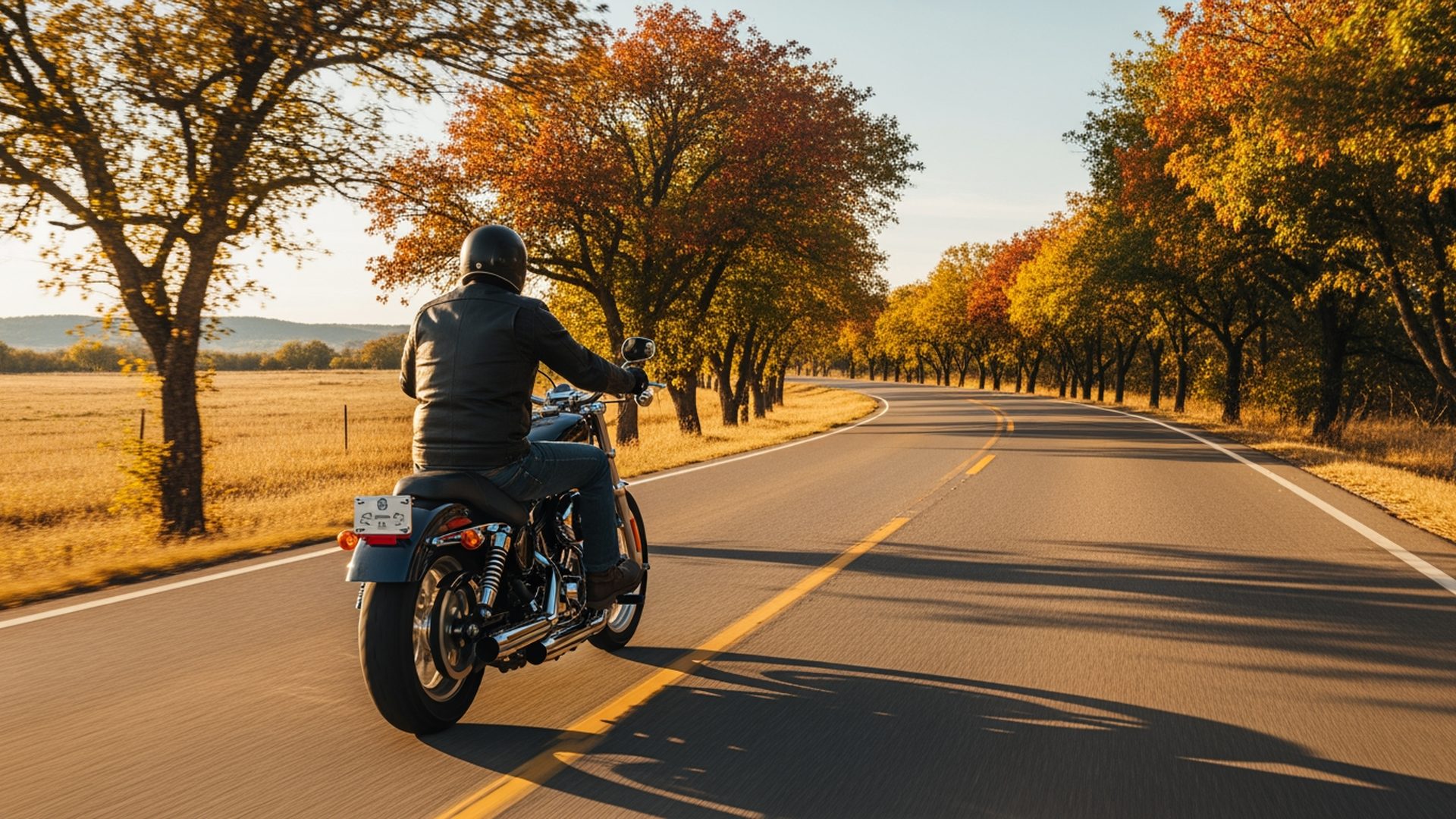
Fall Motorcycle Riding Hazards in Dallas–Fort Worth
Fall is the season most North Texas riders wait all year for. The heat finally breaks, the mornings turn crisp, and a run out the Dallas North Tollway feels like the reason you own a bike. But fall in DFW carries its own hazards, and they are not the ones that put riders down in July.
Low sun turns your commute into a blind spot
As the days get shorter, sunrise and sunset slide right into rush hour. A driver heading east on I-30 at 7 a.m., or west on I-635 LBJ in the evening, can be staring straight into a blinding sun. That driver is not looking for a motorcycle, and there is a real chance they cannot see one at all. This is one of the most underrated fall hazards because it feels like a beautiful day, not a dangerous one.
Cold pavement is the next trap. North Texas mornings can drop into the 40s in late fall while the afternoons stay mild, and cold tires and cold asphalt simply do not offer the traction you are used to from summer riding. Your tires need a few miles to come up to temperature, and that first cold on-ramp onto US-75 Central Expressway is not the place to test the limits of your lean angle. Shaded overpasses and bridge decks around the LBJ and Central interchanges stay colder and hold moisture long after the open road has dried, so treat them with extra care on a chilly morning.
Leaves and debris add a hidden layer. DFW does not get the deep leaf cover of northern states, but tree-lined stretches, park roads, and older neighborhoods around Dallas and Fort Worth still pile up leaves in the fall. A patch of wet, matted leaves is as slick as ice, and it hides painted lines, potholes, and gravel underneath. Blowing debris on the open highway is its own problem, since a trash bag or cardboard flap crossing your lane at speed can trigger a panic reaction that is more dangerous than the object itself.
- ✓ Assume the sun-blinded driver cannot see you. Ride like you are invisible to anyone facing the glare, especially at intersections and merge points.
- ✓ Give your tires time to warm up. Stay smooth on the brakes and throttle until they come up to temperature, and go easy on shaded bridge decks.
- ✓ Cross leaf cover upright, not mid-lean. Do your braking and turning on clean pavement, and watch the gutters and shoulders where debris collects.
- ✓ Ride your headlight after the clocks change. Keep your visor clear, aim your light, and back your speed down to how far you can actually see.
Why a Texas crash can hit a rider harder than expected
Here is the part too many North Texas riders learn after a crash instead of before it. Texas uses a modified comparative negligence rule with a 51 percent bar. If you are found more than half at fault, you recover nothing. If you are 50 percent or less at fault, your recovery is reduced by your share. Insurance adjusters know this rule cold, and they will work hard to pin as much blame on the rider as they can, which is why what you say and do after a fall-season crash matters so much.
The coverage math is just as important. The state minimum liability is only 30/60/25, which is often not enough to cover a serious motorcycle injury, so the at-fault driver's policy may fall short of what you actually need. That is exactly what uninsured and underinsured motorist coverage is for. If you have not checked your UM/UIM limits before this season, now is the time. And the clock is always running: Texas gives you two years from the crash to file most injury claims, and waiting can quietly end a valid case.

Led by Manuel Diaz, Diaz Law Firm in Dallas-Fort Worth fights for injured motorcyclists. Reach out to their motorcycle accident lawyers in Dallas-Fort Worth anytime you need real answers.