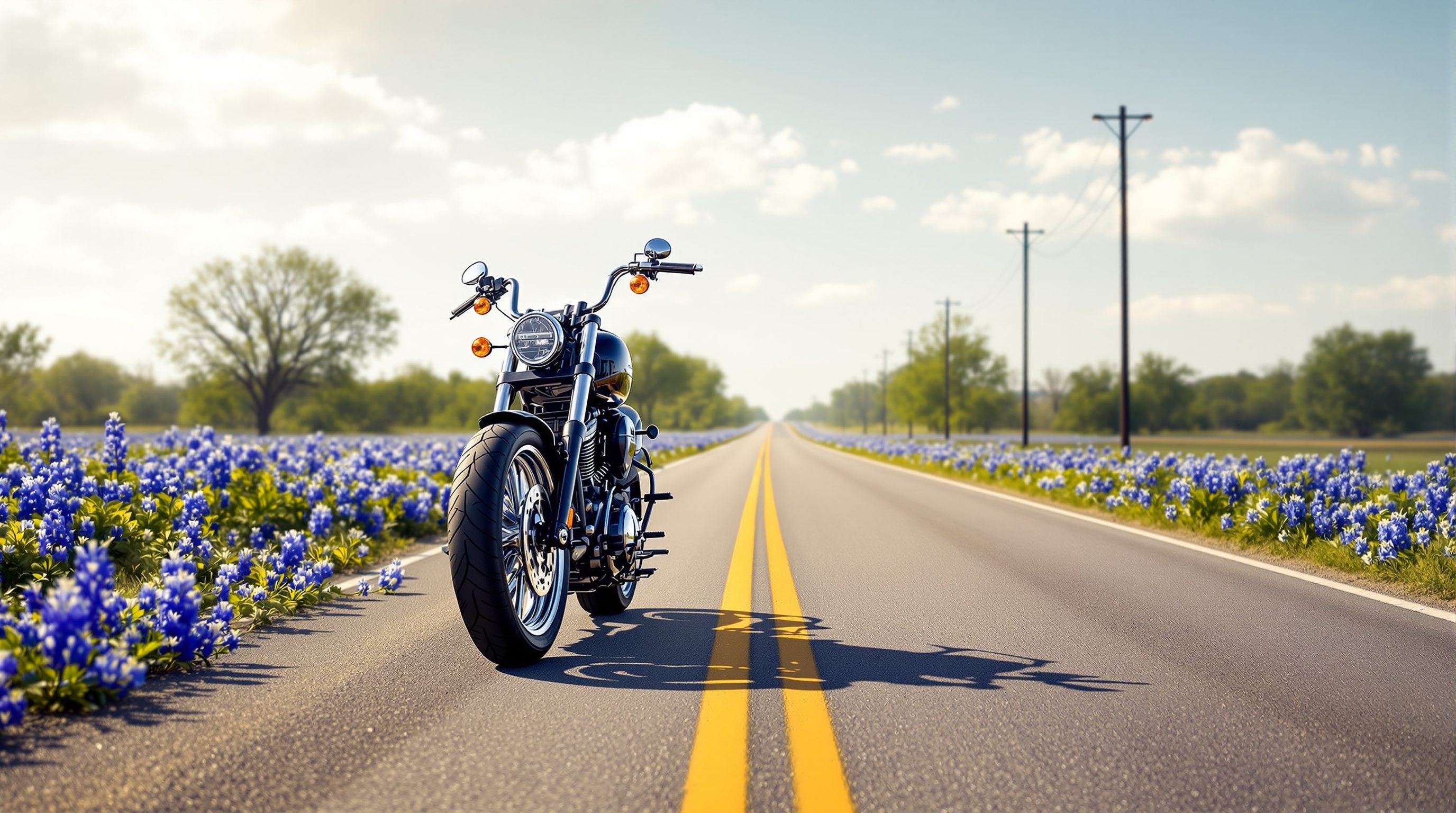
Spring-Ready: The DFW Rider's Pre-Season Bike and Bluebonnet Checklist
North Texas barely gets a real winter, but most riders still park the bike for a stretch of cold, gray weeks. Then the first warm Saturday hits, the bluebonnets start showing up along the Hill Country roads, and everybody wants to ride at once. The problem is that both you and the bike have been sitting. Tires have flat-spotted, the battery has drained, and your reflexes have gone soft. Spring is the best riding of the year around DFW, and also when a lot of avoidable crashes happen.
Run a T-CLOCS inspection before the first ride
T-CLOCS is the standard pre-ride inspection riders learn in the safety course, and it matters most after a bike has sat all winter. Cold storage drops tire pressure and can leave flat spots, so check pressure and look for sidewall cracking before you trust a corner. Work the controls, since cables can stick or fray and a throttle that does not snap back is a hazard the moment you leave the driveway. Test every light, because being seen is a rider's whole safety margin. Check oil, coolant, and brake fluid, and look under the bike for leaks that showed up while it sat. Inspect the chassis, chain, and fasteners, and confirm the stands spring back. The battery is the most common spring casualty: bikes that sat without a tender often turn over weak or not at all, so charge or replace it before the first ride rather than discovering it dead two miles from home.
Your first-ride skills are rustier than you think
The bike is not the only thing that sat. After months off, your throttle control, braking feel, counter-steering, and hazard scanning are all a step slower than they were in the fall. You do not notice it in the driveway. You notice it when a car does something stupid and your reaction is half a beat late. Give yourself an easy re-entry. Take the first ride somewhere low-stress and familiar, not straight onto US-75 Central Expressway at rush hour, and practice hard stops and slow-speed maneuvers in an empty lot before you need them in traffic. The riders who get hurt in spring are often experienced ones who assumed their skills were exactly where they left them.
Watch for spring tourists on the bluebonnet roads
Here is the DFW-specific spring hazard nobody warns you about until it nearly takes them out. When the bluebonnets bloom, the Hill Country and rural North Texas two-lanes fill with tourists who pull over to take pictures. Cars stop suddenly on narrow shoulders or half in the lane, doors swing open, and drivers looking at a field of flowers are not looking for a motorcycle.
- ✓ Expect sudden stops on scenic roads. Out past Cresson and through the Hill Country in spring, treat every wide shoulder and pretty overlook as a spot where a car may brake without warning.
- ✓ Give parked-car clusters extra room. People stand in the road near stopped cars, so slow down and move over before you reach a cluster of pulled-over vehicles.
- ✓ Watch for cars pulling back into traffic. A driver who stopped for a photo often pulls back onto the road without checking, straight into a rider's path.
- ✓ Ride your own pace, not the group's. Spring group rides bunch up on roads full of tourists, so hold a pace where you can actually stop for the unexpected.
- ✓ Assume the driver did not see you. Sun glare, distraction, and scenery all work against a motorcycle, and position and speed are how you stay in control.
Do an insurance re-check before the season starts
The least exciting item on the list decides how a bad day ends. Texas only requires drivers to carry minimum liability limits of 30/60/25, which is not much when a serious motorcycle injury is involved, and the driver who pulls out in front of you may carry only that or nothing at all. That is why your own uninsured and underinsured motorist coverage is a North Texas rider's real backstop, and Texas insurers are required to offer it, so confirm you actually have it and that the limits mean something. Check your helmet-related coverage too, since riders 21 and older may ride without a helmet only if they completed an approved safety course or carry at least $10,000 in medical coverage, and that amount does not stretch far after a real crash. And remember that if you do go down, Texas gives you only two years to bring an injury claim.

Manuel Diaz and the Dallas-Fort Worth motorcycle accident attorneys at Diaz Law Firm represent riders hurt by negligent drivers. If you have questions after a crash, their team is here to help.