Florida Cut the Deadline to Two Years: The Clock That Can Quietly End a Motorcycle Claim
After a motorcycle crash, a filing deadline is the last thing on your mind. You are dealing with injuries, a wrecked bike, and an adjuster who suddenly wants to be your friend. But in the background a clock is already running, and Florida recently made that clock run out twice as fast. Miss it and the strongest case in the world is worth nothing, because the court will simply refuse to hear it.
The Two-Year Rule, in Plain Terms
Florida's statute of limitations for most negligence claims is now two years from the date of the injury. For a motorcycle crash on I-4 or the 408, that generally means two years from the day of the wreck to get a lawsuit on file. This deadline is not a suggestion or an opening position for negotiation. If you try to file after it passes, the other side will move to dismiss, and courts routinely grant that motion no matter how badly you were hurt or how clearly the other driver was at fault.
The change came out of the March 2023 tort reforms, which cut the old four-year window in half. Plenty of Central Florida riders still believe they have four years because that was the rule for decades. Acting on the old number is one of the easiest and most permanent ways to lose a valid claim.
Why This Matters Now, Not in Twenty-Three Months
A lawsuit is a last resort you want available, not a plan you count on. Most claims settle without a courtroom. But an insurer who knows your filing window has closed has zero reason to pay you fairly, because they know you can no longer take them to court. The deadline is leverage, and it quietly shifts to the insurer's side the longer you wait.
There is also the simple reality that two years disappears fast when you are recovering from a serious injury, arguing with an insurer, and trying to get your life back. The calendar does not pause while you heal.
When the Clock Runs Differently
Not every claim runs on the standard two-year track. A few situations change the math, and getting them wrong is costly.
- ✓ Government defendants. If a city, county, or state entity may share fault, Florida law requires you to serve a formal written notice of claim before you can sue, and the agency gets a review period. Those steps eat into your window and cannot be skipped.
- ✓ A dangerous road or public vehicle. A poorly maintained surface, a broken signal, or a crash involving a government vehicle can pull your case under those tighter government-claim rules.
- ✓ Wrongful death. If a rider is killed, Florida generally allows a wrongful-death claim within two years, but the specifics matter and should be reviewed right away.
- ✓ Injured minors. Deadlines can be handled differently for a child injured in a crash, but there are outer limits, so do not assume there is unlimited time.
Why Central Florida Evidence Fades Fast
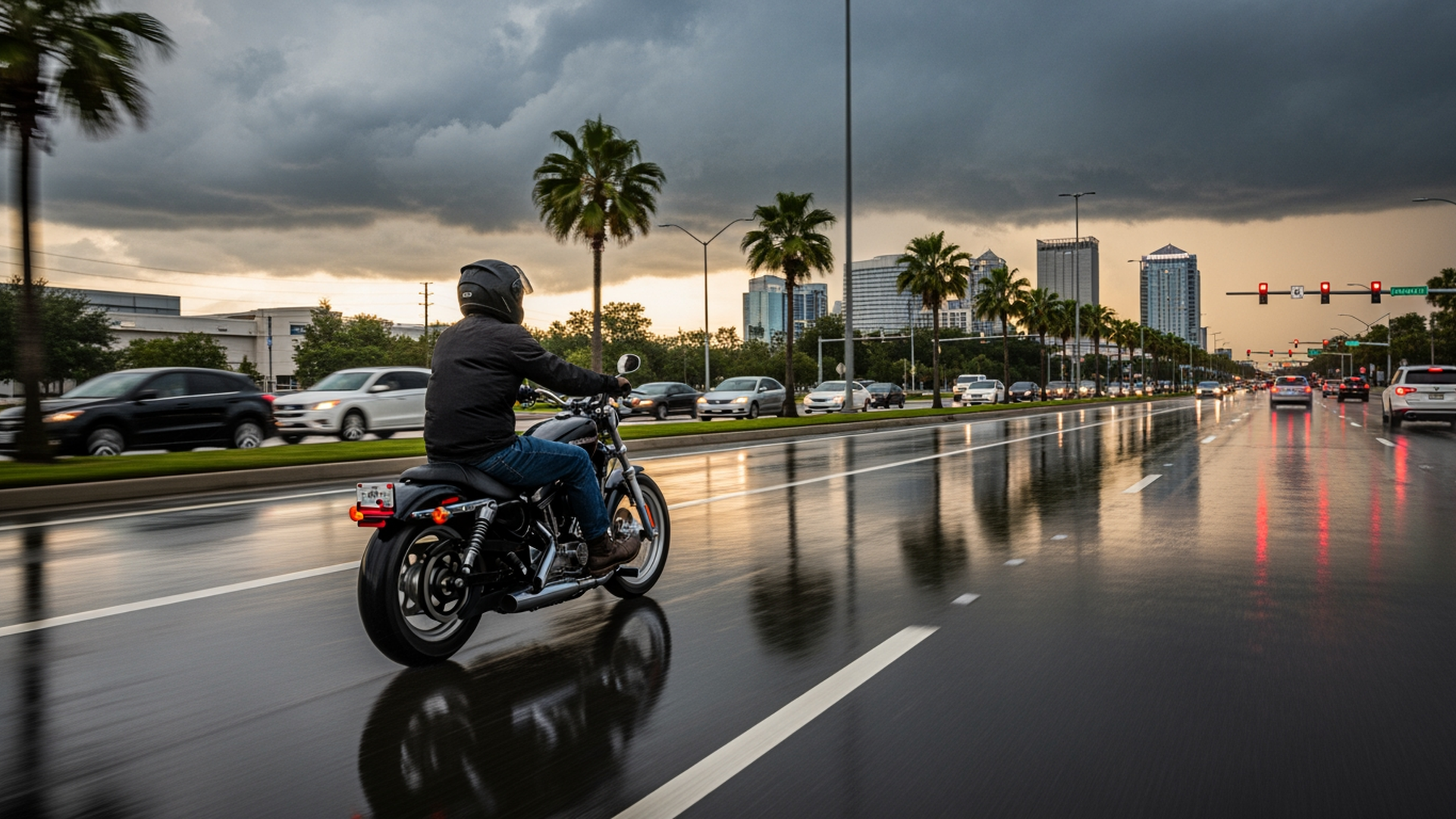
Even with two years on paper, the real deadline for a strong case is much sooner, and Florida's weather is a big reason why. A motorcycle crash on a rain-slick arterial after one of those daily afternoon thunderstorms depends on evidence that does not last. Skid marks and fluid trails wash away in the next downpour. Debris gets swept off the road within days. The exact surface conditions the moment you went down are gone almost immediately.
- ✓ Witnesses scatter and forget. On tourist-heavy corridors like I-Drive and US-192, the people who saw your crash may be visitors who leave the state within days.
- ✓ Camera footage gets overwritten. Traffic, business, and doorbell cameras often loop and erase within weeks, taking the clearest proof with them.
- ✓ The bike and gear get repaired or discarded. Physical evidence of impact and damage disappears once the machine is fixed or scrapped.
- ✓ Medical links blur with delay. Gaps between the crash and treatment give insurers room to argue your injuries came from something else.
The rider who calls early gives an attorney the chance to lock down that evidence while it still exists: photographing the scene, tracking down witnesses, preserving footage, and documenting conditions before the next Florida storm erases them. The rider who waits, even with time left on the clock, may find the proof that would have won the case is already gone.

Moe DeWitt and the Orlando motorcycle injury attorneys at DeWitt Law Firm represent riders hurt by negligent drivers. If you have questions after a crash, their team is here to help.